

Tesla says the first of its Semi electric trucks enjoyed less than five per cent downtime in their first year of trial operations, significantly less than the average for diesel based trucking fleets.
Tesla has finally begun high-volume commercial production of Tesla Semi at its gigafactory in Nevada, almost 10 years since first unveiling back in 2017.
The company has now shared data that it’s been collecting around the significant reduction in downtime experienced for transport and logistics operators that have used the Semi electric truck in trials.
According to Tesla, the Semi fleet faced less than 5 per cent downtime, and 75% of the services on the Semi were completed within 24 hours, which is reasonable given that a much broader service network is expected to be established in the coming years.
The uptime of more than 95 per cent compares to 90 to 92 per cent average for diesel trucks, who also tend to average two to three days service time, according to industry data.
“In 2025, the Semi fleet achieved >95% uptime, with 75% of service visits completed in under 24 hours,” the company said on X.
More details on Semi’s variants have also surfaced, with the Standard Range variant coming with a 548 kWh battery pack and delivering over 500 km of range.
A larger Long Range variant comes in at 822 kWh and delivers up to over 800 km of range with a 37-tonne load on board.
Both variants use Tesla’s 4680 cells with NMCA chemistry that can be charged at a rate of up to 1.2 MW using Tesla’s Megachargers, designed specifically for the Tesla Semi.
Tesla is expected to produce these at the company’s recently opened Nevada Gigafactory. It is capable of producing up to 50,000 semi-trucks a year.
In recent years, Multiple sightings of the Tesla Semi have shown that the truck is being trialled by Walmart, retail store giant Costco and giant logistics operators such as DHL.
The Tesla Semi production began using the low-volume production method when the first truck began delivering in the US in 2022 as part of a trial with a large food and beverage customer, PepsiCo.
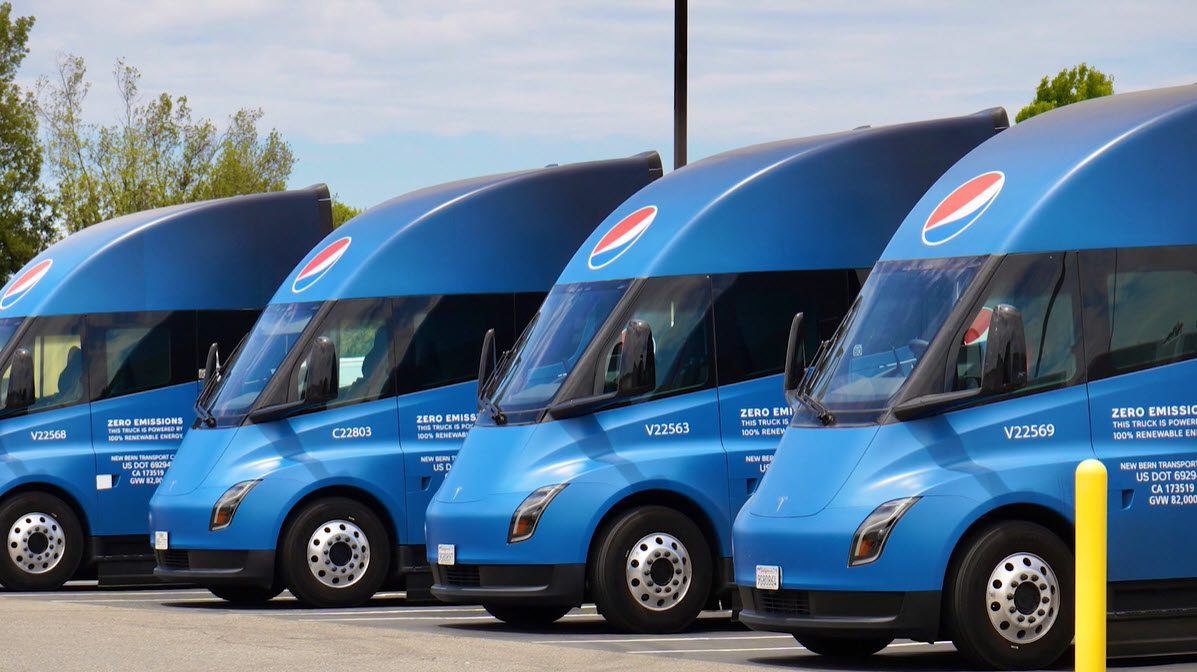
From that and other trials, Tesla took the learning and last year unveiled an updated Semi design with several class-leading upgrades.
This version had improved range and charging specs, which will be welcomed by fleet operators in the US and across the world, with the company already setting its eyes on Europe. On top of that, the latest Semi has increased payload capacity and upgraded 1.2 MW charging speeds.
According to the 2025 trials with global logistics giant DHL, the Semi delivered over 800 km of range and had energy consumption as low as 1.06 kWh/km.
We look forward to seeing more details on Tesla Semi from real customers who operate and service these trucks across the US in the coming months. More real-world case studies will only help fleets electrify and reduce transportation costs and emissions sooner.
See The Driven’s detailed EV sales data here: Australian electric vehicle sales by month in 2026; by model and by brand.
Sign up for The Driven’s free daily newsletter and get the latest EV news and analysis delivered straight to your inbox.