Tesla CEO Elon Musk was right when he suggested that autonomous cars like his company’s Robotaxi will suffer intense scrutiny – more than any other vehicles – as they are deployed around the US and overseas. And they will.
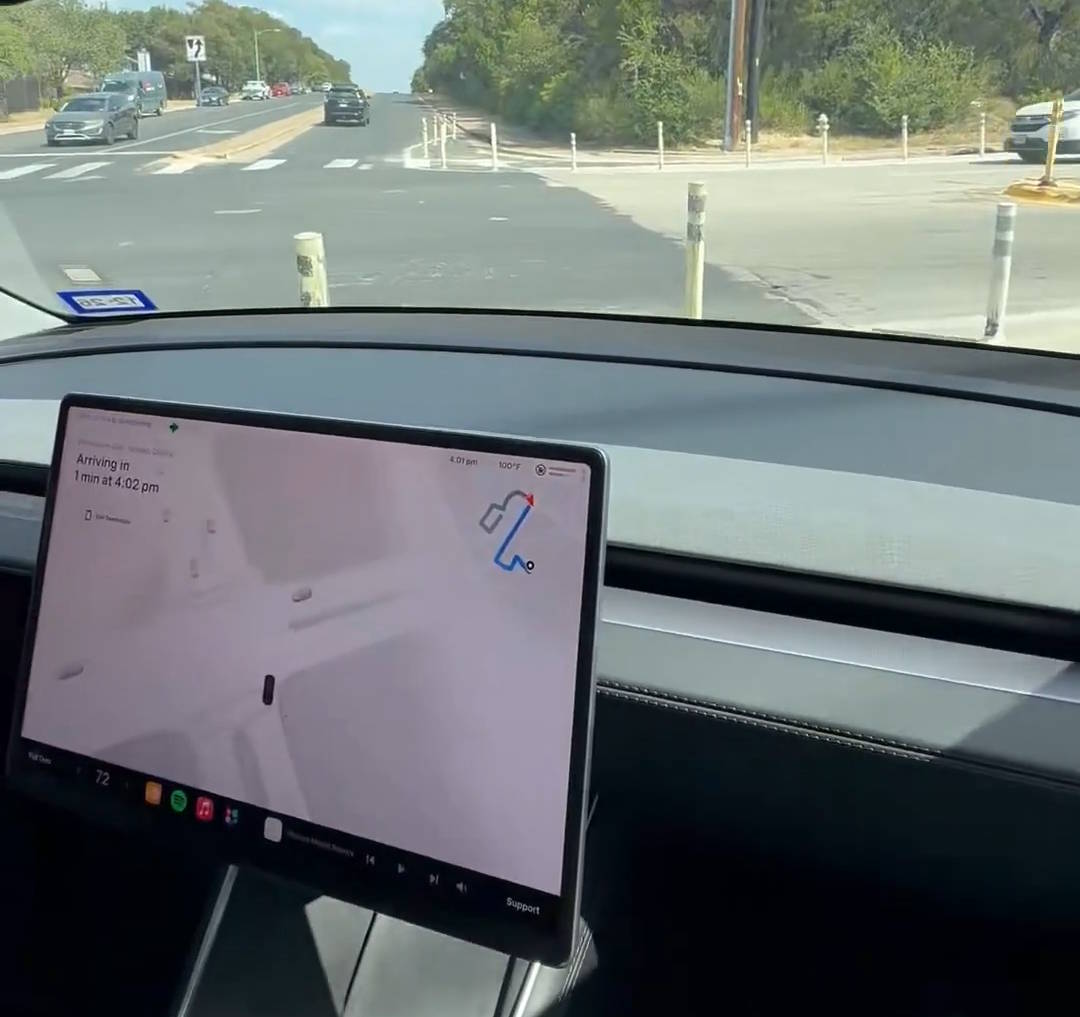
This week, an unsupervised Tesla Robotaxi created news after driving itself into a spot of bother in Austin, Texas, making a right-turn into a row of bollards protecting a closed-off lane.
The video, shared to Reddit by user bladerskb, shows the Robotaxi attempting to turn right at an intersection but failing to recognise the row of bollards which seem to have been designed to extend the curb further out into the road.
Several other Reddit users were able to determine the exact location of the intersection and explain that the bollards have been in place for “at least 3 years.”
Instead of reversing itself out of the situation, the Robotaxi comes to a standstill before “pulsing the brakes” and eventually squeezing through two of the bollards, hitting them on the way through.
As others have pointed out, the Robotaxi was able to detect the bollards and stop for them, but was unable to reverse itself out of the situation and chose instead to drive through the obstacles.
The incident comes only a few weeks after Tesla’s vice president of AI Ashok Elluswamy described on an earnings call the Robotaxi program’s safety record as “impeccable”, adding that “We have driven more than 380,000 miles of unsupervised robotaxi now across six cities in two different states. We have had zero notable incidents.”
No one was injured in the Austin incident. However, as The Driven’s own enthusiastic adopters of autonomous driving have reported, the system is not perfect, which is why – at least in Australia – that technology requires supervision.
It’s a different matter with the Robotaxis. And while Tesla’s claims of “380,000 miles” completed sounds impressive, Waymo revealed in June that its cars had driven 220.6 million rider-only miles without a human driver.
Waymo’ says its cars were involved in 94 per cent fewer crashes causing serious or fatal injuries, 82 per cent fewer crashes in which an airbag deployed, and 82 per cent fewer crashes involving any reported injury. Again, that is not a 100 per cent reduction.
As Electrek reported earlier this year, Tesla total active fleet of Robotaxis across all markets is only 31 vehicles – and apparently only 14 of those are driving unsupervised.
For comparison, Waymo is operating somewhere in excess of 3,800 vehicles – though, this number does appear to come from reports that the company recently had to recall 3,871 due to a software issue that could cause the cars to drive into freeway construction zones.