Even as Norway has set yet another spectacular electric vehicle (EV) sales record, much of the rest of Western Europe is also seeing continued EV growth, with European carmakers proving increasingly popular.
Norway continues to lead the way in terms of BEV market share, hitting a new record of 98.6 per cent in April, up from the previous record set the previous month of 98.4 per cent. Through the first four months of 2026, BEVs now account for 98.15 per cent of all new passenger cars registered in Norway.
So dominant is the BEV sector in Norway that, of the 11,103 new passenger cars registered in Norway in April, only 87 new diesel cars and 31 new petrol cars were registered. There were also only 33 hybrid vehicles of all types sold.
Neighbouring Denmark also recorded an impressive BEV market share in April of 81.9 per cent – a number which climbs even higher when limited to private buyers, with electric cars accounting for a record 96.3 per cent market share.
This compares favourably to April 2025, when electric cars accounted for 63.3 per cent and private electric cars accounted for 83 per cent of new registrations.
According to Mobility Denmark, based on data provided by Bilstatistik.dk, electric cars now account for 80.5 per cent of all newly registered vehicles through the first four months of the year.
And while Mobility Denmark do not explicitly clarify whether the “electric cars” they refer to are all BEVs or simply an ‘electrified’ catchall for BEVs, PHEVs, and other hybrids, the top 10 most popular models for April were all BEVs, and totalled 5,571 units, accounting for 40 per cent of the 13,721 electric cars registered during the month.
In Sweden, 24,147 new passenger cars were registered in April, of which 9,834 were BEVs, accounting for a 41 per cent of all new registrations, up 15 per cent compared to April 2025.
Sales of BEVs in Spain also increased, climbing by 44.4 per cent in April, with 11,039 new units registered, accounting for an 8.7 per cent share of the entire market, up more than 2 per cent from a year earlier.
This continues a strong trend so far in 2026, with 41,741 BEVs sold through the first four months of the year, up 40.7 per cent compared to the same four-month period in 2025, and accounting for 8.59 per cent of the market.
When combined with PHEVs and basic hybrids, electrified vehicles accounted for a 19.7 per cent market share in April, nearly five points higher than in April 2025.
Not every country’s sector provides as much detail as others, but the general news remains good.
In the Netherlands, April saw 9,616 new BEVs registered, a 3.4 per cent increase on April 2025, accounting for a total market share of 37.4 per cent. In Ireland, 2,779 new BEVs were registered in April, more than double (109.7 per cent) the 1,335 recorded in April 2025, accounting for a 22.35 per cent market share.
Of the 37,802 new cars registered in Belgium in April, 37 per cent were BEV, maintaining the year-to-date share at around the 35 per cent mark. While next door in France, BEVs accounted for a 26 per cent share of all new vehicles registered in April, well up on the 18 per cent share recorded in April 2025.
Not all countries publish data on the best-selling cars, or partition out best-selling BEVs, but for those countries where the information is available, European carmakers are making an important comeback.
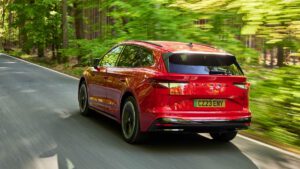
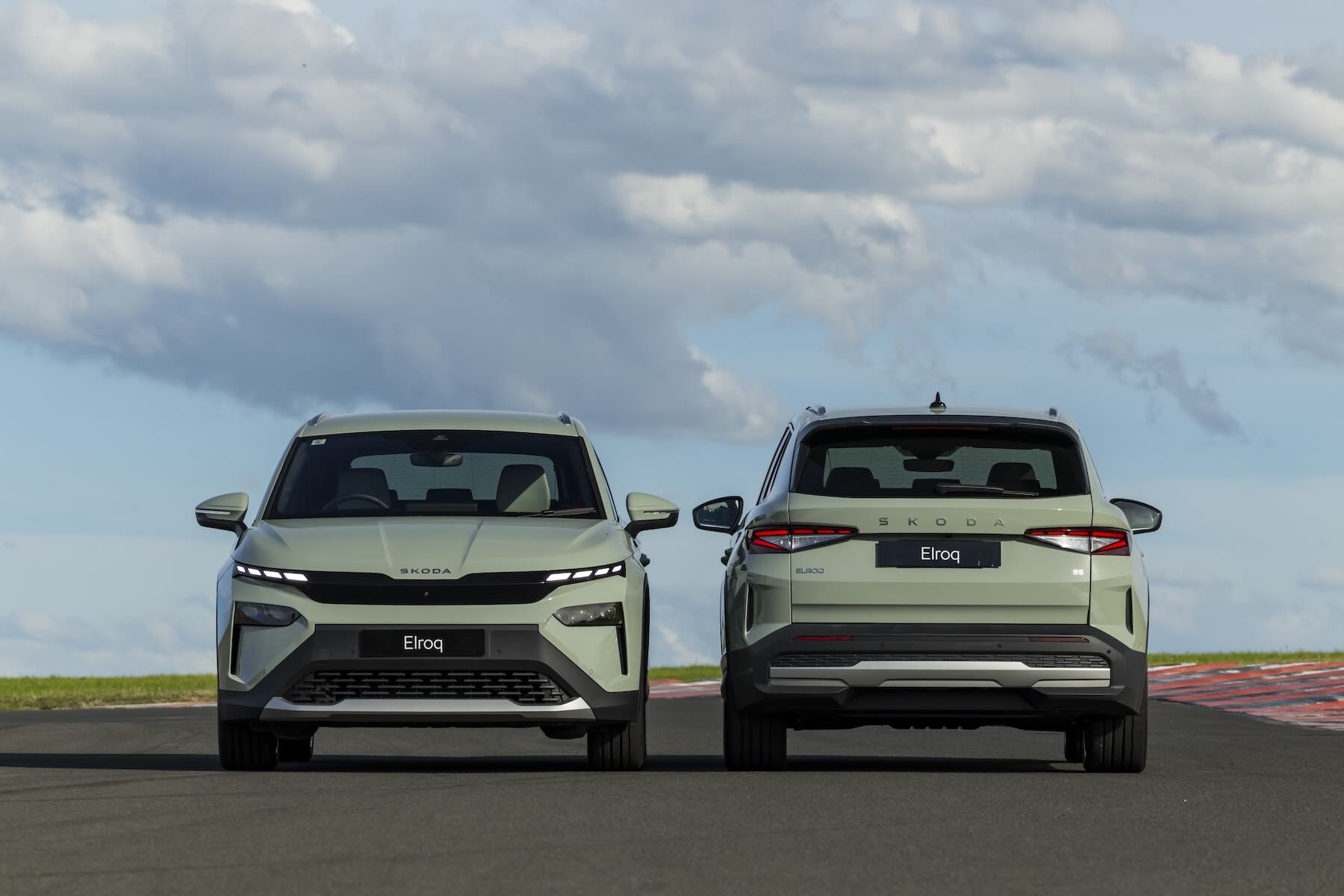
Czech automaker Škoda had the top two best-selling cars in Denmark in April with the Škoda Elroq and the Škoda Enyaq, both of which are BEVs. The Škoda Elroq was also the most popular BEV in the Netherlands in April, while the Škoda Enyaq was the best-selling BEV in Ireland.
German automaker Volkswagen was the dominant force in Norway, accounting for over 15 per cent of all cars sold in April, led by the ID.4 and ID.3 which were the first and third best-selling car. The ID.4 was also the fourth best-selling car in Denmark, while the ID.7 was the fifth best-selling car in Sweden.
Tesla sales struggled, as it often does in the first month of a new quarter, and was only the eleventh best-selling car brand in the country in April with 379 units registered, 326 of which were the Tesla Model Y.
Similarly, in Denmark, the Tesla Model Y only managed to see 335 new units registered in April, making it the seventh best-selling car. Tesla also recorded small sales numbers in Portugal, the Netherlands, Ireland,
In Sweden, however, the Model Y was the third best-selling car with 413 new units registered, an increase of 143 per cent over April 2025. Tesla also saw a return to form in France, with 1,829 units sold in April, up 112 per cent over the same month a year earlier.
In Spain, the Tesla Model 3 and Model Y remain the best-selling BEVs so far this year, but they failed to enter the equation in April. And in Belgium, Tesla recorded 834 units registered, well up on the 570 registered in April 2025.
See The Driven’s detailed EV sales data here: Australian electric vehicle sales by month in 2026; by model and by brand.
Sign up for The Driven’s free daily newsletter and get the latest EV news and analysis delivered straight to your inbox.