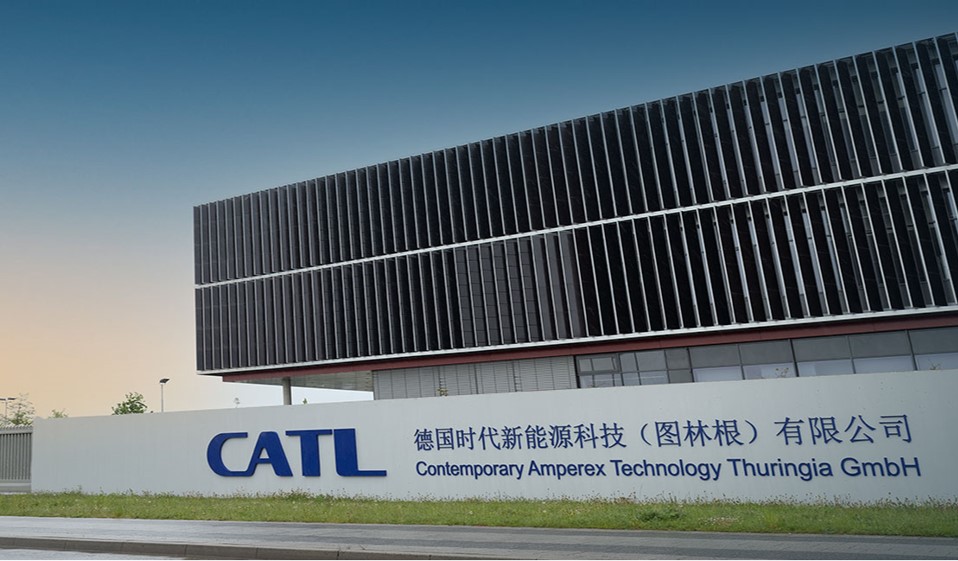
The world’s largest battery manufacturer, CATL, says it has achieved its 2025 target of reaching carbon neutrality across its core operations, with all 20 of its battery plants now certified as carbon neutral.
However, with more than 80 per cent of carbon emissions across CATL’s product lifecycle stemming from its supply chain, the company has a way to go before reaching its goal of carbon neutrality across its full value chain by 2035.
CATL, which makes batteries for EVs as well as grid scale storage, on Monday credited its Carbon Chain Management System (CCMS) for its ability to monitor and calculate carbon emissions at its plants and production lines.
“Carbon neutrality cannot be built on estimates alone,” said Jiang Li, vice president, board secretary, and head of corporate sustainable development management committee of CATL. “It requires reliable data, clear boundaries and systematic execution.”
The CCMS allows the company to embed decarbonisation efforts across process and equipment operation, battery design, green energy consumption, raw material sourcing, and recycling.
CATL says that in 2025, zero-carbon electricity accounted for 100 per cent of all electricity consumption at CATL’s core operations. Additionally, CATL has been able to reduce the energy consumption per unit of product at its battery manufacturing bases by 28 per cent compared to 2022.
CATL will now turn its attention towards its supply chain, including material innovation, material manufacturing, green logistics, and battery recycling.
CATL has already established baseline carbon data for more than 100 core Tier 1 suppliers, but the company is aiming to steadily achieve 100 per cent data coverage across its key upstream links.
It says it could favour suppliers with stronger low-carbon performance, and it plans to launch a Zero-Carbon Supply Chain Empowerment Initiative, which will launch in-depth joint decarbonisation initiatives with an initial cohort of 30 core suppliers.
“Before contributing to global carbon rules and standards, CATL must first prove what is possible through our own industrial practice,” said Robin Zeng, chairman and CEO of CATL.
“As the world ramps up efforts toward net-zero, zero-carbon batteries will not be a choice but a necessity in the near future. We are ready to share our technologies and experience with partners across the industry, helping to shape global carbon standards and advance industry-wide decarbonization.”