The Australian Electric Vehicle Association (AEVA) has lambasted calls for a road user charge specifically for electric vehicles (EVs) as “ill-conceived”, calling instead for a “holistic” policy to fund the country’s public charging infrastructure.
A persistent and vocal campaign to impose a road user charge on EVs has been swirling for some time now, with proponents generally pointing to the fall in revenues from the fuel excise tax as the main catalyst.
The fuel excise in Australia is a flat sales tax of 52.6 cents levied by the federal government on every litre of fuel purchased at the bowser, with the proceeds used to fund the country’s transport infrastructure. Half of it has been suspended for three months because of the global fuel crisis.
As electric vehicles increase in popularity and market share, a road user charge of some sort will be inevitable – a fact the EV industry has long come to grips with. The sticking point is the form such a charge should take.
Federal energy and climate minister Chris Bowen last week downplayed fears of an arbitrary tax on EVs, saying instead that a road user charge would only happen “when it is ready”.
Some have called for a distance-based charge on light EVs as “the logical starting point”. Others, such as Fortescue CEO Andrew Forrest, have argued that the fuel excise rebates should be abandoned entirely, particularly for the mining industry, which gets hundreds of millions of dollars in rebates.
There are also concerns that an arbitrary or un-tailored tax would hamstring EV adoption and risk net zero targets. The Electric Vehicle Council also released a study earlier this month which found that a road user charge would hit working families in the outer suburbs the hardest.
The AEVA have now also thrown their two-cents into the mix, warning that an EV-specific road user charge to fund incremental public charging infrastructure would likely entrench inequities and could even supress EV uptake in Australia, especially among lower- and middle-income families.
Instead of an EV-specific road user charge, AEVA suggests a universal ‘mass × distance’ charge should be levied on all road-going vehicles regardless of fuel type, and that the fuel excise be left intact as an efficient tax on pollution.
The specific ‘mass × distance’ charge would, according to AEVA, more accurately reflect those vehicles causing the greatest impact on Australia’s roads.
“A flat rate would mean a small electric hatch or motorcycle would pay just as much as a 2.5 tonne SUV, despite the negligible impact of a smaller vehicle on infrastructure and the community,” said Dr Chris Jones, part of AEVA’s policy working group.
“Larger, heavier vehicles not only have a greater impact on road infrastructure, but their popularity correlates with a steady increase in Australia’s road toll, particularly for vehicle-pedestrian crashes.
“Vehicle mass must be factored in.”
And according to AEVA president James Pickering, any future tax on EVs should not require current EV drivers to accept the short-term burden of responsibility for the long-term benefit of all Australians.
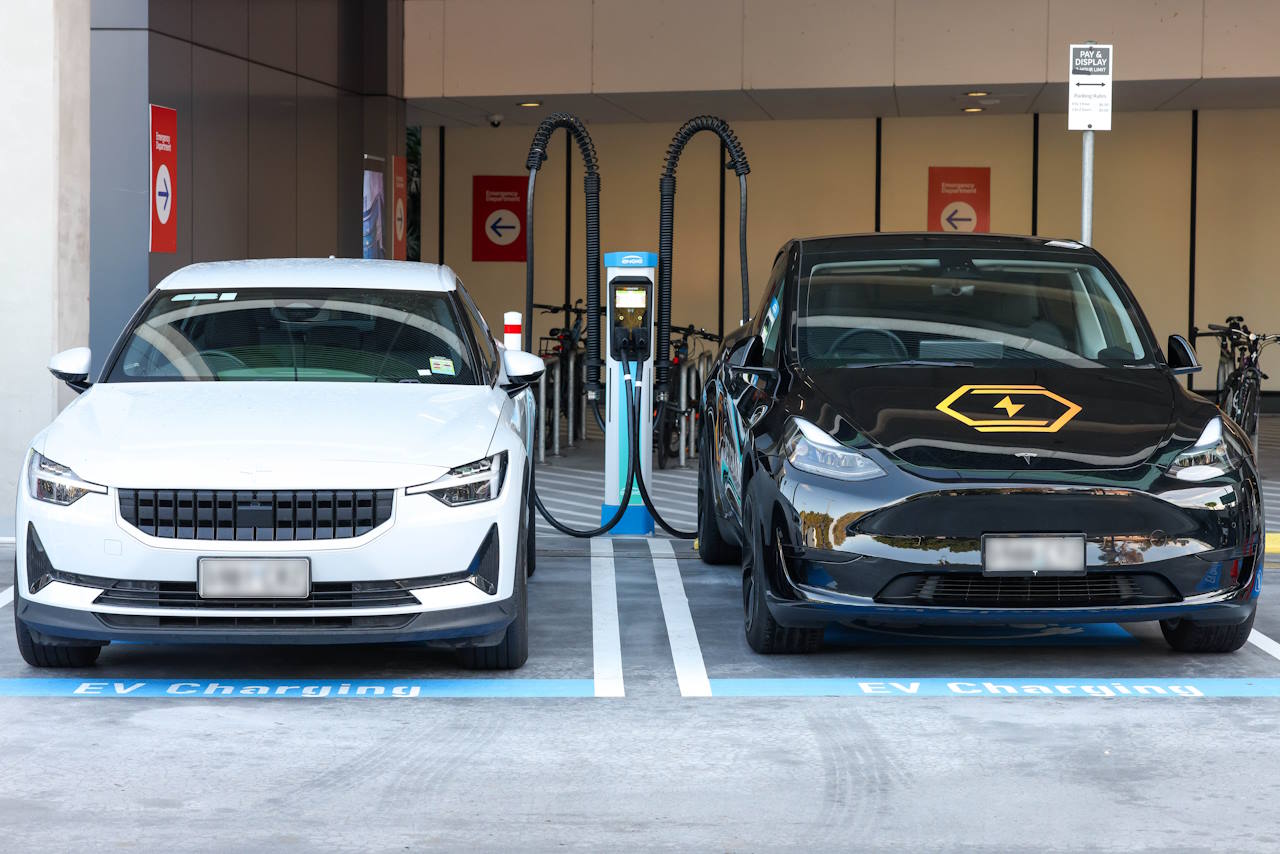
“The private sector is rolling out chargers with targeted government support; this is responsible and sustainable,” said Pickering.
“What’s important is ensuring these chargers are properly maintained and service level agreements are honoured. While more public charging infrastructure investment is needed, all Australians will benefit from a reliable, complete network, funded by general revenue, in partnership with industry.
“Our transition to cleaner, cheaper transport, and new industries will need enduring investment and comprehensive policy across governments, not one-and-done proposals.
“Infrastructure which supports Australia’s fuel security deserves holistic policy, and not ill-conceived new taxes.”