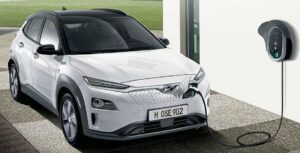
Distribution network company Essential Energy is planning to install streetlight-mounted electric vehicle (EV) chargers across regional, rural, and remote areas of New South Wales to boost charging facilities in areas where they have yet to emerge.
Essential Energy own one of Australia’s largest electricity distribution networks stretching across NSW and parts of southern Queensland, and plans to install 7-kilowatt (kW) white-labelled EV chargers in 300 pole streetlights across its network.
It also plans to make a further 1,000 poles available for private operators to install their own equipment.
The so-called ‘Plug and Play’ EV charging program, which is partly funded by the Australian Renewable Energy Agency’s (ARENA) Driving the Nation Program, will utilise Essential Energy’s existing infrastructure and relationships with councils and communities to de-risk the creation of public charging in otherwise expensive locales.
Unlike metropolitan regions where installing EV charging is easier and cheaper, regional and remote areas face high upfront costs and complexity due to smaller and more dispersed communities relying on scarce network infrastructure.
Essential says it is open for its initial network of 300 chargers to be used by private charge point operators, and is preparing a ring-fencing waiver application to the Australian Energy Regulator (AER) to facilitate the program.
It suggests private operators would handle all pricing, customer engagement, and even branding, while using charging hardware that Essential Energy installs and maintains.
Essential Energy hopes that this approach will allow charge point operators to enter locations that they would otherwise be forced to overlook due to the costs and difficulties of rolling out public charging infrastructure in remote locations and where usage might be limited.
The program also aims to pave the way for subsequent private investment that will build out additional public charging infrastructure. In pursuit of this, the Plug and Play program will also identify 1,000 additional power poles that can be used by private operators to install their own charging infrastructure.

“We know there are a lot of towns where there is no ready-made market, but if no-one takes the first step to install the infrastructure and lower the barriers to entry then regional people will continue to lag behind their metropolitan counterparts,” said Andrew Hillsdon, Essential Energy’s general manager for commercial development.
He said the proposed trial is designed to create a market for EV charging in regional, rural, and remote locations, though he is under no illusion it will be easy.
“Essential Energy has the distribution network already with the poles and the wires and it makes sense for us to take this next step to deliver the charging infrastructure that regional people need.
“We are applying for a waiver to create the opportunity for private operators to use their technology with our infrastructure – not so we can operate the chargers.”