
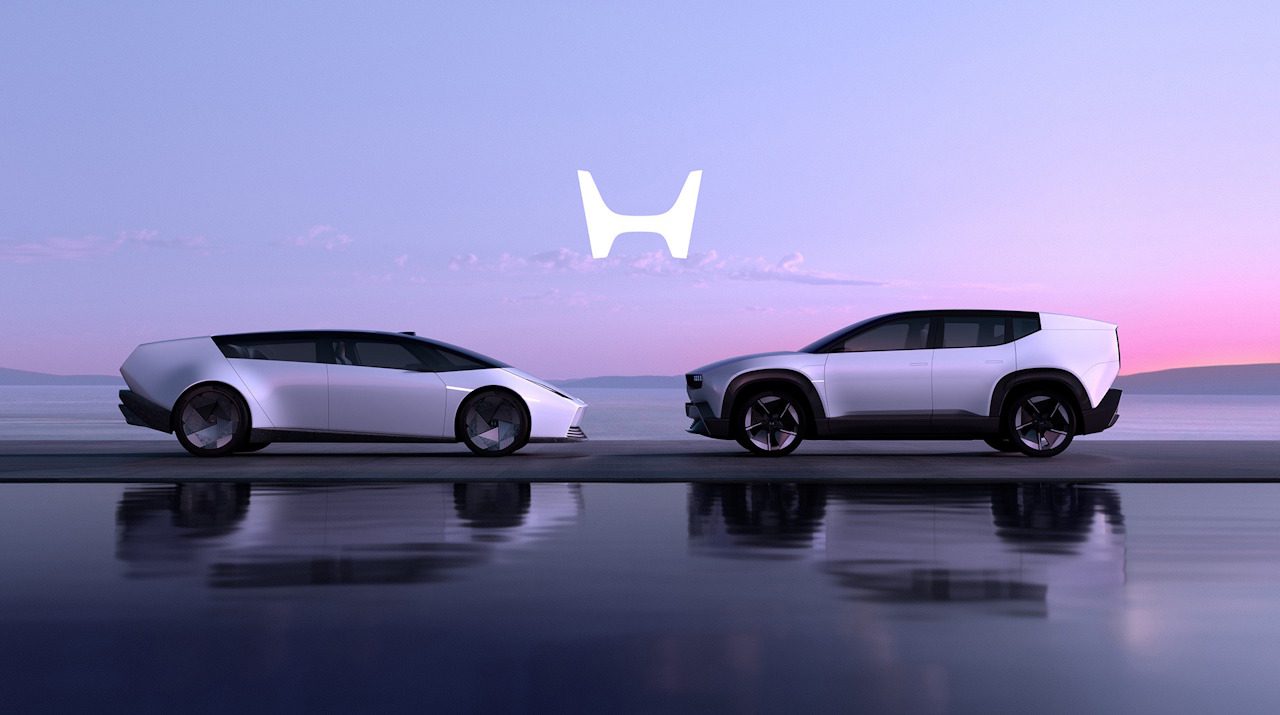
Japanese automaker Honda has announced it will cancel the development and market launch of three electric vehicles (EVs) previously announced for the North American market, and admitted it can no longer compete with Chinese EV makers.
As part of a “reassessment of the company’s automobile electrification strategy” stemming from “various factors including recent changes in the business environment”, Honda announced late last week that it was cancelling the development and launch of the Honda 0 SUV, the Honda 0 Saloon, and the Acura RSX.
The cancelled plans, and its inability to compete with Chinese EV makers means the Japanese car giant will be forced to write off around $15.7 billion ($A22.5 billion) when it announces its year results next month. It plans to update its future strategy in May but has indicated it will focus on hybrids.
Honda had set itself a goal of reaching carbon neutrality for all its products and corporate activities by 205, and as a result of the earlier US shift to support EVs committed to rolling out numerous new electric models.
However, the imposition of US tariffs as well, a slowdown in the EV market due to easing of fossil fuel regulations and the dumping of EV incentives, has led to it abandoning its plans and prepare for massive write downs and impairment losses.
China is also weighing heavily on Honda’s mind, with increased competition from Chinese car manufacturers, particularly those specialising in electric and autonomy.
“In China, what customers value more in automobiles is shifting from hardware features, such as fuel efficiency and cabin space, to software-based features that will continuously advance according to customer preferences,” the company said.
“This has intensified the competition due to the rapid emergence of newer EV manufacturers that leverage their short product development cycles and strengths in the area of software-defined vehicle (SDV) technologies, including advanced driver-assistance systems (ADAS).
“In such a difficult competitive environment, Honda was unable to deliver products that offer value for money better than that of newer EV manufacturers, resulting in a decline in competitiveness.”

Joshua S. Hill is a Melbourne-based journalist who has been writing about climate change, clean technology, and electric vehicles for over 15 years. He has been reporting on electric vehicles and clean technologies for Renew Economy and The Driven since 2012. His preferred mode of transport is his feet.