Image: Riz Akhtar
Jaecoo, a sub-brand of Chinese car giant Chery, last week revealed specs of its upcoming adventure-focused dog-friendly J5 EV. Now, the SUV’s pricing can officially be revealed, delivering unbelievable value in the electric family SUV market.
Starting at $36,990 driveaway for the first thousand customers, the Jaecoo J5 EV has significantly undercut our pricing expectations and provides family car buyers with a massive amount of value.
I had the opportunity to drive the Jaecoo J5 EV at an event in Sydney last week, giving us an idea of what it could be like to own the single variant of this model, which lands at our shores next month.
Let’s start with the single, quite well-specified variant of the car. It comes with more value than any of the SUVs we’ve driven so far at this price point.
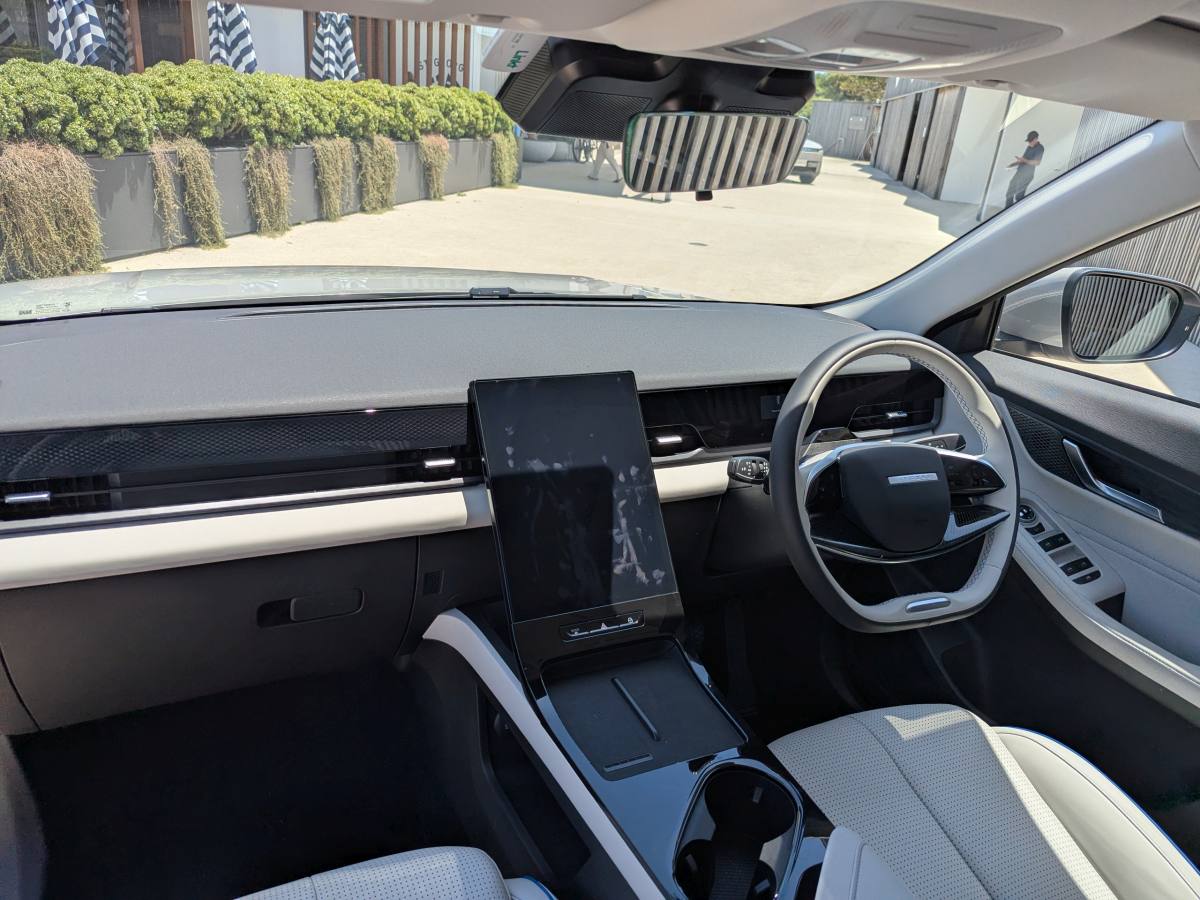
The J5 EV has 18-inch alloy wheels, powered mirrors and tailgate, a frunk, a panoramic glass roof, a 13.2-inch Infotainment screen, an 8.8-inch instrument cluster, a 50 W wireless charger, heated and ventilated seats, an 8-speaker sound system, multiple drive modes, a powered tailgate, and much more.
This makes it a very well-equipped car at its price point and makes it hard to think of any other model available in the market that comes close.
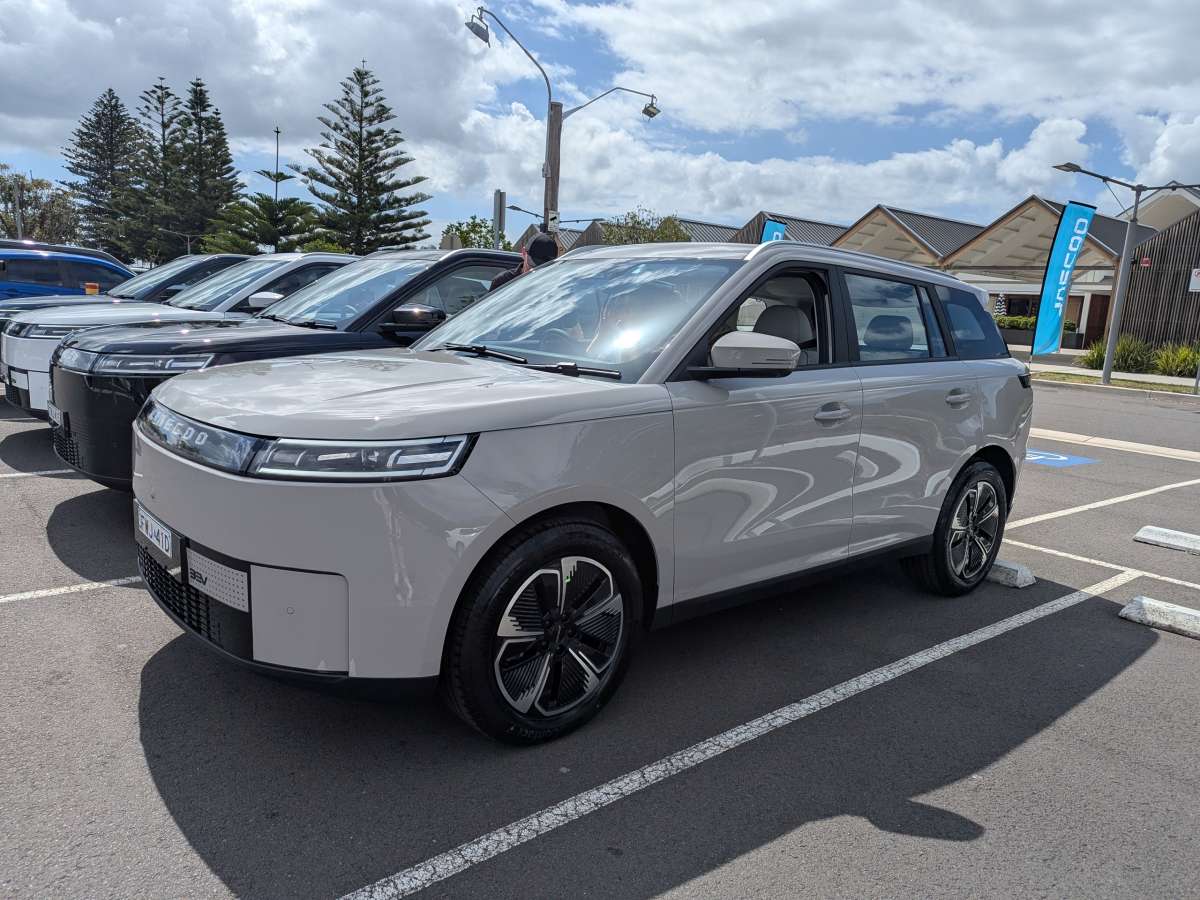
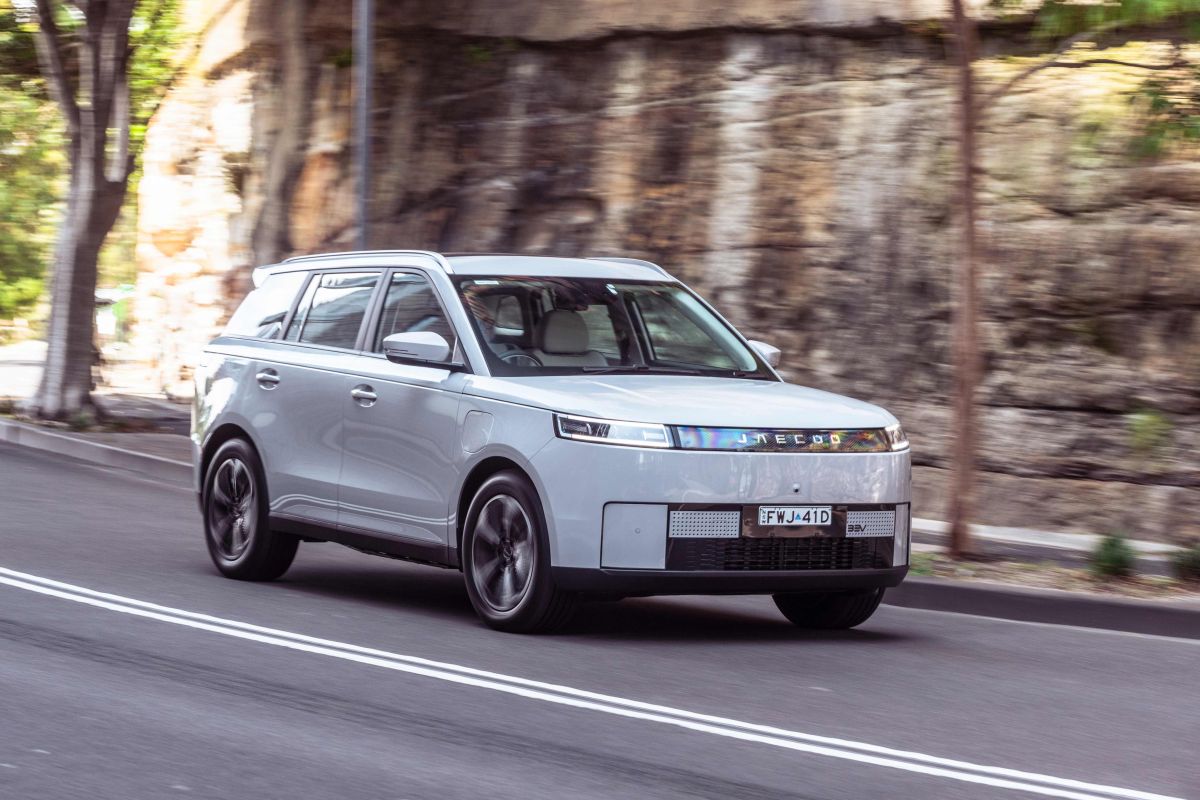
My first impression of the car from the outside was its nicely squared at the front, and the styling of this SUV has quite European/near Range Rover Evoque vibes. The green paint really stands out.
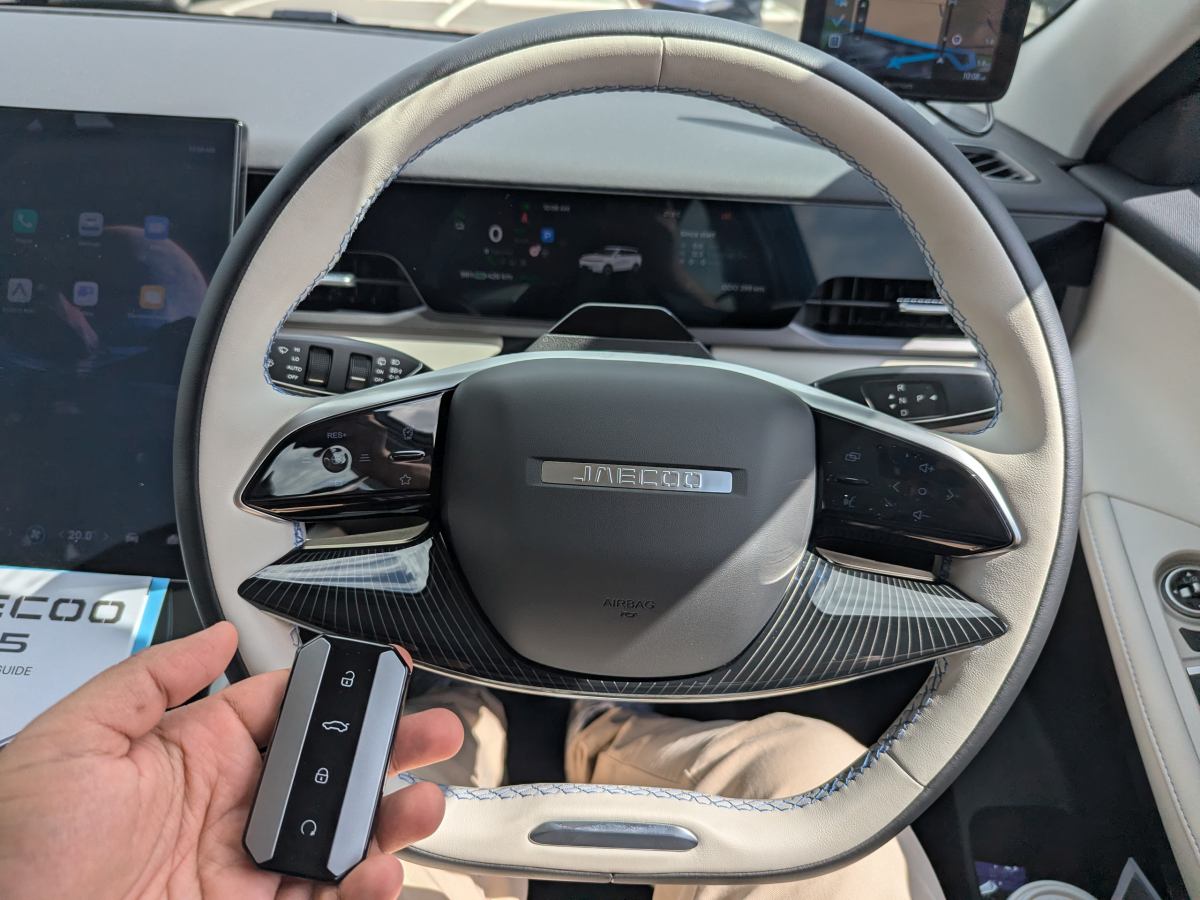
Getting into the car with its conventional door handles is straightforward and, thanks to its ride height, doesn’t take much effort. With the key in your pocket, the car can automatically unlock as you approach it.
One area that caught my eye early on was the build quality of the Jaecoo. It looked and felt solid, and during the few hours I spent in it, this quality was evident throughout the car.
There is good legroom in the driver and passenger seats, and this continues in the rear with plenty of space for adults and kids. The rear seats also have a slight extension on the base cushion, making longer trips more comfortable for rear passengers without sacrificing too much leg room.
Boot space in the back was also reasonable, given the segment this car plays in, although we didn’t get to load it up with much on this drive. We will aim to test it out on the formal test drive in the coming weeks.
There’s also a 35 Litre Frunk to stow cables or other bits in, and it also has a seal around it so water doesn’t get into the compartment.
To get the car moving, there are not any start buttons, so as long as you had the key inside the car, the car could be put into drive by using the stalks behind the steering wheel.
From there, I drove down to the Royal National Park and got to drive on some winding roads.
With its fairly zippy 155 kW motor, which produces up to 288 Nm of torque, city or suburban driving is no issue, especially in traffic with its auto-hold function.
On top of the auto hold, the three regenerative braking settings were also tested on the roads leading up to the National Park.
Medium regenerative braking was the best setting, but there is also high regen available. On high, the car would slow down quite quickly once you let go of the accelerator, although I found it less linear than expected, making it go from minimal braking when easing on the accelerator pedal to a harsher slowdown after a small delay.
On country roads, the Jaecoo J5 felt quite composed. On 80 and 100 km/h sections, the car stayed within the lanes, and the ADAS system wasn’t intrusive, as is the case in some other cars, including Chery, the parent company’s own Omoda E5, when we tested it at launch.
It’s a much more refined experience with driver monitoring, lane centring and other functions performing fairly well on this initial drive. The team has taken the feedback from the E5 and really done a good job at implementing it to make the drive experience a whole lot better.
Speaking of safety, it’s not skimping on much in terms of features, coming with seven airbags, Autonomous Emergency Braking (AEB), Emergency Lane Keeping (ELK), Adaptive Cruise Control (ACC) and Forward Collision Warning (FCW).
When it comes to absorbing the bumps, the suspension did a good job in some of the scenarios tested. It’s easy to get the on-road feel in the J5 EV that it’s geared for daily driving around town and road trips.
During the drive, I also got to use wireless Android Auto, which worked seamlessly without any disconnections. That’s of course on the centre vertical screen, which was very easy to navigate through and even had a search function.
After driving the car for a period of just over 1 hour, the Jaecoo J5’s average consumption was 13.2 kWh/100 km. This was lower than expected, with the official figures putting it at 14.3 kWh/100 km. This could be because the drive program didn’t cover as much highway driving but did include some high-speed sections.
That type of consumption would put the range at over 400 km in real-world conditions, thanks to its 58.9 kWh Lithium Iron Phosphate (LFP) battery pack.
All in all, the time I spent in the Jaecoo J5 EV gave me a solid impression of this family SUV that is well-built, with good tech, plenty of comfort features, and at the launch price is pretty much a steal.
The Jaeoo J5 EV will also come with a very progressive 8-year unlimited kilometre warranty, 8 years of capped priced servicing and 8-year unlimited kilometre battery warranty.
Speaking of capped price servicing, the Jaecoo J5 EV 8-year service plan will set owners back $1,520 over 8 years of ownership, if driving less than 20,000 km/year. That’s great value compared to some other EV servicing plans we’ve previously come across.
We look forward to spending more time with it in the coming weeks and sharing what it could be like to own it in the real world. For now, I still can’t believe the price of this EV with what it packs.
Jaecoo J5 EV Features
Riz is the founder of carloop based in Melbourne, specialising in Australian EV data, insight reports and trends. He is a mechanical engineer who spent the first 7 years of his career building transport infrastructure before starting carloop. He has a passion for cars, particularly EVs and wants to help reduce transport emissions in Australia. He currently drives a red Tesla Model 3.
Tim Eden and Riz Akhtar join to help review the year that was in EVs,…
The Zeekr 7X arrives in Australia with a sort of self-assurance usually reserved for brands…
Deliveries of Tesla's fastest electric SUV to date begin in Australia, with some owners celebrating…
BYD continues its rapid global expansion after reaching its 15 million NEV production milestone.
Tesla opens up almost 50 new Supercharger stalls ahead of the holiday rush, meaning EV…
First sighting of Tesla's upcoming new Cybercab testing on public roads comes to surface as…

It’s almost like a Jaecoo promotional piece.
That's how Riz writes, most of his articles are like that. I assume he just gets enthusiastic seeing so many new EVs, and got to say, this one is a hell of a bargain.
So we have:
Deepal - sounds like Indian
Denza - sounds like Japanese
Jaecoo - sounds like Korean.
And of course the more Western sounding Nio, Polestar, Aion, etc.
Did they just pick these names out of thin air or intentionally not to sound like they are Chinese?
Good article Riz.