
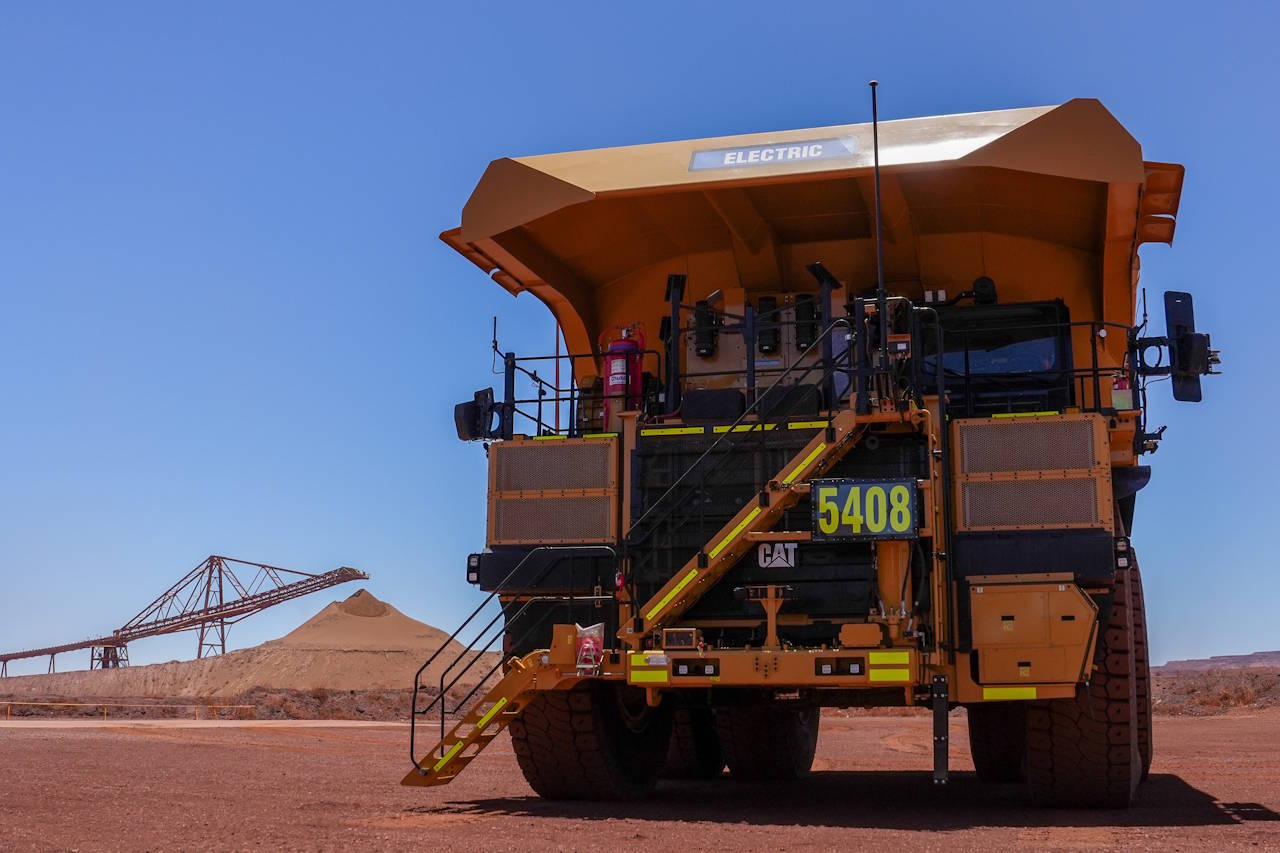
Australian mining giants BHP and Rio Tinto have welcomed two new battery-electric haul trucks at BHP’s Jimblebar iron ore mine in Western Australia’s Pilbara region.
The two battery electric trucks are part of a joint trial between BHP and Rio Tinto which will begin once the vehicles have been safely commissioned. The trial will test the viability of battery-electric technology as an alternative to diesel usage in the company’s large-scale iron ore mining operations.
The Cat 793 XE Early Learner battery-electric haul trucks were supplied by American equipment manufacturer Caterpillar as part of its ‘Early Learner’ program which delivers battery electric trucks to customer sites earlier than normal in an effort to better refine requirements, develop processes, and validate both the machine and technology designs.
The Cat 793 have a payload of around 250 tonnes, and will be tested for their suitability in running round the clock in high temperatures (often at 45°C), and the infrastructure needs including charging and renewable energy supplies.
Fortescue has the most ambitious program for electric trucks, locking in contracts for nearly 400 giant electric haul trucks for its iron ore mines, part of its plans to reach “real zero” by 2030, meaning it will not be burning fossil fuels for transport or power by that time.
Rio and BHP have been more circumspect, particularly about electric trucks and have argued that the technology is not yet ready for widespread deployment.
“Powering up our first battery-electric haul trucks in the Pilbara is an important step forward on the mining industry’s road to decarbonisation,” said Tim Day, BHP’s Western Australia iron ore asset president said in a statement.
“Replacing diesel isn’t just about changing energy sources, it’s about reimagining how we operate and creating the technologies, infrastructure and supply chains to transform mining operations.
“These trials will help us understand how all the pieces of the puzzle fit together: the battery technologies, generation and charging infrastructure, power management, as well as the supply chains to potentially deliver this at scale.
Day says such a significant shift “is going to take time to get right, which is why trials like this one with Rio Tinto and Caterpillar are so critical.
“These trials are a critical part of this work as we bring the testing to the reality of the Pilbara. We’re excited about what we’ll learn about how best to deliver the breakthroughs required to accelerate this transition.”

Joshua S. Hill is a Melbourne-based journalist who has been writing about climate change, clean technology, and electric vehicles for over 15 years. He has been reporting on electric vehicles and clean technologies for Renew Economy and The Driven since 2012. His preferred mode of transport is his feet.