
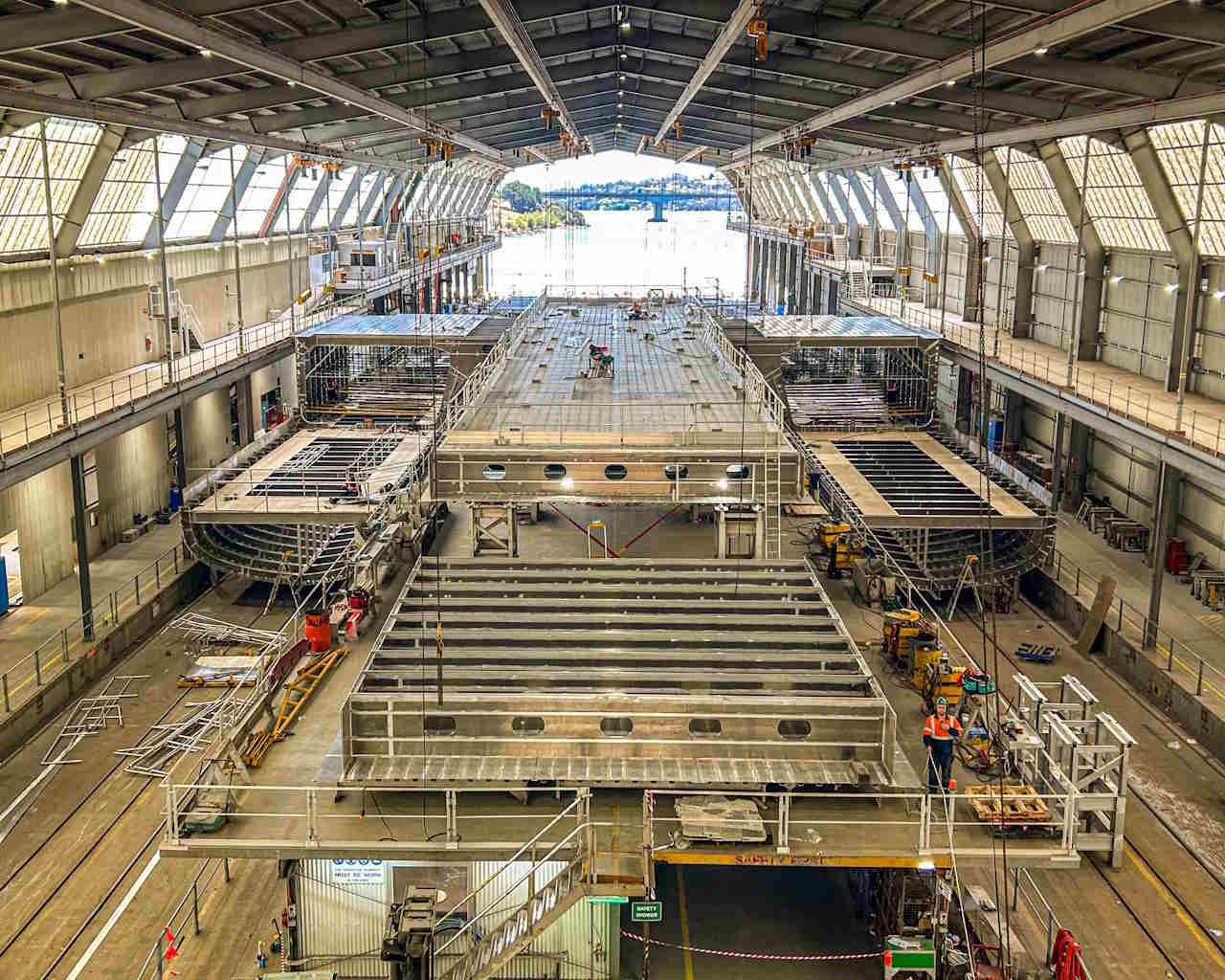
Australian shipbuilder Incat Tasmania has been selected to design and build a third new battery electric ferry for Danish ferry operator Molslinjen in what it says is part of the “world largest electrification project at sea.”
Incat Tasmania announced in July that Molslinjen had selected it to build two new battery electric ferries for the busy Kattegat route between Jutland and Zealand. The company says Molslinjen has now contracted Incat to build a third electric ferry at its Hobart shipyard for the same route.
Each of the three high-speed ferries will measure 129 metres in length and will be 100 per cent battery powered. They will feature 45 megawatt hour batteries, and will each carry up to 1,483 passengers and 500 cars, operating at speeds over 40 knots,
“This is an important milestone for both organisations,” said Stephen Casey, CEO of Incat Tasmania.
“Molslinjen is leading the way in the decarbonisation of high-speed ferry services in Europe, and we are proud to be delivering vessels that will play a central role in Denmark’s clean-transport future.
“This additional order reflects Molslinjen’s confidence in our people, our processes and our capability to build the world’s most advanced electric high-speed ferries. Together, we are showing what’s possible when innovation, ambition and real-world operational needs come together.”
Incat Tasmania operates out of Australia’s largest commercial shipyard, located on the River Derwent north of Hobart and one of the few globally capable of producing large aluminium vessels for the international market. Given its location in Tasmania, the shipyard is also able to rely on 100 per cent renewable energy.
“By building all three ferries at the same shipyard, we gain clear advantages and valuable learning from the first to the last vessel,” said Kristian Durhuus, Molslinjen CEO.
“And it is also important for us to have a stable and reliable partner, as we do with Incat. We and our owners are taking the lead and trying to show the way forward in the green transition using technology that, until recently, simply did not exist.”

Joshua S. Hill is a Melbourne-based journalist who has been writing about climate change, clean technology, and electric vehicles for over 15 years. He has been reporting on electric vehicles and clean technologies for Renew Economy and The Driven since 2012. His preferred mode of transport is his feet.