
A rule change proposed by European fuels and cars industries to allow new combustion engines running on biofuels to be sold after its 2035 deadline for zero-emission cars could result in an unsustainable spike in demand for biofuels from waste feedstocks like animal fats and used cooking oil.
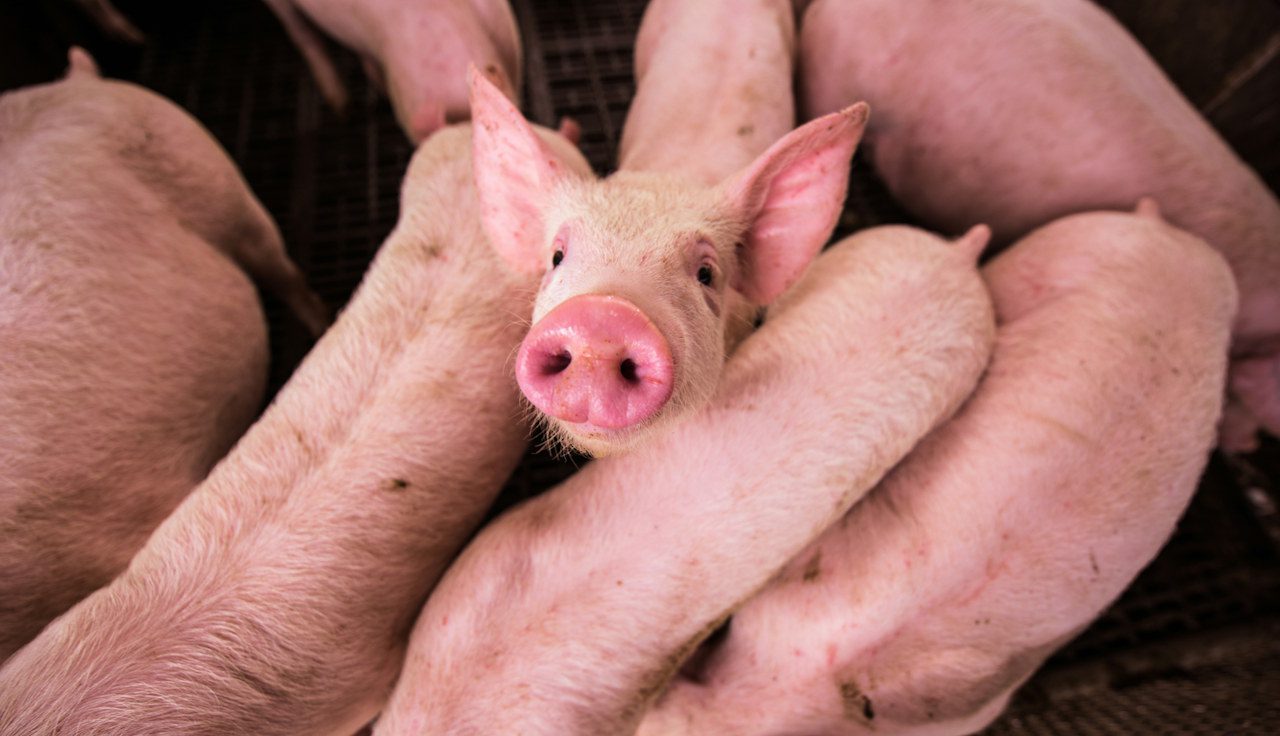
According to the European Federation for Transport and Environment (T&E), Europe’s leading advocates for clean transport & energy, a car running on animal fats would, for example, require the equivalent of 120 pigs a year.
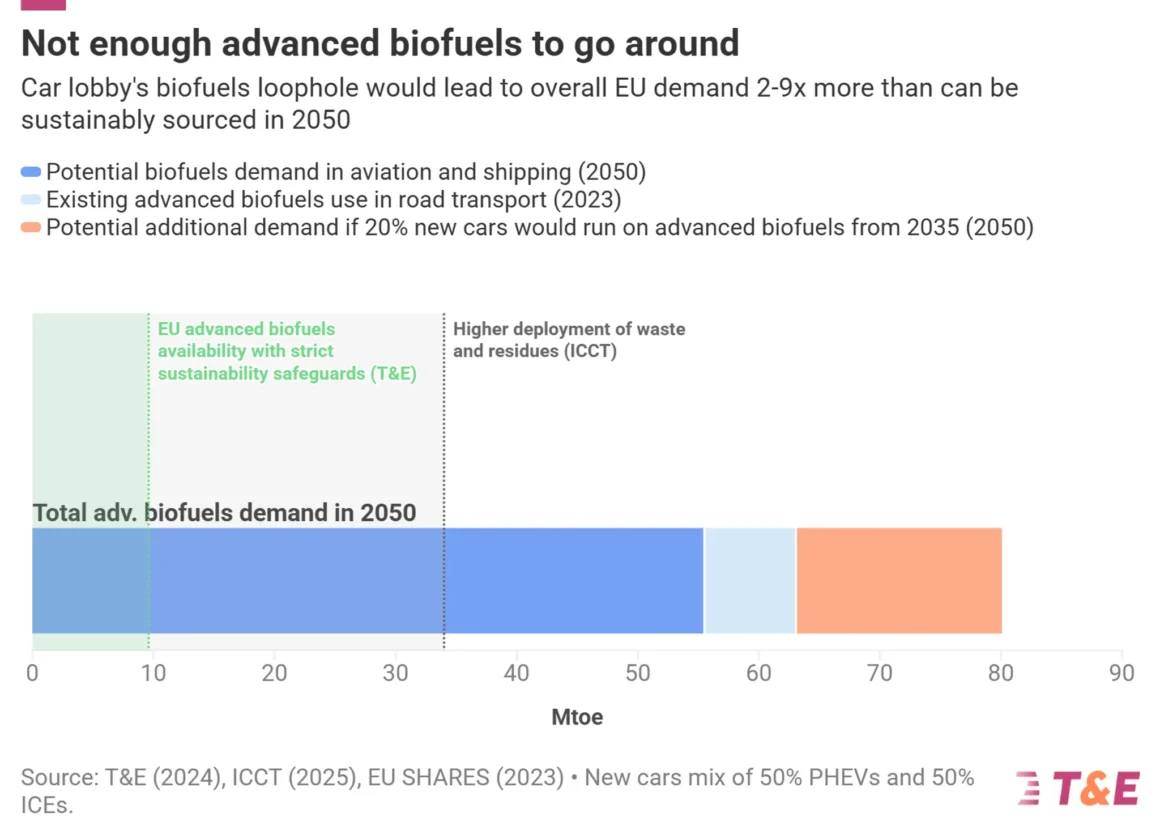
This would see cars, planes, and ships consume anywhere between two- to nine-times more advanced biofuels than can be sustainably sourced in 2050.
The findings come from a new report published by T&E late last week entitled Biofuels in cars: A dead end for Europe, which analysed the effect of allowing the so-called “biofuels loophole” in the EU 2035 cars law, which bans the sale of new petro land diesel cars in the European Union from 2035.
Implementing the loophole is supported not only by European fuels and cars industries, but also the Italian government.
But to include such a loophole would immediately consume the already limited supplies of sustainable advanced biofuels which are currently required for hard-to-decarbonise sectors like aviation.
Based on current European targets, planes and ships alone will already require approximately double the amount of advanced biofuels that can be sustainable sourced in Europe in 2050 under what T&E describes as “the most optimistic scenario”.
The issue is that advanced biofuels such as waste-based fuels are not scalable, with Europe already importing more than 80 per cent of its used cooking oil from countries like China and Malaysia.
Another popular waste feedstock is animal fats, but European cars already use 1.3 million tonnes of animal fats per year – the rough equivalent of 200 million slaughtered pigs.
To put these two examples into further perspective, adding new cars running on animal fats would require around 120 pigs per car each year. Or a new car running on used cooking oil would require an additional 25-kilograms of fries to be cooked each day.
“The push for biofuels is absurd,” said Lucien Mathieu, cars director at T&E.
“Europeans can’t eat enough pork or fries to sustainably run even a fraction of Europe’s cars let alone its ships and planes. Why are the car and oil lobbies flogging non-solutions when we have a ready technology in electric cars? This is nothing but a delay tactic that will leave Europe uncompetitive in the global EV market.”
Given the unlikelihood of a sudden European increase in the consumption of pork and fries, the huge gap between demand and the availability of sustainably sourced biofuels would massively increase Europe’s dependency on imports.
Increasing the region’s dependency on biofuels imports would also increase the risk of fraud where virgin palm oil and other edible vegetable oils are passed off as waste oils.
These claims of fraud have been backed up by previous T&E investigations. For example, one T&E investigation found that Europe imports three times more used cooking oil from Malaysia than can be collected in the country. In another investigation, T&E showed that Europe imports more palm oil mill effluent – a palm oil byproduct – than can be collected globally.

Joshua S. Hill is a Melbourne-based journalist who has been writing about climate change, clean technology, and electric vehicles for over 15 years. He has been reporting on electric vehicles and clean technologies for Renew Economy and The Driven since 2012. His preferred mode of transport is his feet.