Image: Tesla
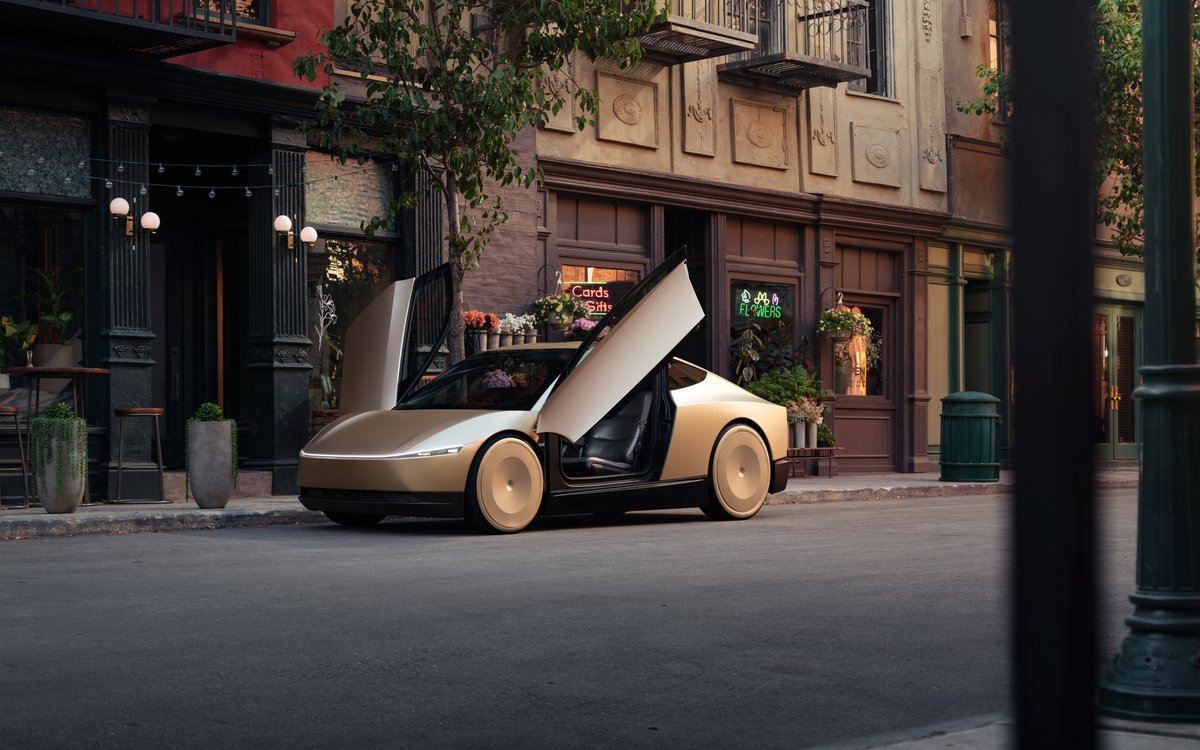
Tesla has been developing autonomous driving technologies for almost a decade. The company has aimed to scale its efforts by building a purpose-built Robotaxi it calls the Cybercab, which doesn’t have a steering wheel or pedals.
At the company’s annual shareholder meeting last week, where CEO Elon Musk’s trillion-dollar package was approved, the company has revealed that production of the Cybercab will begin in 5 months at its Austin, Texas factory.
In the shareholder’s deck, the company shared photos of the pilot production line as it aims to begin production of the unique two-seater vehicle in April 2026.
This update brings comes within a month of the initial announcement at the earnings call that the Cybercab Robotaxi will go into production in the second quarter of 2026, helping the company increase its sales target to 3 million cars in the next 24 months.
Tesla aims to use this model to further expand its Robotaxi network in the US before going to international markets.
At the shareholders meeting, the company also provided update on its next steps within the US to expand it’s Robotaxi operations, which are currently being offered in parts of Texas and California.
According to Musk, the company will be expanding into 5 new cities next using the Model Y Robotaxi fleet it currently has. These include Dallas and Houston in Texas, Las Vegas in Nevada, Phoenix in Arizona and Miami in Florida.
Back to the Cybercab model, the latest update also shows slight updates to the design of the vehicle which was first showcased at the company’s “We, Robot” event in 2024.
The major difference between the original demo and the new vehicle is the frameless window design, similar to the company’s most popular models, the Tesla Model 3 and Model Y.
There are also other smaller updates such as ambient lighting on the inside and the use of similar interior design on the dashboard.
These updates appear to help simplify the design of the Cybercab, which, according to previous reports by Tesla’s engineers, will have only half the parts of a Tesla Model 3.
That’s what will help bring the cost of the circa $A45,000 self-driving robotaxi down, helping the company scale a lot quicker than the very specialised vehicles seen by its competitors like Waymo in the US.
Riz is the founder of carloop based in Melbourne, specialising in Australian EV data, insight reports and trends. He is a mechanical engineer who spent the first 7 years of his career building transport infrastructure before starting carloop. He has a passion for cars, particularly EVs and wants to help reduce transport emissions in Australia. He currently drives a red Tesla Model 3.
EV sales rebound in February and are nearly double their levels of a year ago…
Queensland’s rumoured e-bike licensing plan may sound like a safety measure, but it risks discouraging…
Australia Post plans to expand what is already Australia’s largest electric vehicle fleet, adding more…
EVs take 98 pct share of Norway market, leaving petrol cars with just 12 sales…
EV sales bounce up with early data revealing Tesla Model Y rebounded strongly from a…
A full breakdown of all electric vehicle sales by month in Australia in 2026. Latest…