
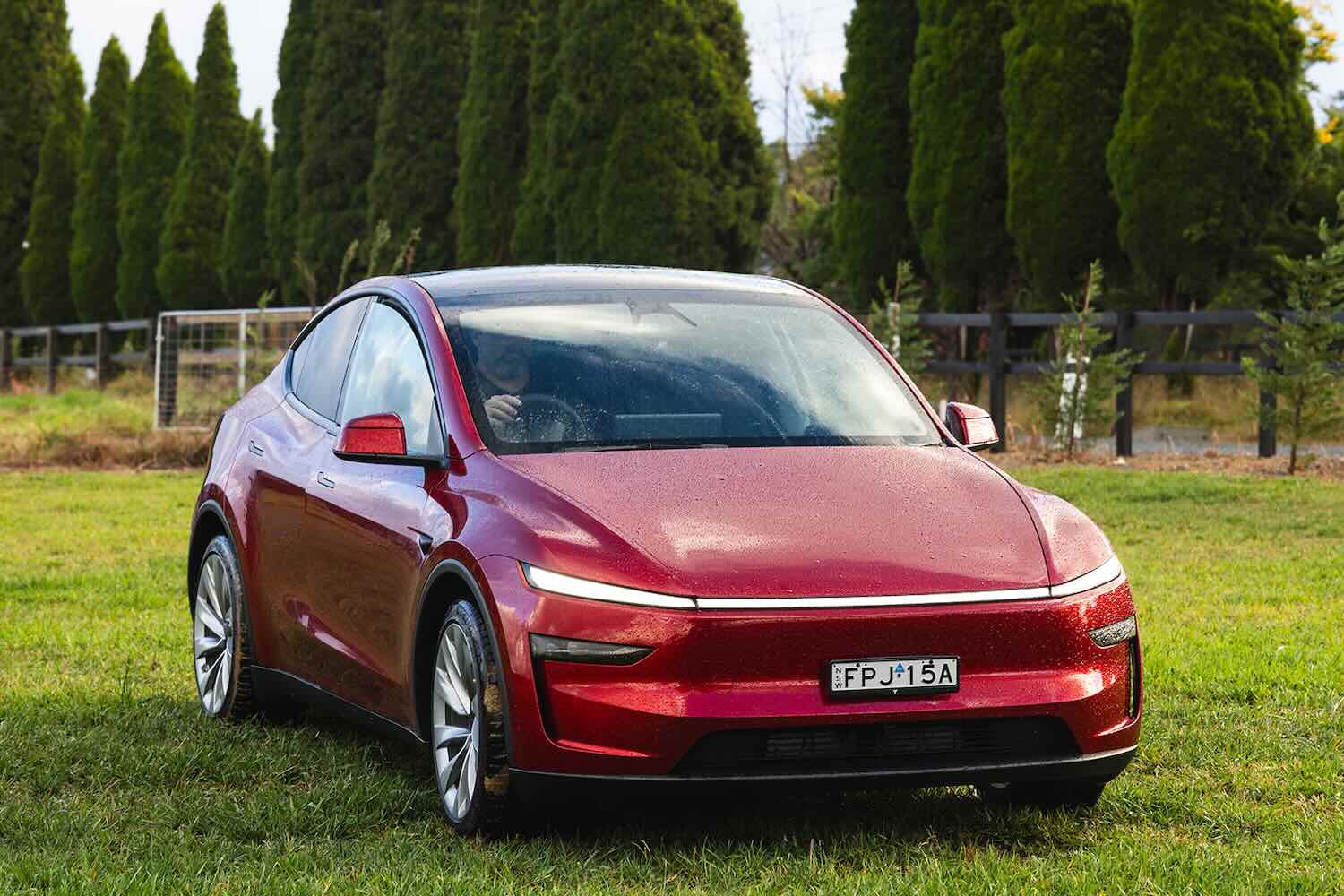
Tesla has long been Australia’s most popular EV brand, but with steadily growing model choice and fierce competition from BYD in second place, Tesla’s tight grip on the top spot appears to be weakening.
BYD has already outsold Tesla during 3 months of this year in April, July and August, going from strength to strength with 42% year over year growth up to and including September.
Extremely low Tesla sales of just 500 in April were subsequently explained away by logistical issues, although a year to date fall of 26% shows there is clearly more to the story.
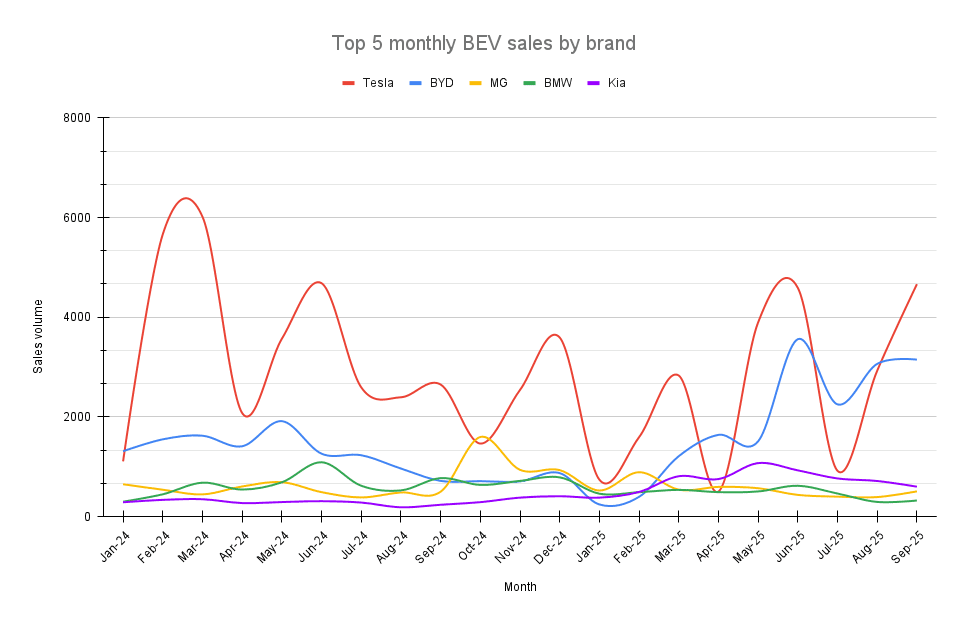
Despite Tesla’s decreasing volumes, they still hold a significant lead of 22,653 YTD sales vs 17,019 for BYD. Unless something unforeseen happens in the final quarter, it looks like Tesla will retain the number one position for 2025 at least.
Tesla’s historical dominance of the Australian EV market is best demonstrated by them selling the majority of all EVs until the middle of 2023, when things started to get more interesting.
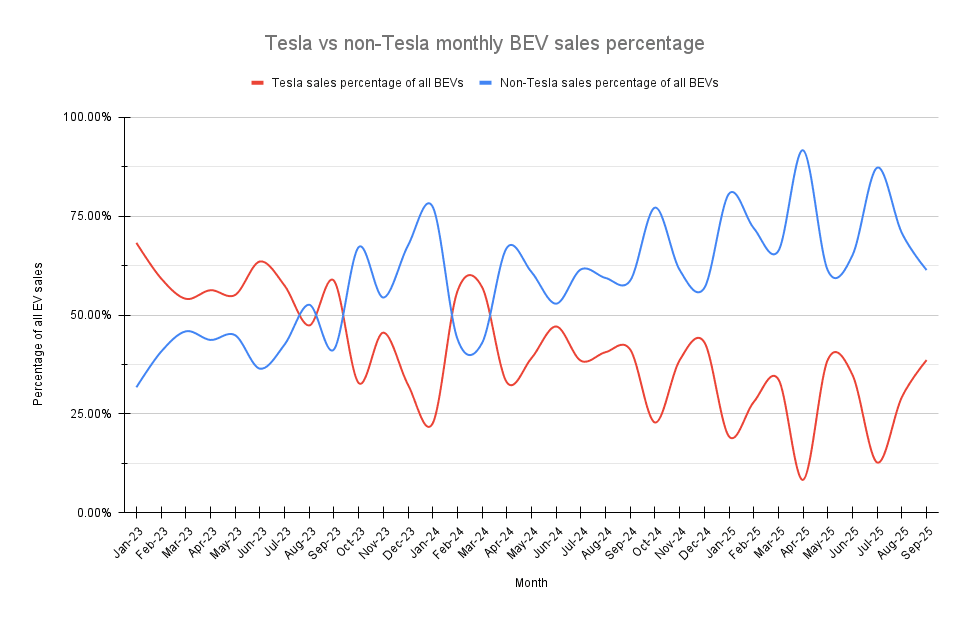
Apart from February and March 2024 that coincide with the arrival of the refreshed Model 3, Tesla sales have accounted for less than half of all BEV sales since October 2023.
Two more things are obvious from this second chart, Tesla sales are highly variable month to month, and as a percentage of the total BEV market they are undoubtedly trending downwards, with the gap between Tesla and non-Tesla widening as time goes on.
This trend is caused by a few different factors, with the drop in Tesla sales as mentioned above clearly having an impact. How much of this decline is due to waning support for Elon Musk is hard to tell, but the topic reliably sparks internet debates and lively comment threads from both sides of the Tesla camp.
Increased market competition and huge growth in model choice from other automakers is the other main factor. Back in October 2023, our EV models page listed 56 currently available models. This figure has now ballooned to 102 models in October 2025, with nearly 30 more on the horizon.
With just the Model 3 and Model Y in Tesla’s local lineup, they are looking increasingly stale despite significant refreshes, new variants and Full Self Driving (Supervised) to make them more interesting in recent times.
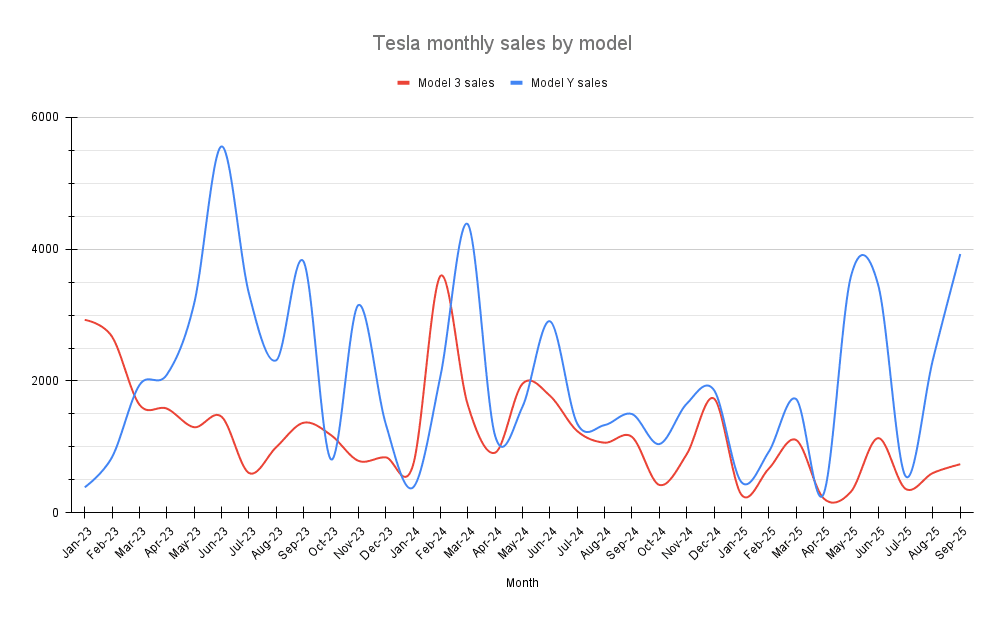
In contrast, BYD’s approach of introducing new models regularly seems to be paying off for them, in particular the Sealion 7 which quickly shot up to number 2 on the sales charts behind the Tesla Model Y. It looks unlikely to challenge the Model Y though, with less than half the sales of Tesla’s most popular model.
Two more electric vehicles will be joining the BYD lineup in November, the Atto 1 hatchback pictured below as well as the Atto 2 small SUV. With an expected price tag of roughly $25,000, the Atto 1 will comfortably slot underneath the BYD Dolphin Essential as Australia’s cheapest EV.
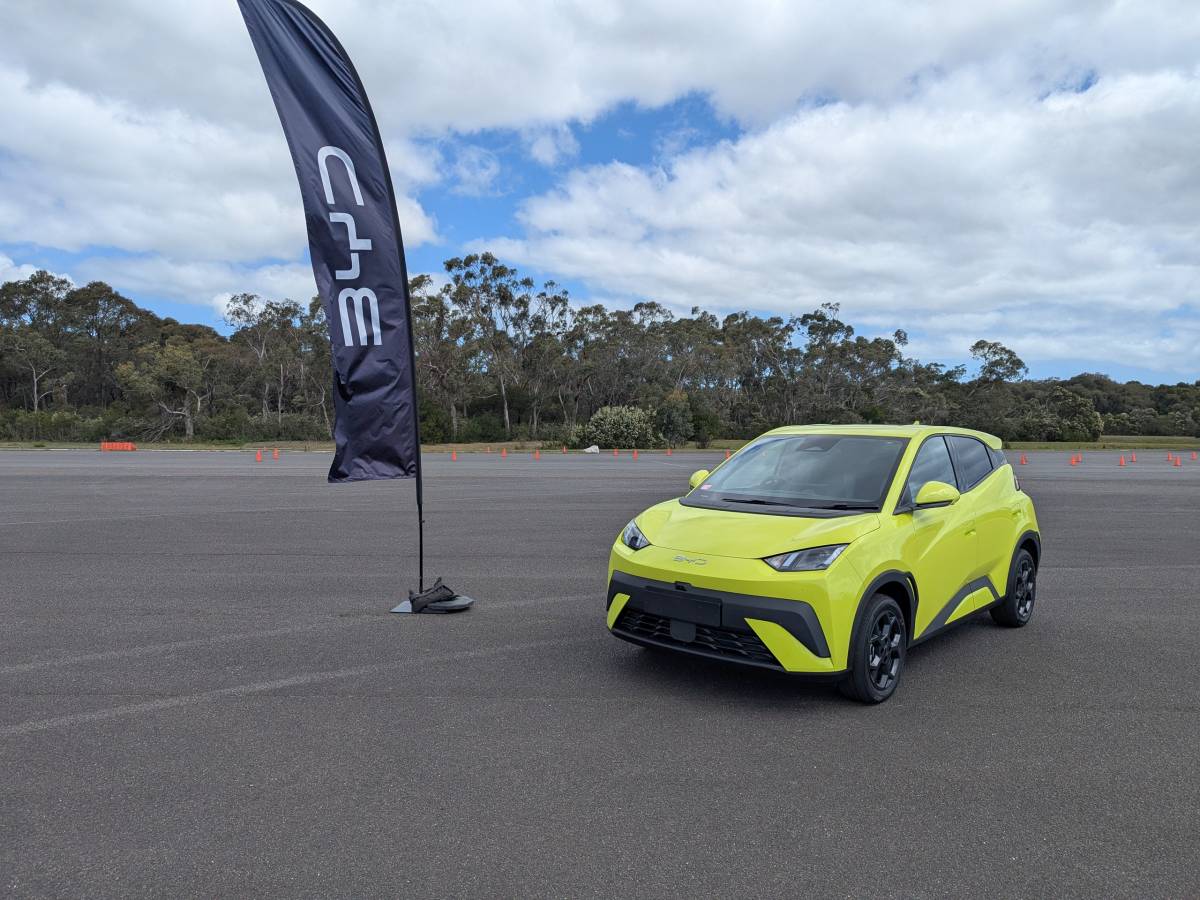
BYD has set expectations for Atto 1 and Atto 2 at roughly 300 sales per month each. By taking these numbers and adding 600 vehicles per month to BYD’s 2025 YTD figures, it would bring their total estimated sales to 22,419, very close to Tesla’s actual figure of 22,653.
With strong year over year growth for BYD and 2 new models soon to be launched, I think 2025 might be the final year that Tesla holds onto the top spot as Australia’s most popular EV brand.
See also The Driven’s sales data here: Australian electric vehicle sales by month in 2025 – by model and by brand

Tim has 20 years experience in the IT industry including 14 years as a network engineer and site reliability engineer at Google Australia. He is an EV and renewable energy enthusiast who is most passionate about helping people understand and adopt these technologies.