Image: Beijing Hyundai via Weibo
South Korea car maker Hyundai has been rolling out a series of premium EVs over the last couple of years, and now has started pre-sales of what could be its lowest cost so far.
In China this week, Hyundai, through a joint venture with BAIC Motor, launched a new electric SUV with prices starting at the equivalent of less than $A28,200.
According to reports from cnevpost, Hyundai will launch the EO mid-sized SUV in three variants, ranging from $A28,120 up to $A$32,500.
This new model will also be built on the company’s E-GMP platform, carried over from the Ioniq 5 and Ioniq 6, which should mean faster charging speeds on some variants.
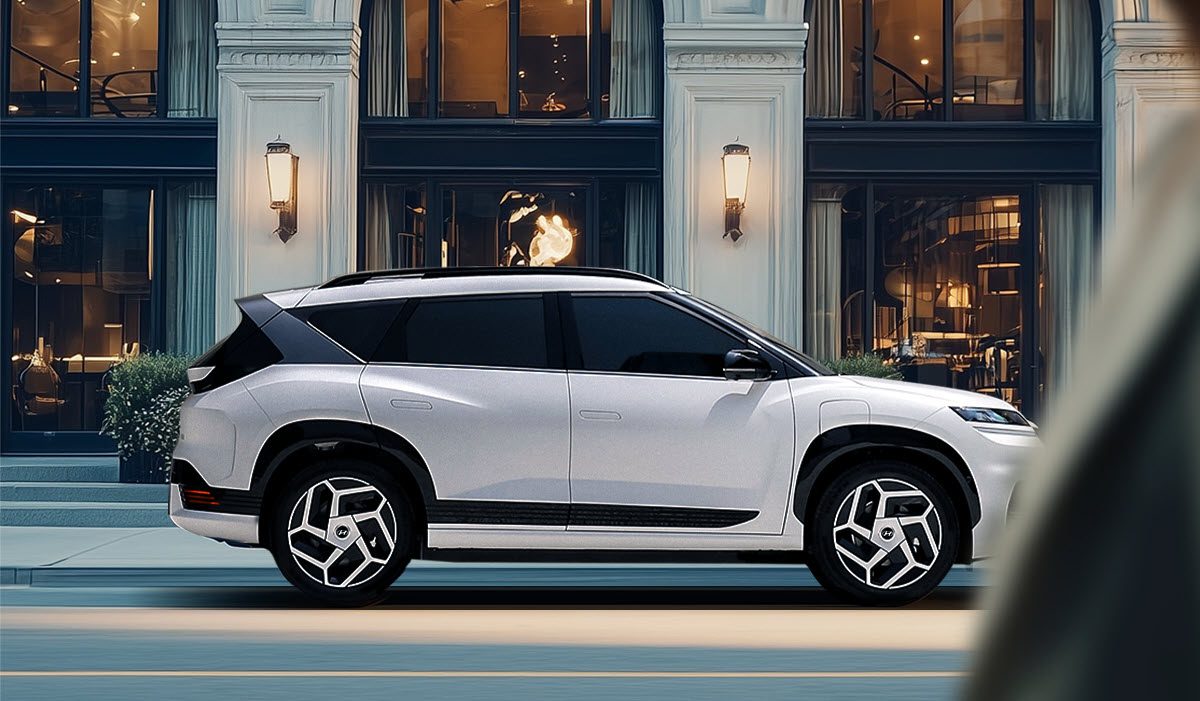
Coming in with a length of just over 4.6 metres, it’s expected to be closer to the Ioniq 5 but in a more traditional SUV body.
This means that it could compete with the Geely EX5, BYD Atto 3 and upcoming Leapmotor B10 in the Australian market.
Over the years, Hyundai has grown its EV lineup in Australia with models such as the Ioniq, Ioniq 5, Ioniq 6, Kona Electric and more recently, its smallest most affordable model, the Inster as well as its most expensive, the Ioniq 9.
The new EO is one of Hyundai’s Chinese-developed models, which was previously known as the Hyundai Elexio.
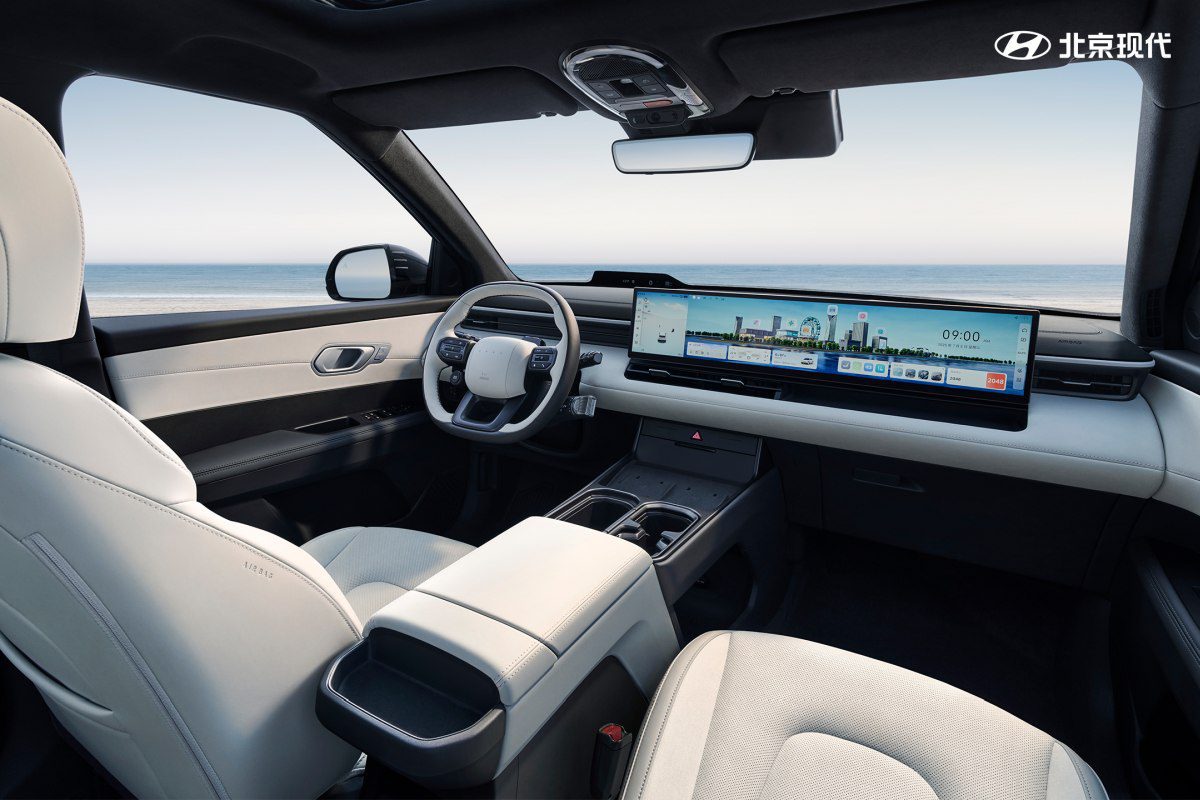
It features a large 27-inch centre display screen and is quite different from existing models in Hyundai’s lineup in terms of screen placement and size.
This new model also features pedal shifters like a few other Hyundai electric cars, helping the driver adjust regenerative braking when on the go.
From the outside, the car has flush door handles and reminds us a little bit of the Range Rover Evoque.
In June this year, the regulatory approval by the Ministry of Industry and Information Technology (MIIT) in China for the Hyundai EO, revealed two powertrains.
The first is a front-wheel-drive version of the car that will have a 160 kW motor and 310 Nm of torque. For those wanting more power, an all-wheel-drive model will add 73 kW to the rear, bringing the total power output to 233 kW.
On the battery front, the car will feature a Lithium Iron Phosphate (LFP) battery from BYD-owned FinDreams. This could be a similar arrangement to the Kia EV5, which is currently delivered in Australia and also has batteries from FinDreams.
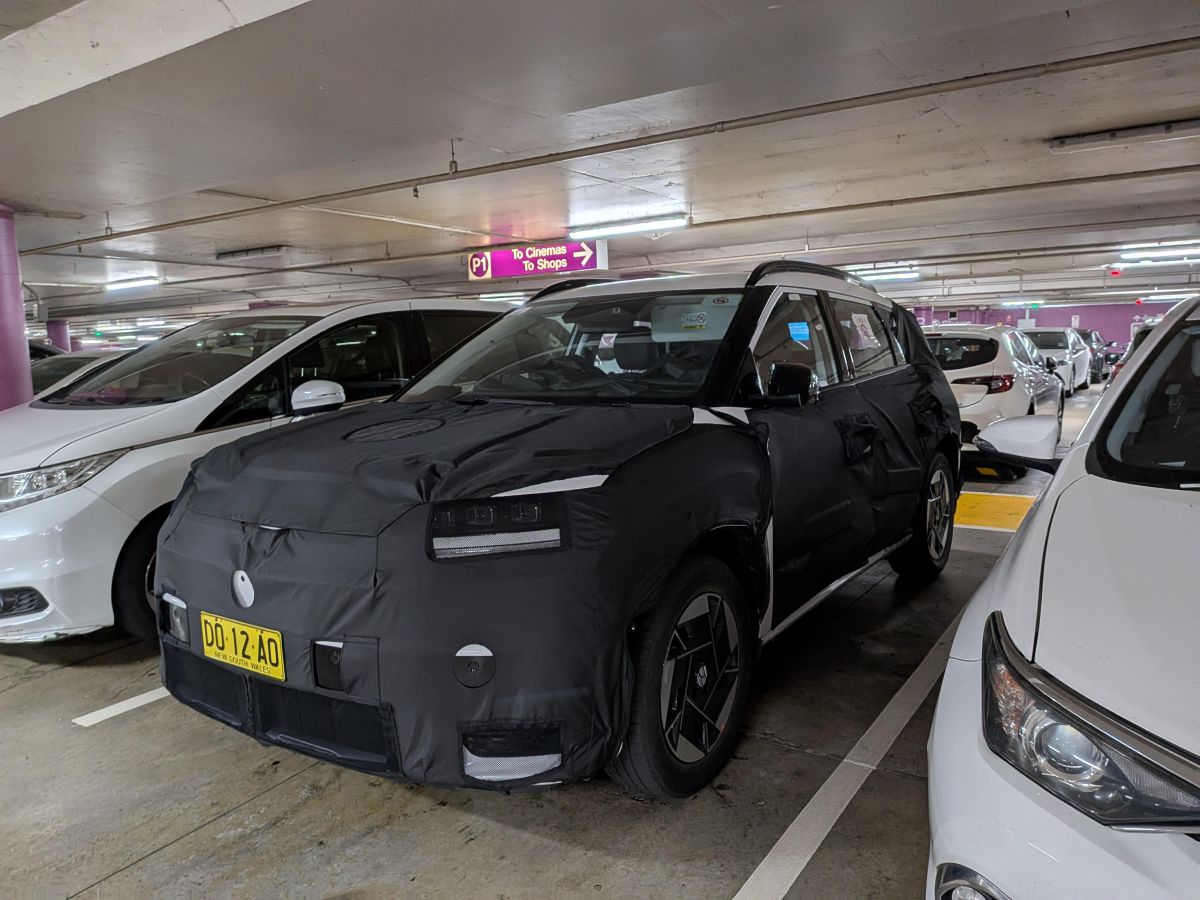
In July, a test vehicle resembling the EO was spotted being tested in Sydney, Australia, hinting at a potential variant being sold in our market, too.
Given that this test vehicle has been spotted in Sydney, Hyundai may be working on a version to be sold in international markets as well.
If that’s the case, it could be a successor to the Kona Electric or slot just above it in its local lineup. We look forward to keeping an eye on this model’s movement because, as we’ve seen with the Kia EV5’s success in local sales, this could be the model that becomes Hyundai’s electric best-seller in 2026.
Riz is the founder of carloop based in Melbourne, specialising in Australian EV data, insight reports and trends. He is a mechanical engineer who spent the first 7 years of his career building transport infrastructure before starting carloop. He has a passion for cars, particularly EVs and wants to help reduce transport emissions in Australia. He currently drives a red Tesla Model 3.
The drop-off and pick-up line has become a cleaner, quieter place at the primary school…
It is clear, though, from the wide variety of different apps available in Australia that…
BYD's next affordable Seal EV sedan to feature new blade battery tech that can charge…
MG extends price cuts on its MG4 electric hatchback and adds a charging hub to…
EV lobby says tax cuts for electric cars and reintroducing state-based rebates could help more…
As petrol prices climb, the economics of going electric look increasingly compelling. New modelling reveals…