
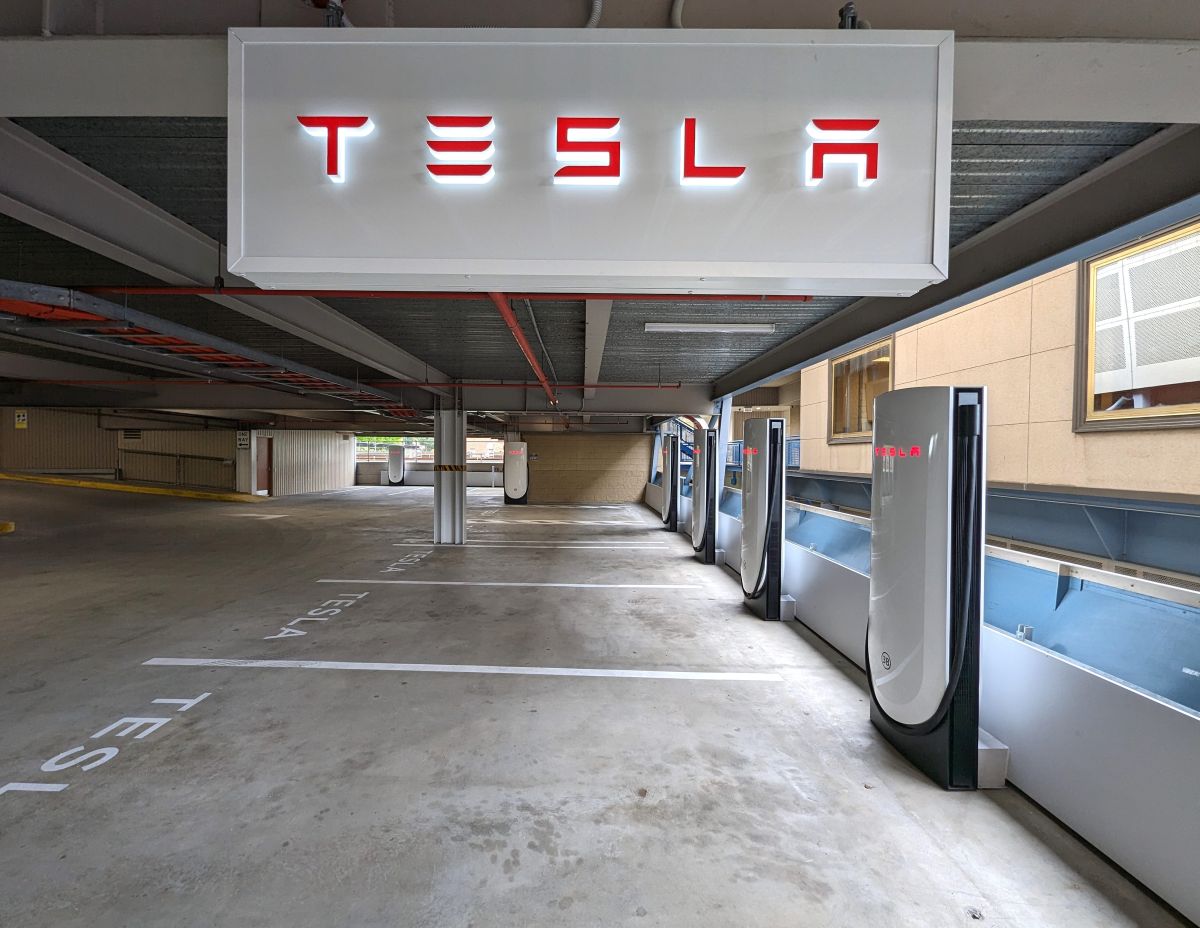
In November 2024, Tesla officially launched the updated V4 cabinet, with the potential to double the supercharging speeds to 500 kW, while supporting a range of high-voltage architectures.
Now, the first of those sites appears to be under construction, bringing with it the latest charging tech from the world’s leading EV manufacturer.
In a post on X, Tesla charging expert, MarcoRP, said: “The world’s first ‘real’ V4 station is now under construction in Campbell, California”.
Plans of the new site were also shared, outlining the site’s layout with the new V4 cabinets, and the new faster charging bays using Tesla’s North American Charging Standard (NACS) compatible plugs.
In Q4 2024, Tesla formally unveiled its V4 supercharging cabinets, which are expected to deliver twice the charging speeds of up to 500 kW per stall for compatible cars. For trucks, this would be as high as 1.2 MW per stall.
The new V4 cabinets that power the dispensers can now cover voltages between 400 and 1,000 V, catering to vehicles by delivering faster speeds to those from Hyundai, Kia, Porsche, and Tesla, including the Cybertruck.
Along with faster charging capabilities of the V4 cabinets, the next generation system is capable of having up to 8 stalls, which is double the current 4 stalls per cabinet seen at sites today.
At the time of unveiling, Max de Zegher, director of Tesla charging in North America, said: “Posts can peak up to 500kW for cars, but we need less than 1MW across 8 posts to deliver maximum power to cars 99% of the time,”.
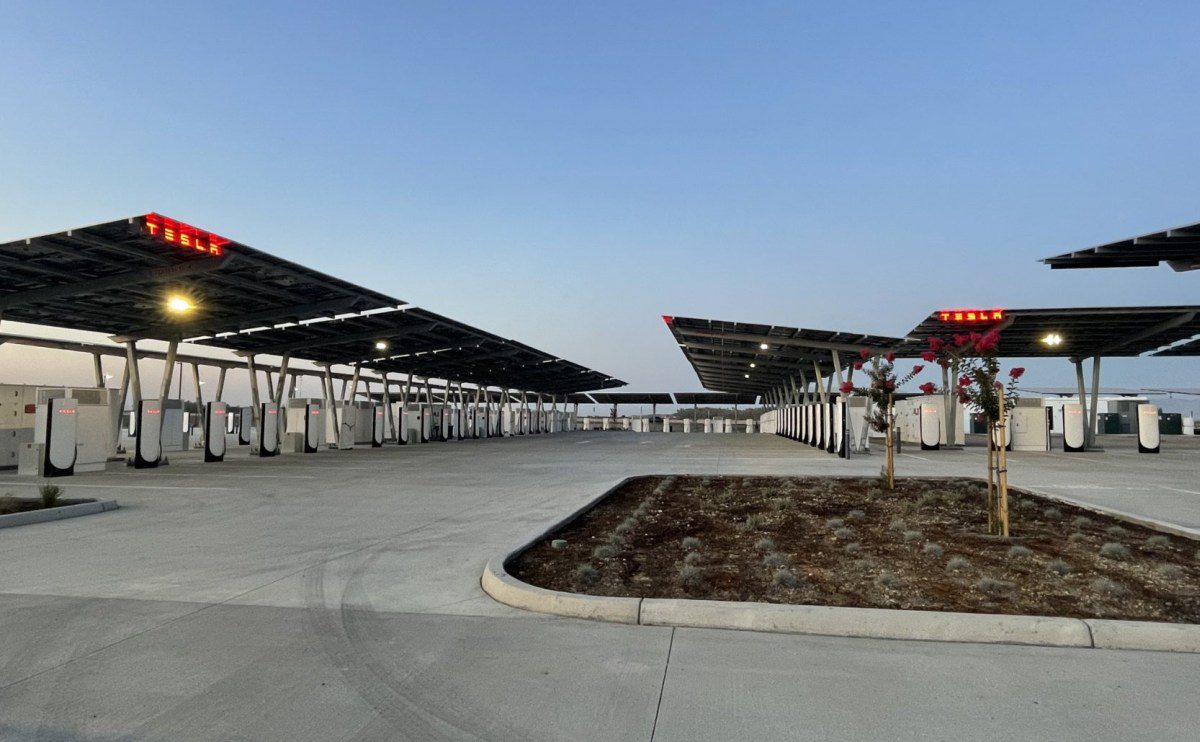
“No more DC busbar between cabinets. Power comes from a single V4 cabinet to 8 stalls. Easier to install, cheaper, more reliable. Even some of the small incremental improvements matter. V4 Cabinet has a 2% efficiency improvement. Superchargers already deliver over 5 TWh/year, 100 GWh/year in waste heat that can be saved.”
Tesla also disclosed that the new cabinets and electrical setup will reduce complexity and, more importantly, will lower the space needed at each site for the cabinets, which will make rolling out of sites much faster. It said that the V4 cabinet hardware is designed with reliability in mind, delivering 3 times the power density with lower costs.
With the first V4 cabinets-equipped site under construction in California, it would be interesting to see the charging speeds vehicles can achieve.
We look forward to seeing similar hardware being deployed in Australia, where Tesla recently surpassed 130 active sites across the country.
What’s even better for EV adoption is that some of these sites offer off-peak pricing of as low as 35 c/kWh for Tesla vehicles and around 48 c/kWh for non-Tesla cars.
The latest V4 cabinets and deployment should bring lowered costs that would help keep Tesla supercharger prices low, making driving electric a bit of a no-brainer.

Riz is the founder of carloop based in Melbourne, specialising in Australian EV data, insight reports and trends. He is a mechanical engineer who spent the first 7 years of his career building transport infrastructure before starting carloop. He has a passion for cars, particularly EVs and wants to help reduce transport emissions in Australia. He currently drives a red Tesla Model 3.