

A fleet of all-electric construction machines from Volvo Construction Equipment (Volvo CE) and Volvo Trucks has been undertaking demolition work in Erlangen, Germany in what the Swedish companies describe as a world first.
German technology giant Siemens has been spending €500 million redeveloping its Erlangen research centre since 2013 into the Siemens Technology Campus, and is aiming for zero-emission and adhering to the highest sustainability standards.
There had been no thought, however, to making the deconstruction process similarly emission-free, until Volvo CE and demolition specialists Metzner Recycling got involved.
There were good reasons for considering using all-electric equipment for demolition work, including nearby offices that would remain in use throughout the work. The reduced noise levels of the electric machines therefore provided a major advantage, minimising local disruption while maintaining productivity.
Relying solely on electric machines also eliminated the need for air filtration systems and actually sped up demolition tasks.

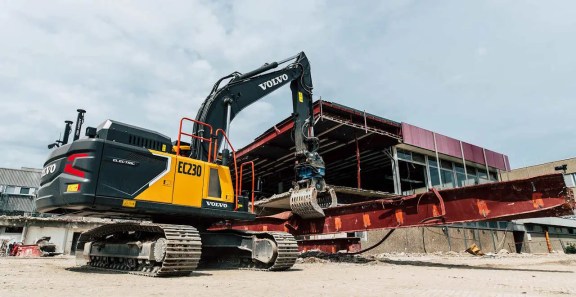
According to Volvo CE, any initial operator qualms at the use of an all-electric fleet of demolition machines were quickly erased, with feedback pointing to their impressive power, responsive handling, and quiet, emission-free performance.
The plug-in charging process – which replaced the need for traditional on-site refuelling – also proved a hit and was backed by a custom on-site transformer providing a direct connection to the grid and access to certified renewable electricity.
https://www.youtube.com/watch?v=1bjmjZ4hiPc
In total, five electric machines from Volvo CE, electric trucks from Volvo Trucks, and a battery-powered demolition robot from Husqvarna, were used to deconstruct three buildings across nearly 25,000 cubic meters.
The machines handled everything from selective gutting to concrete crushing and materials transport and marks the first full-scale electric deconstruction of its kind.
“Our transformation is no longer a vision, but a reality,” said Therese Schmitz-Hillebrecht, head of market area Central Europe at Volvo CE.
The five Volvo CE machines included
- a Volvo ECR18 Electric compact excavator with hydraulic breaker, which operated inside the buildings to perform precise break-up and demolition of concrete and masonry;
- a Volvo L20 Electric wheel loader that transported materials from inside the buildings;
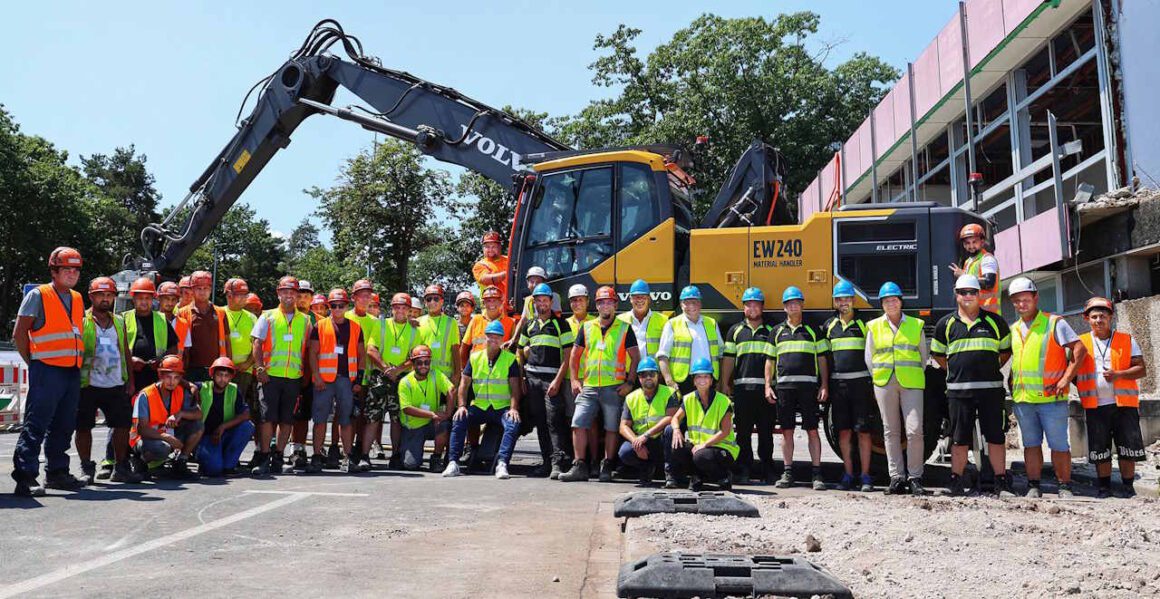
- a Volvo EW240 MH Electric grid-connected material handler for exterior deconstruction and handling;
- a Volvo EC230 Electric crawler excavator for deconstruction, concrete cutting, and crusher feeding;
- and a Volvo L120 Electric wheel loader that transported materials to and from the electric crusher.
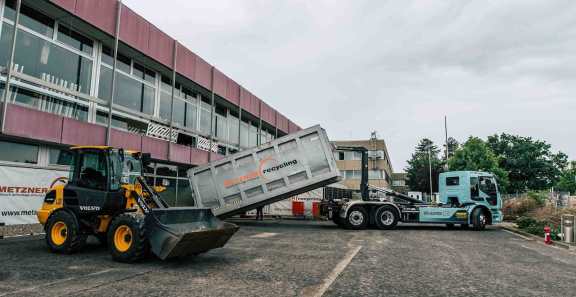

At the end of the deconstruction process, the machines sorted and processed approximately 12,800 tonnes of construction waste and sent an impressive 96 per cent of the waste to be recycled into raw materials for future use.
“This groundbreaking electric deconstruction project boasts an impressive 96% recycling rate and is a testament to our commitment to achieving excellence in sustainability,” said Christian Franz, head of sustainability at Siemens Real Estate, which is implementing construction of the new Siemens Technology Campus.
“This project illustrates how partnerships and determination can create a lasting impact and help shape a more sustainable real estate industry.”

Joshua S. Hill is a Melbourne-based journalist who has been writing about climate change, clean technology, and electric vehicles for over 15 years. He has been reporting on electric vehicles and clean technologies for Renew Economy and The Driven since 2012. His preferred mode of transport is his feet.