German researchers say they have dismantled batteries from both Tesla and BYD to see what is inside and how they are made, and they concluded that BYD’s are more efficient.
Tesla and BYD are two of the main manufacturers of electric vehicle (EV) batteries in the world but nevertheless keep as much secret as possible about their specific battery technology.
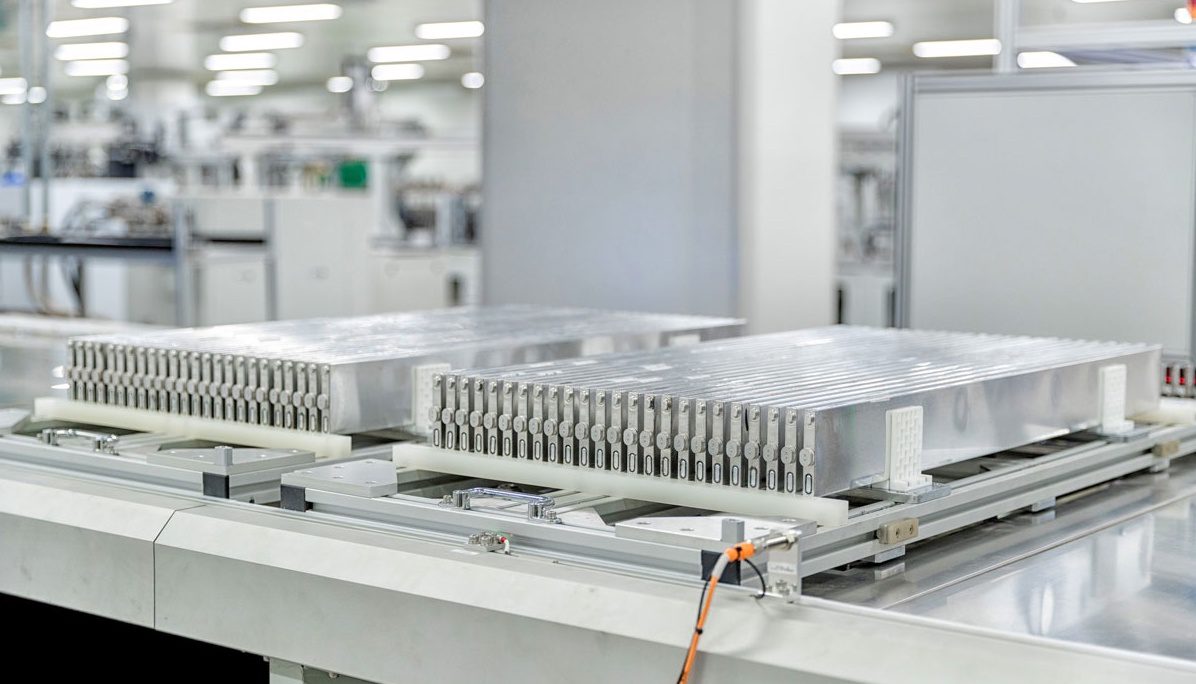
Seeking to unravel the mysteries of the Tesla 4680 cell and BYD Blade cell, researchers from RWTH Aachen University in Germany took apart each battery to determine the specific design and performance features of each.
In findings published in the journal Cell Reports Physical Science, the researchers assessed the mechanical designs and dimensions of the cells, the exact material compositions of their electrodes, and the electrical and thermal performance of the battery cells.
The researchers also believe they have deduced the processes used to assemble the cells and the material costs.
The top line findings reveal that Tesla’s batteries prioritise high-energy density and performance, whereas BYD’s batteries focus on volume efficiency and lower-cost materials.
As such, BYD’s batteries are more efficient due to allowing for easier thermal management.
The BYD Blade cell uses a lithium iron phosphate (LFP) electrode chemistry while the Tesla 4680 cell uses an NMC811 chemistry, “resulting in energy densities of 160Wh/kg and 355.26Wh/l and 241.01Wh/kg and 643.3Wh/l, respectively, on the cell level.” Both cells, however, utilise graphite anodes without silicon dioxide.
“There is very limited in-depth data and analysis available on state-of-the-art batteries for automotive applications,” said Jonas Gorsch, a researcher at Production Engineering of E-Mobility Components at RWTH Aachen University in Germany and lead author of the study.
“We were surprised to find no silicon content in the anodes of either cell, especially in Tesla’s cell, as silicon is widely regarded in research as a key material for increasing energy density.”
Each battery delivered what the team described as “significant differences” in the speed at which the battery charges or discharges relative to its maximum capacity.
Similarly, the researchers conclude that the “main difference between the Tesla 4680 cell and BYD Blade cells is their formats: BYD uses a large prismatic cell format, while the Tesla 4680 cell is a large cylindrical cell with a significantly lower volume.”
There were similarities between the two batteries, such as in the way they connect their thin electrode foils, which the researchers believe is done with laser welding (Tesla) or a combination of laser and ultrasonic welding (BYD). This, compared to the more common ultrasonic welding used across the rest of the industry.
And, while the BYD cell is much larger than the Tesla cell, the fraction of passive cell components such as current collectors, housing, and busbars, remains similar.
Gorsch concluded that the two batteries achieve “highly innovative” but “fundamentally different” design approaches, though admitted that further research is needed to determine the impact of mechanical cell-design choices on electrode performances in EV batteries, as well as the lifespans of the Tesla and BYD cells.
“The findings provide both research and industry with a benchmark for large-format cell designs, serving as a baseline for further cell analysis and optimization,” said Gorsch, adding that the data can help battery-cell developers make informed choices when deciding on format, size, and active materials.