
Hi Bryce
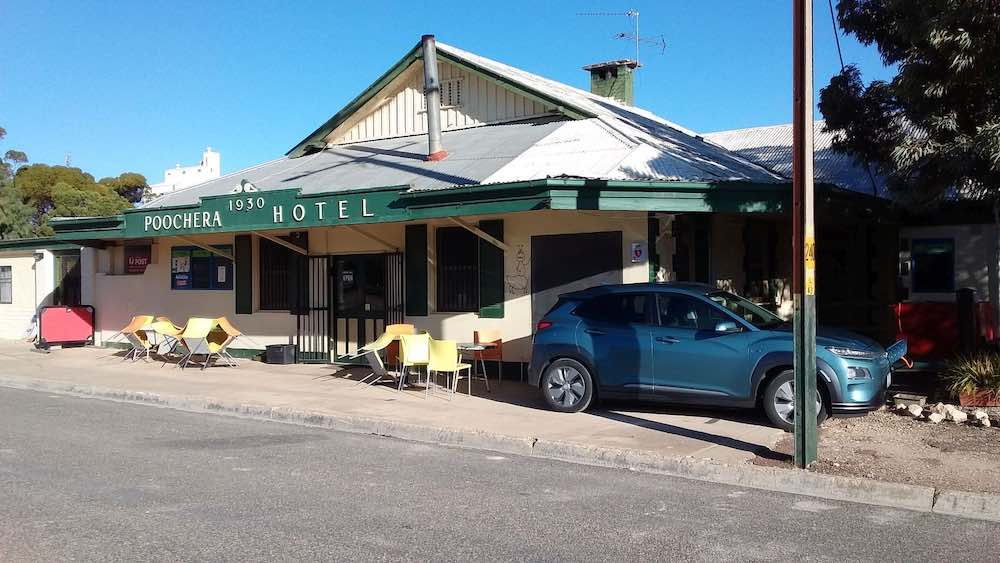
I live in rural WA and own a Kona EV – my 2nd, first one purchased in 2019, packaged with an EV charger, Delta AC Mini Plus Charger, (Type 2).
Twice, when charging my Kona, the fuse on my supply pole has blown and I have called Western Power. Their diagnosis, after two visits, was that my car was drawing too much power/current, even when nothing else but a couple of lights and two small fridges were running. I asked AEVA members but it seems city dwellers haven’t had this problem.
Now when I charge my own car, or visitors charge their Konas or Teslas I ensure that no other power user is on (heating, air-conditioning, toaster, plug in induction cook top, etc) and ask owners to reduce the charging rate on their cars. Also on my car I set it to charge at 4.5 (mid range, and not 7.5). My charger is not smart/not adjustable.
My question is: can an Atto3 be set to take in charge at a reduced rate?
I have a guest coming to stay at the end of October in a new Atto 3, heading to Kalgoorlie and needing to charge at Merredin. I have tried to determine (downloaded owner’s manual) whether their car can be set to charge at a lower rate, as I do with my Kona. Can’t find this information in the manual.
It would be embarrassing, annoying and possibly expensive if I have to call WP again for a blown fuse.
I am awaiting a reply from WP about this problem, which I suspect could be general for WA country EV owners – but there’s not many of us.
Can you help please?
Many thanks
Roy
Hi Roy – your power supply does sound rather limited and, whilst your problem is not unique, it is much rarer in the cities. In fact, this has been identified as an issue with regional and remote electricity users and there are research papers, reports and recommendations making the point that these supplies must be addressed as a priority as part of the EV transition.
So yes, the problem is not being ignored and whilst the number of affected customers is low, the effect is not minor!
To help your electrician (and other electricians who are new to installing EV chargers) – there is, by the way, a new accredited course for electricians on how to design and configure home EV charger installations. The take-home message from that course being to always provide a charging solution that won’t pop the supply fuse. (More details about enrolling in the course at the end of this article).
As you’ve found though, one way around it is to set the car, itself, to charge at a lower rate. Unfortunately, having also now trawled through the Atto 3’s owner manual (which turns out not to cover the infotainment system or the vehicle charge settings page … and then checked all the online videos about the infotainment system), it appears the BYD Atto 3 does not have that option.
(If there are any Atto 3 owners out there reading this article, feel free to add your experience/better knowledge of such a setting in the comments section).
On the other hand, there are other ways to reduce the charging rate of an EV other than through its internal charging menu. These are:
- Set a lower limit on the Delta charger. Most chargers have this ability, including the Delta, but it is often not a user selectable option. To change the charge rate setting in the Delta mini, you need to open the charger and alter the DIP switch settings to lower the charge limit. The available options for yours are: 6A, 8A, 10A, 13A, 16A, 20A, 25A and 32A.If the charger is currently set to its maximum of 32A (7.4kW), my guess would be to choose 20A (4.6kW) or 25A (5.7kW). That way ALL EVs connecting to it will draw a ‘safe’ current for your supply and avoid popping the fuse. (So long as you make sure not to run much in the way of other electrical appliances whilst charging is happening – see point 4 on ways to avoid this issue as well).The Delta manual is very detailed on how to do this and I would suggest you get the installing electrician to come back and do this for you. (And then encourage that electrician to lobby a local TAFE to offer the new EVSE installation course from their campus. Currently it is only offered from the Centre for U and Holmesglen TAFE – both in Victoria).
- Get the Atto 3 owner to recharge via the emergency Mode 2 (plug-in) charger that comes with the car. This charger will recharge the car at 8A (1.8kW) using a standard power point, so no chance of blowing your fuse there. It might be a bit slow for the owner’s needs though!
- If the Atto 3 owner wants a faster charge and you can’t get the electrician back in time to open the Delta and reset it – get them to buy a portable 15A (3.4kW) charger to use with a 15A outlet. (If you have a 15A outlet available).
- This last one is for the readers rather than addressing your particular problem Roy: but if in this situation, look at installing a ‘semi-smart’ charger that can sense the overall amount of power being drawn by the house and ramps the EV charge rate up and down accordingly. This will ensure you don’t pop the supply fuse and get left in the dark.
I hope that helps Roy?
As a final note: for Electricians in Victoria (or in the short-term, those willing to travel from interstate) – there are still free places available in the government funded pilot of the 22609VIC – Course in Electric Vehicle Charging Infrastructure up to 22kW. If interested, call the Centre for U on 1800 270 875. A more detailed article about the course will be posted to TheDriven soon.

Bryce Gaton is an expert on electric vehicles and contributor for The Driven and Renew Economy. He has been working in the EV sector since 2008 and is currently working as EV electrical safety trainer/supervisor for the University of Melbourne. He also provides support for the EV Transition to business, government and the public through his EV Transition consultancy EVchoice.