Articulated Trucks. Source: Unsplash - Marcin Jozwiak
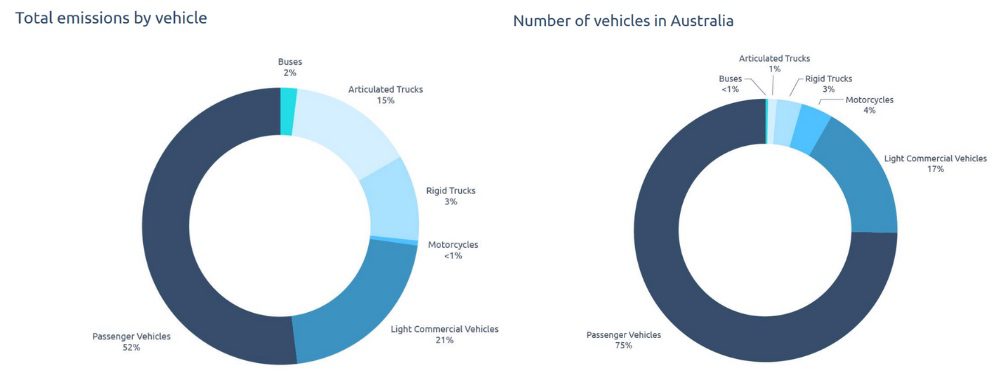
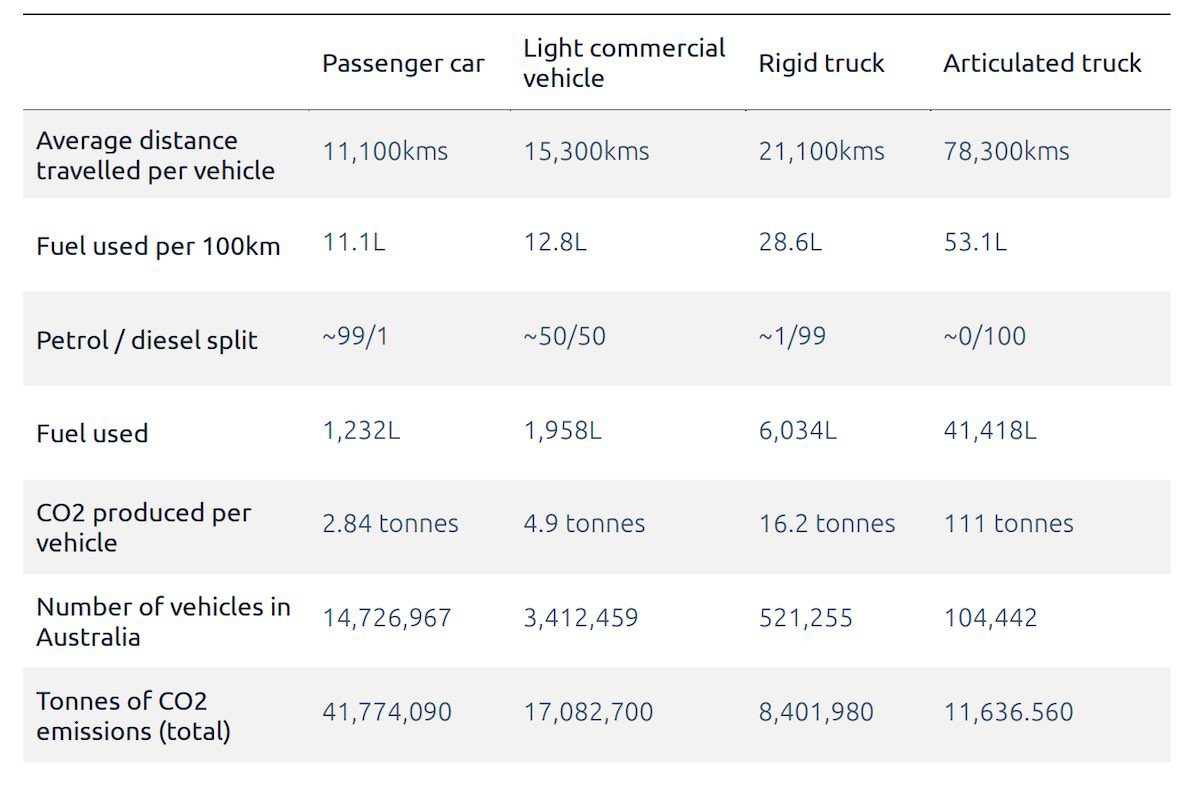
An articulated truck will burn through 40 times more fuel and generate 50 times more CO2 than a passenger car. They represent 1% of all vehicles on Australian roads but 15% of all transport emissions.
These are the findings of a new report by Adiona Tech titled “Connected Thinking” that makes the strong case that Australia is not putting enough attention into electrifying truck fleets.
“Our data shows that consumer adoption of EVs should not be Australia’s number one priority,” says Adiona Tech CEO and co-founder Richard Savoie.
“Electrifying fleets is by far the most efficient way to reduce vehicle emissions. Every battery we put in a truck or van counts for 5 to 50 households buying an EV, and businesses often have hundreds of vehicles.
“Australia must prioritise the electrification of vehicles that are on the road most, travel the longest distances, and are the least fuel efficient.”
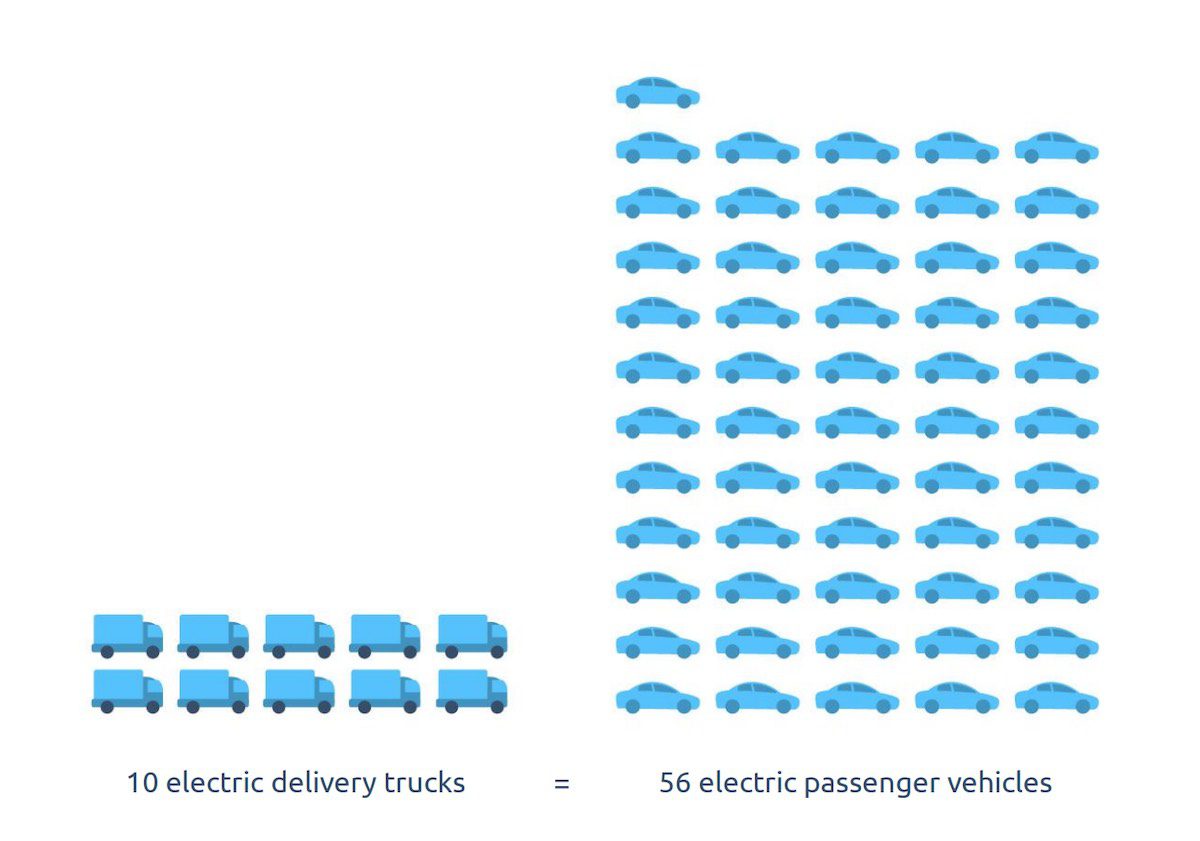
The report says that electrifying 10 vehicles used for last-mile delivery (e.g. rigid trucks) is as beneficial as 56 households buying an EV.
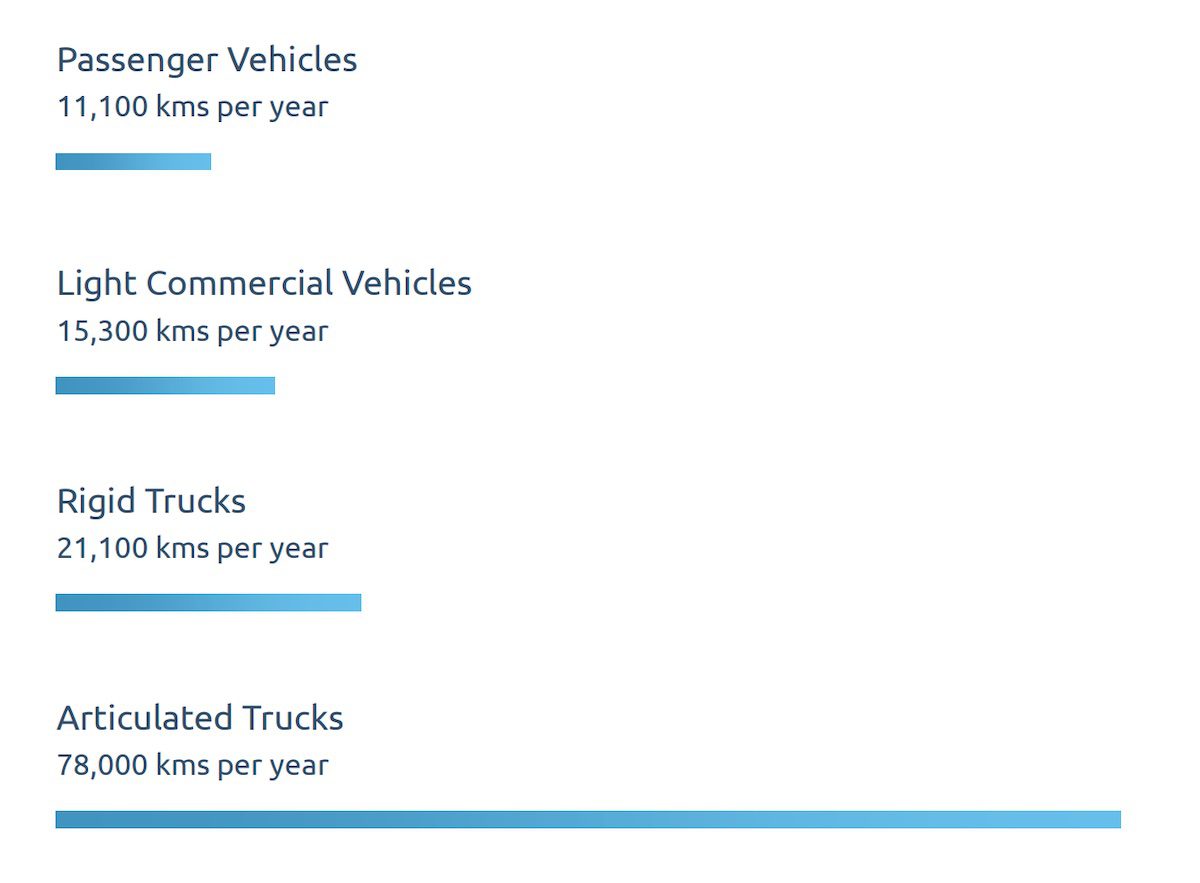
The report also shows that on average articulated trucks are doing seven times more kms than passenger cars. This means that by electrifying trucks sooner will have a bigger impact on emissions and air pollution because of the higher utilisation.
Trucks are also obviously much heavier meaning on top of much longer distances, the additional weight means they burn a lot more fuel.
“We can calculate how much fuel and CO2 emissions are produced by all different vehicle types in Australia.” says the report.
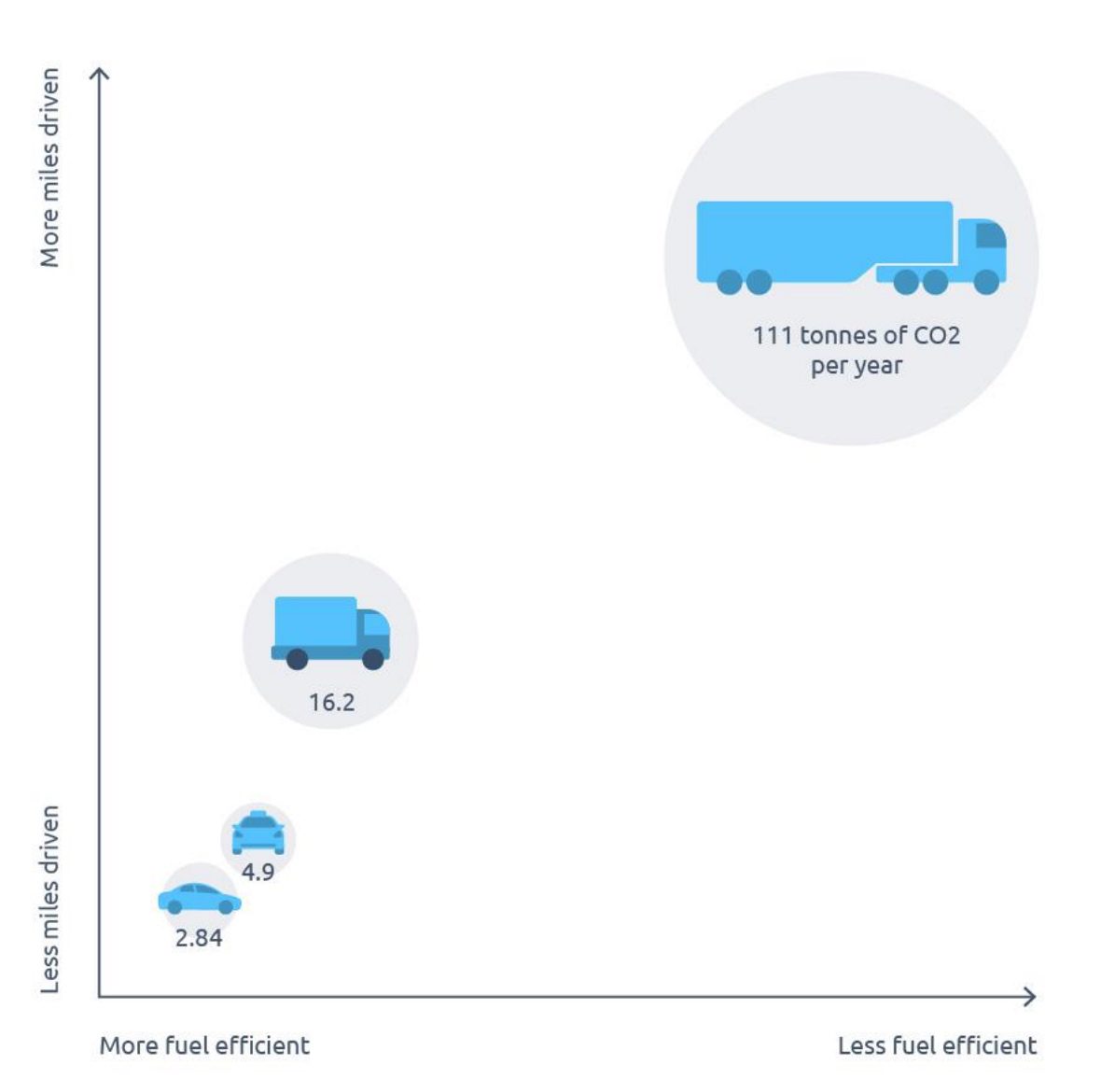
“These figures are even more jarring than the kilometres driven figures, and there is an even bigger gap between passenger and commercial vehicles. Commercial vehicles are often larger, heavier and less fuel efficient than their passenger counterparts. They are also far more likely to use diesel, which produces more CO2 than petrol.”
Spewing out 111 tonnes of CO2 per year, articulated trucks produce almost 40 times more emissions than the average passenger car.
This huge difference results in articulated trucks contributing to 15% of all vehicles emissions despite only making up just 1% of all vehicles.
On average articulated trucks use a staggering 53.1L per 100km. The current average diesel price in Sydney is around $1.88 meaning the average articulated truck uses around $100 worth of diesel per 100 km.
For comparison in December Tesla CEO Elon Musk tweeted that the Tesla Semi currently gets 1.7 kWh per mile. This translates to about 106 kWh per 100km. Assuming a charging rate of $0.20 per kWh, the all-electric Tesla Semi’s fuel costs are just a 5th of the diesel truck.
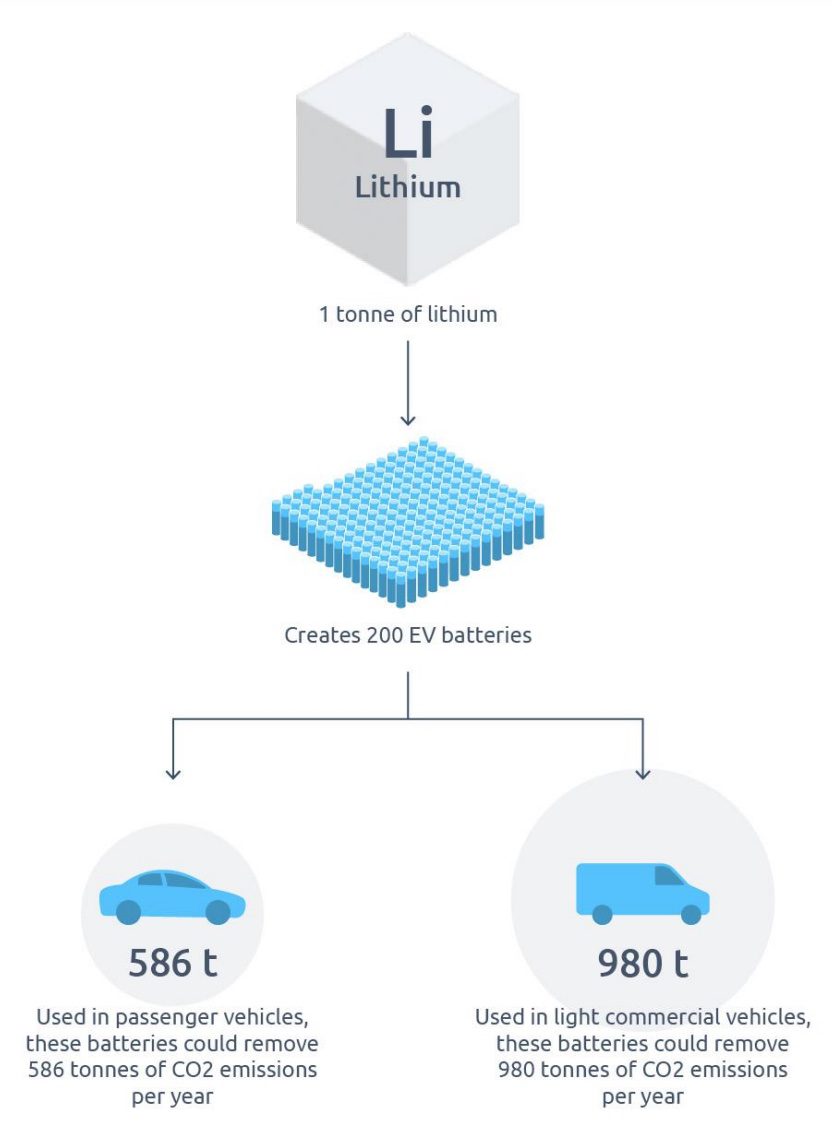
Adiona Tech says that as battery production ramps up to meet demand, the priority should be trucks before passenger vehicles.
The report says that every one tonne of lithium used in batteries in trucks instead of passenger cars displaces an additional 394 tonnes of CO2 per year!
The report says that the federal government’s National Electric Vehicle Strategy has been widely criticised as being lightweight and lacking ambition.
“It pales in comparison with the efforts of other developed nations, and our data suggests it has some glaring omissions. Our data shows that electrifying delivery and freight vehicles should be a top priority for any national EV strategy, especially as more delivery vehicles are put on the road,” says the report.
“It is therefore deeply concerning that the Australian national EV strategy appears to focus exclusively on passenger vehicles and light commercial vehicles. Larger vehicles are ignored, and the new strategy has many of the same flaws as proceeding ones – such as the $250m Future Fuels Fund and $146m Driving the Nation fund.
“Australia’s EV infrastructure is in urgent need of investment, but it’s well known that most commercial fleets can’t practically share public chargers. Transport and delivery businesses are built on efficiency, and they demand predictability regarding availability times and costs for charging. Therefore they usually build their own charge networks via partnerships.
“A successful national EV strategy must incentivise businesses as well as consumers, and that means listening to them about what it would take to make them switch.”
Adiona Tech says they expect the introduction of low or zero emissions zones to be a major debate in years ahead.
“In the biggest Australian cities like Sydney and Melbourne, restrictions on ICE vehicles are a logical and necessary step to reduce emissions, improve congestion, and ease air pollution. However, it cannot be done overnight, and local governments would need to do more to compensate businesses,” says the report.
Adiona Tech says $3,400 subsidies for a small delivery business with 5 ICE vans wouldn’t be enough for them to make the switch.
“One possible solution would be to allow businesses to “bank” their fines and congestion charges for driving ICE vehicles in zero emissions zones, giving this money back on the condition it goes towards an EV.”
“We need drastic intervention from the government to make electrification more appealing to businesses, deploying both the carrot and the stick. Federal and state leaders must prioritise urban spaces and last-mile delivery, combining financial incentives with emission caps.
“An emissions limit on new commercial cars sold that would decline to 0 by 2035 would effectively give businesses 12 years to phase out all petrol vehicles.
“Currently, there is little consensus on a state level, and that needs to change fast. It’s farcical that New South Wales has earmarked $105M for fleet electrification, while Victoria has only allocated $5M. Others are yet to implement schemes for fleet electrification schemes at all.”
Daniel Bleakley is a clean technology researcher and advocate with a background in engineering and business. He has a strong interest in electric vehicles, renewable energy, manufacturing and public policy.
The Department of Pedalling and Perspiration suggests cyclists should be paid $1 per kilometre and…
A detailed early look at the 2026 refreshed Zeekr X.
We take a very early look at the 2026 Zeekr X, which offers more power…
The roll out of electric buses to two additional routes - including the busiest in…
Analysis of EV registrations show massive growth in March as surging fuel prices and fears…
We got behind the wheel of GAC’s new electric hatchback to see what $31,990 gets…