
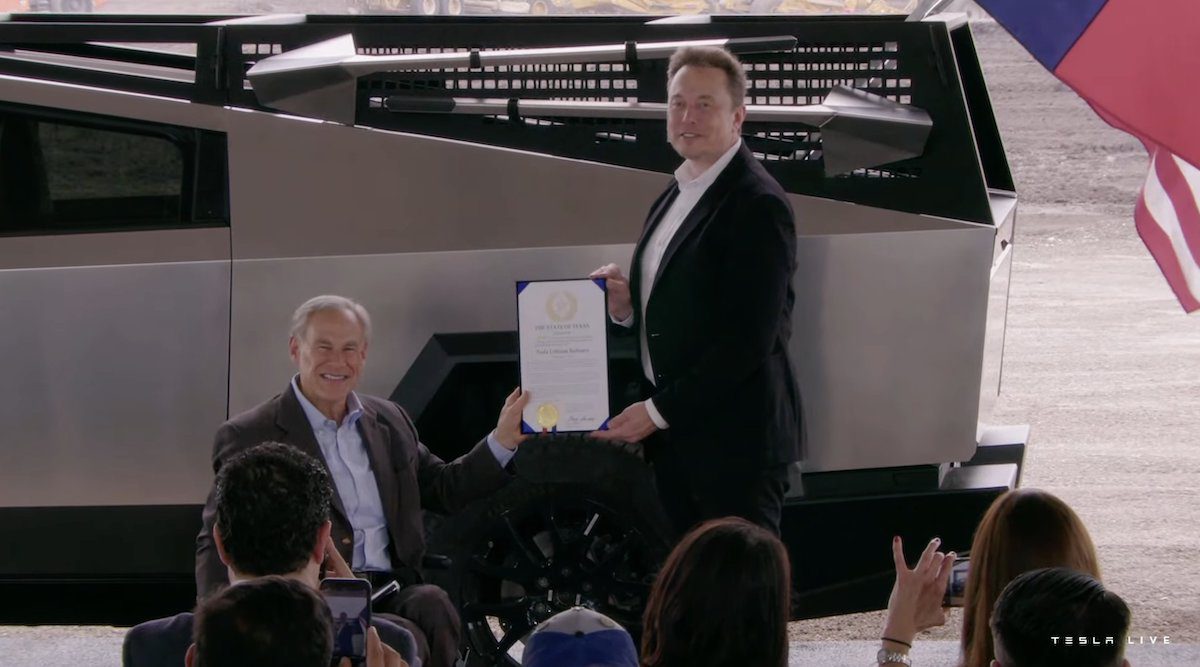
Tesla has broken ground on its new lithium refinery in Corpus Christi Texas, 350 km from Tesla’s Austin gigafactory.
The new refinery will be one of the largest in the world and produce enough lithium for 1 million EVs per year when it reaches full production.
Tesla CEO Elon Musk arrived at the event in a Cybertruck with shovels for the ground breaking ceremony strapped to the side of a tool accessory fitted to the all-electric pickup truck.

“We can expect to produce lithium for about a million vehicles and produce more battery grade lithium than the rest of North American refining capacity combined,” said Musk.
“We’re aiming to finish construction next year and then reach hopefully full production about a year later. Which is great because this is extremely fast by normal standards But that’s how we do things,“
“We’ve got a number of innovations that we think will be quite effective in the refining of the lithium that haven’t been done before.”
Increasing lithium refining capacity is critical to a sustainable energy economy—today, we're breaking ground on our in-house lithium refinery outside of Corpus Christi, TX.
This facility will also prioritize the elimination of a challenging refinery byproduct (sodium sulfate).… pic.twitter.com/mBnDBLNrW7
— Tesla (@Tesla) May 8, 2023
New refinery uses inert reagents, can take feedstock from recycled batteries
“The conventional process is heavy,” said Tesla senior manager of battery minerals and metals Turner Caldwell.
“It’s a heavy sulfuric acid consumer. It’s a heavy sodium hydroxide consumer and as a result the byproducts that are produced from that conventional process are challenging to manage.
“What we’re going to be using are much more inert reagents. We’ll be consuming soda ash, sodium carbonate, very common industrial chemicals.
“And it’s a much more direct route that consumes 20% less energy all in. It consumes reagents that are 60%, less costly. And all in the production cost is around 30% lower on a unit cost basis.
“So that we end up with as a net environmentally, very neutral site.”
The new refinery is also designed to take feedstock from recycled batteries.
“In the future, we will also process other intermediate lithium feedstocks, including those from recycled batteries & manufacturing scrap.” said Tesla in a Twitter post.
Australia produces half of the world’s lithium but little refining
In 2021 Australia produce more than 50% of the world’s lithium. However there are currently very few lithium refineries in Australia.
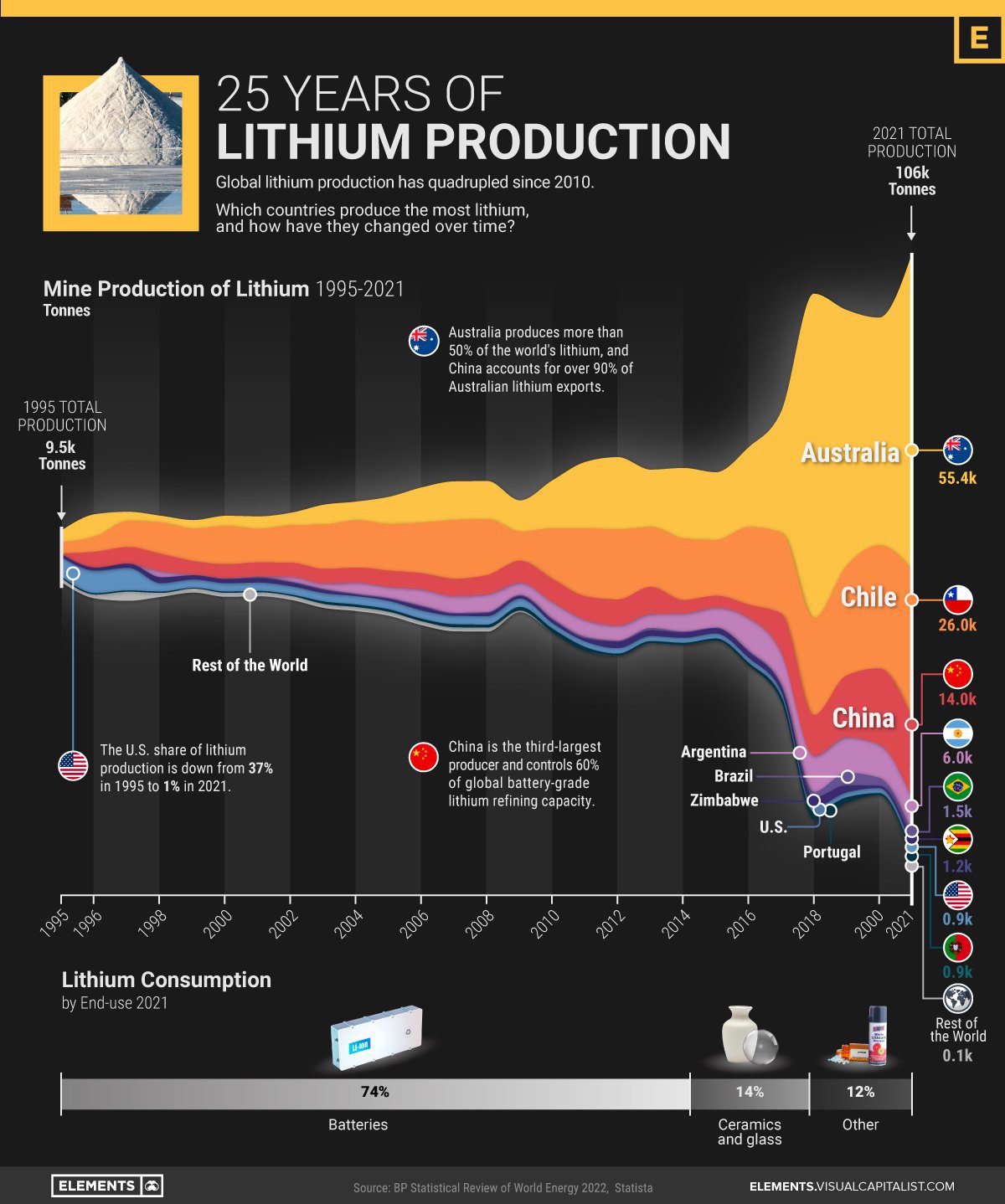
Lithium refining is a massive opportunity for Australia to value add to the raw materials we sell the world.
If Tesla can revolutionise lithium refining in the same way its revolutionised electric vehicle manufacturing, maybe Australia could be an ideal place for a future Tesla lithium refinery?

Daniel Bleakley is a clean technology researcher and advocate with a background in engineering and business. He has a strong interest in electric vehicles, renewable energy, manufacturing and public policy.