
New and retrofitted electric ferries are being sounded out to carry passengers across Sydney’s harbour and key river routes, a new strategy from the NSW government has revealed.
The NSW state government laid out a broad-ranging strategy on Monday aimed at guiding the state towards its net zero emissions by 2050 targets.
And ferries, although they contribute just a small portion of the state’s emissions, can play a part. A push from the public to save the state’s iconic Freshwater ferries, now 40 years old, has seen them remain on the fleet despite the additional maintenance costs of their aging diesel engines.
The good news is they could be saved by converting to electric propulsion. The new NSW strategy states that assessing the purchase and retrofit of the harbour city’s ferries is already underway.
Electric ferries are not new, and other countries such as Norway and New Zealand capital of Auckland – where its 30 aging diesel ferries account for 25% of public transport emissions – have already set sail on the idea.
As The Driven reported in April, Auckland commenced construction of two ferries with $NZ27 million support from the NZ government for operation from 2024.
At the same time, Norwegian ferry maker Hurtigruten announced it had made its last fossil-fuelled cruise for Norway’s coastal express line.
Road user charges for EVs still on table
A key piece of the 124-page report released on Monday underlines the importance of reducing the state’s reliance on fossil fuels.
Central to this is encouraging the transition to electric cars. With transport accounting for 24% of carbon emissions in NSW, private and light commercial vehicles account for two-thirds of that.
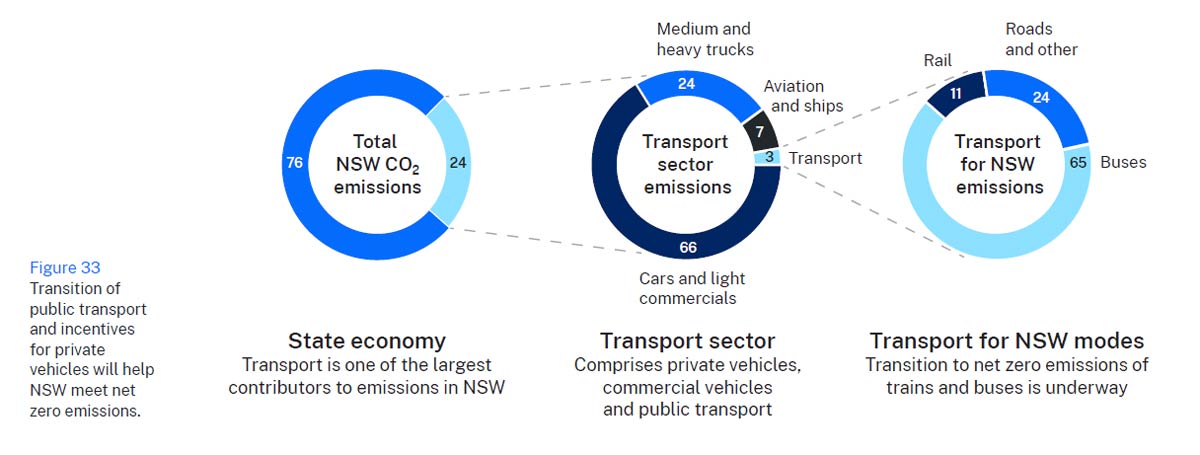
The NSW state government offers drivers incentives to go electric. All electric vehicles priced below $78,000 are now exempt from stamp duty in NSW, and the first 25,000 vehicles costing below $68,750 dutiable value purchased after September 1, 2021, are eligible for a $3000 refund.
Unlike Victoria which introduced a controversial road-user tax for electric and plug-in hybrid vehicle owners to replace declining fuel excise, NSW has chosen to delay the tax until 2027 or 30% on new car sales are electric to ensure EV uptake is not stymied.
“This will help provide a sustainable and efficient source of road funding into the future without acting as a brake on electric vehicle uptake,” it says.
Streamlining road user fees and multimodal roads
But the strategy will also consider a streamlining of a range of fees, as well as changing the focus of roads away from cars.
“Current levies, fees and charges for road use include the fuel excise, stamp duty, licence and vehicle registration fees, and in Greater Sydney, a network of tolled routes,” the strategy states.
“There is an opportunity to reduce congestion and improve travel choices by exploring charges that are clearer, fairer, more efficient and more sustainable.”
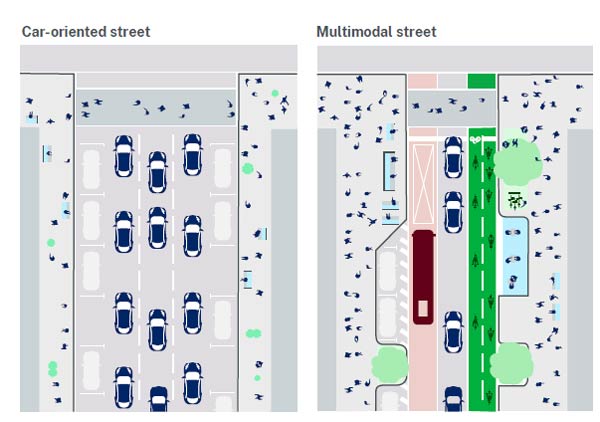
It also looks to a transport future that encapsulates numerous and equitable transport options, including “multimodal” roads that carry twice the number of people, used by connected and autonomous vehicles, public transport and private mobility options including bikes and scooters.

Bridie Schmidt is associate editor for The Driven, sister site of Renew Economy. She has been writing about electric vehicles since 2018, and has a keen interest in the role that zero-emissions transport has to play in sustainability. She has participated in podcasts such as Download This Show with Marc Fennell and Shirtloads of Science with Karl Kruszelnicki and is co-organiser of the Northern Rivers Electric Vehicle Forum. Bridie also owns a Tesla Model Y and has it available for hire on evee.com.au.