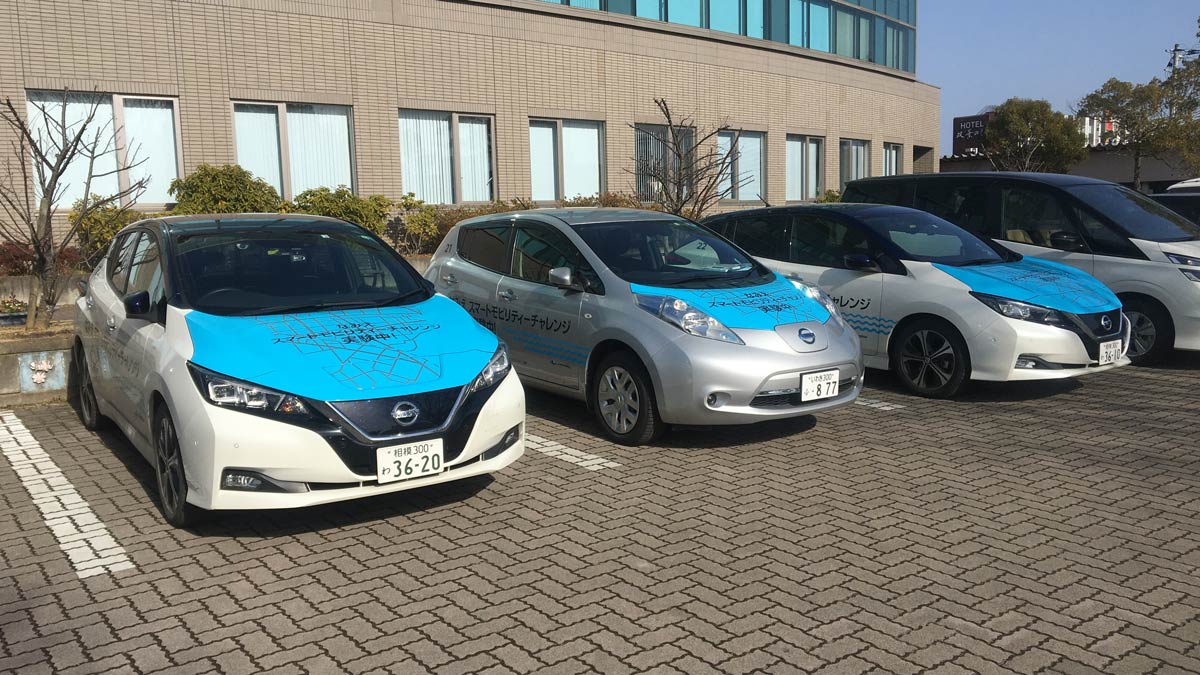
Japanese automaker Nissan has this week begun field tests of new mobility services in the Hamadori area of Fukushima Prefecture as part of a local partnership to develop a sustainable low-carbon community, featuring a “hub and spoke” model combining renewables, storage and zero emissions transport.
Nissan announced on Monday that it had partnered with three local governments and eight companies to “develop a revitalized, resilient and sustainable low-carbon community” in an effort to promote future-proof green communities.
The move comes under a fortnight after the company unveiled its goal to achieve carbon neutrality across its operations and the life cycle of its products by 2050.
Partnering with local communities and businesses, Nissan’s involvement in the development of the Hamadori area future community includes testing the operation of an EV shuttle service that runs in a loop around the central district of the local town of Namie.
The EV shuttle service is designed to run regularly and use roadside stations as mobility hubs, which act like the spokes of a wheel, allowing access to other vehicles and services such as personal vehicles, EV taxis, and Japan Post vehicles.
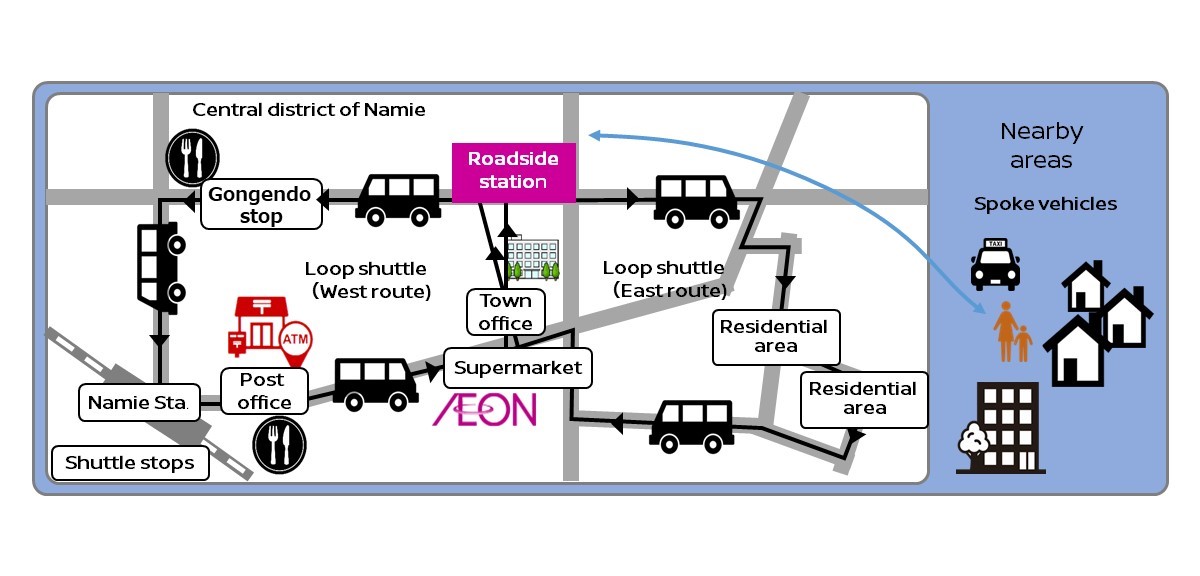
Other “spoke” options include roadside station pickup of purchases from supermarkets, home delivery of packages, as well as passenger and cargo transport.
Nissan’s tests in the town of Namie also include running an autonomous vehicle on a route around the central part of the town.
Nissan’s partnership with the building of a future community also includes the introduction of an energy management system that utilises electric vehicles and stationary rechargeable batteries, while increasing the use of renewable energy at various facilities in the area.
The plan also includes efforts to cooperate in making the community more resilient through the use of electric vehicles in the event of disasters, such as supplying power to stores and other necessary sites.
As part of Nissan’s carbon neutrality pledge, the company also promised that all new Nissan vehicle’s offered in key markets will be electrified by the early 2030s.