Sales of hybrids and plug-in electric vehicles continue to rise amid a faltering Australian auto market, with all-electric vehicles outselling plug-in hybrid vehicles by a ratio of three to one in the latest month.
September sales released this week by the Federal Chamber of Automotive Industries (FCAI) showed overall new car sales falling 21.8% from the same month a year earlier, with the Covid-19 pandemic and strict lending conditions blamed for struggling sales.
“First of all, we are seeing COVID-19 health restrictions across Australia, and particularly in metropolitan Melbourne, continue to ease,” said FCAI chief Tony Weber in a statement.
“Another sign that the market may improve is the announcement by the Federal Government last week of an easing of lending conditions for private buyers and small business in Australia. Freeing up restrictions around financial lending will act as a stimulus for Australian industry,” Weber said.
However this downward trend has been lingering for nearly two and a half years now, suggesting there is more going on than the pandemic.
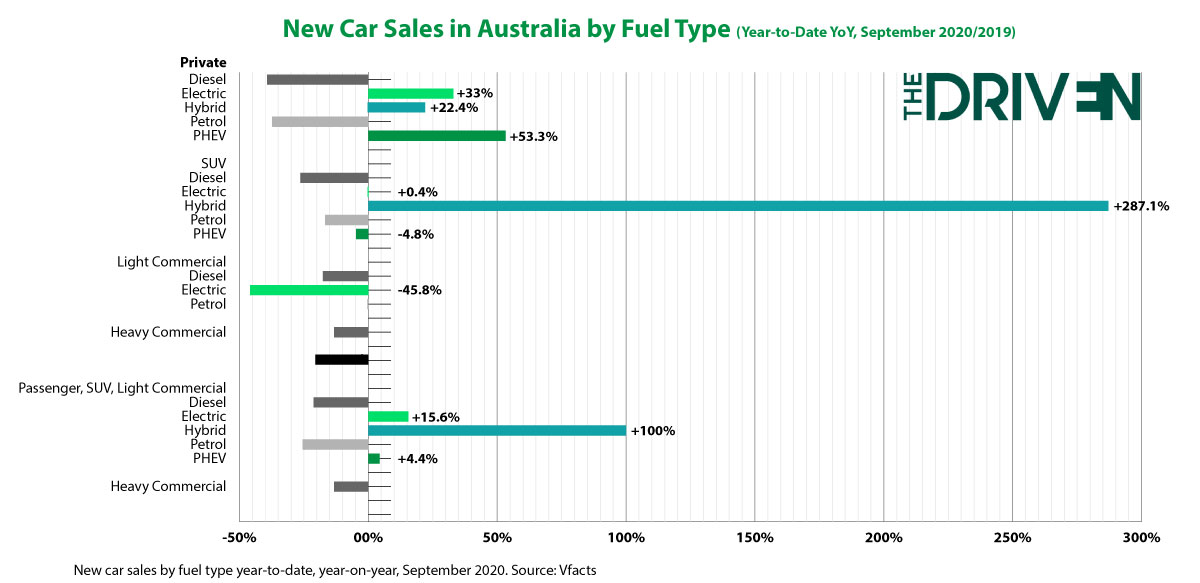
While petrol and diesel sales continue to drop in every single vehicle segment, hybrid sales have doubled from the same time last year, and even electric sales saw a 15.6% increase even without Tesla figures (as Tesla does not report local sales figures to the FCAI).
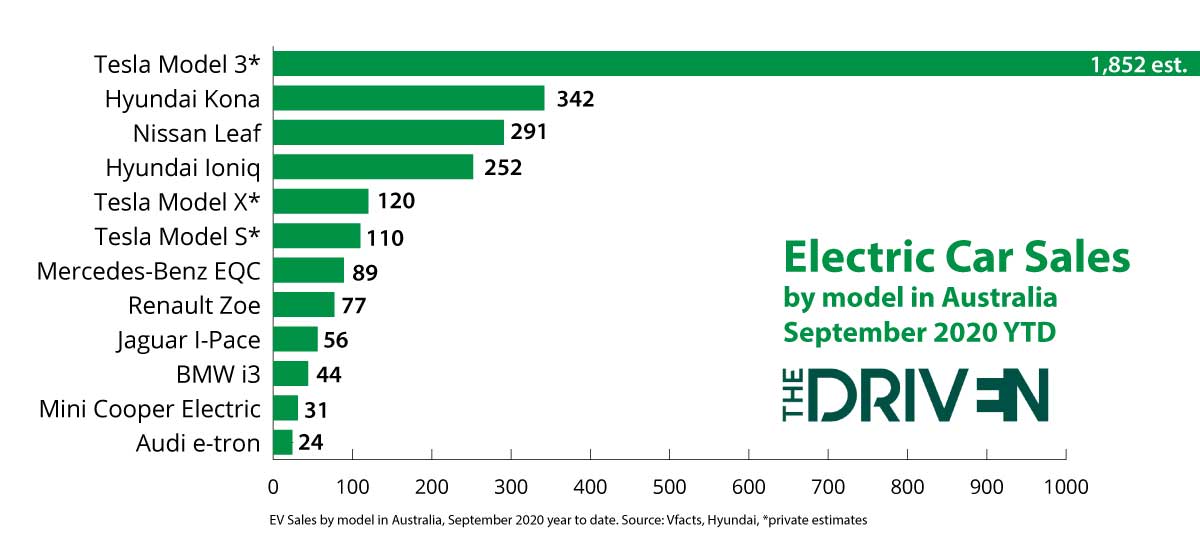
Adding estimated Tesla delivery figures as reported by The Driven last Tuesday (gathered from shipping data), there have been more than 3,200 all-electric vehicles sold in Australia in 2020 to date – thanks of course to the Tesla Model 3, which with 1,852 shipped to date in 2020 accounts for more than half of all EV sales.
Also promising is the fact that all-electric vehicles are outselling plug-in hybrid vehicles three to one, with just 1,114 PHEVs sold so far this year.
With car makers beginning to bring in more plug-in hybrid models in coming months, such as the Mercedes-Benz A250 there will be more choice for consumers who may decide to take the step up from electric-assisted petrol hybrids to true pluggable vehicles.
However if they do, buyer beware – as pointed out by Bryce Gaton, Australia is actually at risk of being given the short shrift when it comes to the most recent and efficient PHEV models due to a lack of local vehicle emissions standards.
And recent reports note that PHEVs are often more polluting than car makers let on due to driving parameters and owners not keeping them constantly charged.
In terms of models sold in Australia so far, it is the Tesla Model 3 that continues to stand out, followed by the Hyundai Kona, and then the Nissan Leaf and the all-electric Ioniq.
We note a big jump up in terms of Model S and Model X figures thanks to updated shipping data, placing Tesla’s two premium vehicles at number five and six on the ladder.
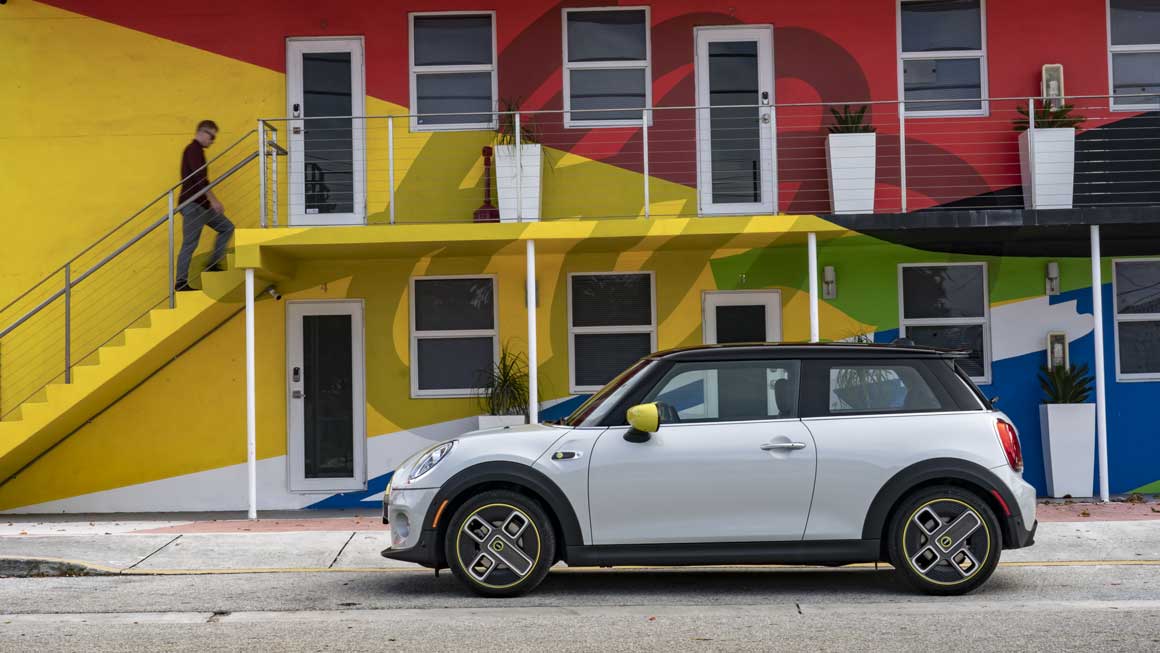
Additionally, Mini has commenced deliveries of its Mini Electric Hatch, or Cooper SE, with the first vehicle delivered to a Brisbane family in as reported by The Driven late September, and which has leapfrogged the Audi e-tron with 31 registrations to date.