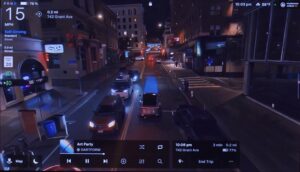
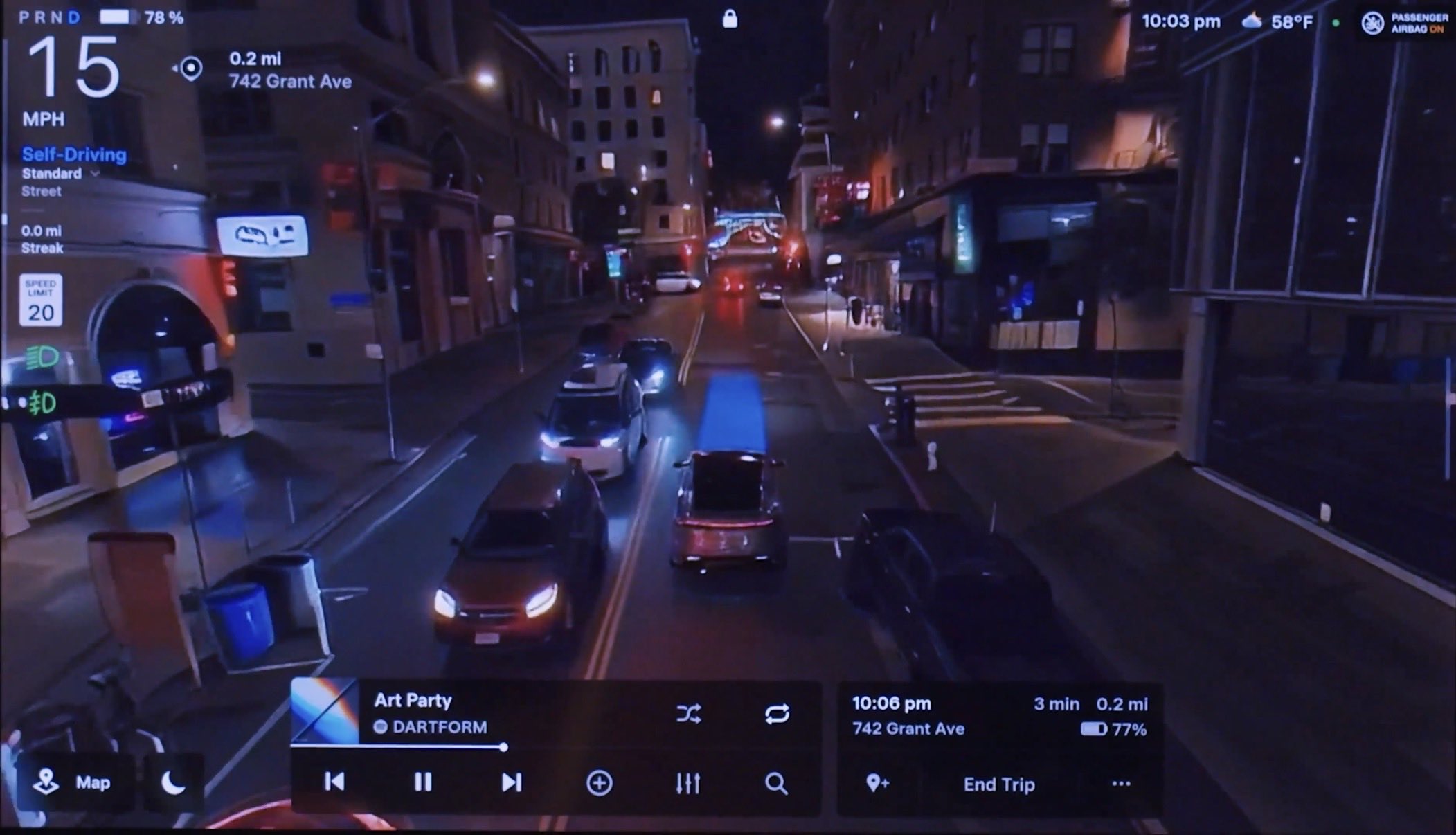
Tesla has started rolling out its best full-self-driving (FSD) supervised software version to date, which it calls V15, bringing with it some major updates to both safety and the in-car experience with visualisations and better detection of animals, potholes, debris, road signs, standing water and more.
In a post on X, the company shared that the software is being rolled out to early users ahead of a mass release: “FSD v15 now starting to roll out – upgrading every part of the end-to-end driving network”.
On the safety metric alone, the new software version is capable of 25x better handling of safety-critical cases. Tesla has also added a major feature that shows a real-world view of what the car can see, including what the vehicle will do next – alleviating some of the anxcietty, particularly for new users of the FSD Supervised software.
In a video shared as part of the announcement, the company showcased some of the improvements and upgrades, focusing heavily on safety, obstacle avoidance and the new visuals.
Locally, Tesla recently announced that car owners in Australia and New Zealand have clocked up more than 160 million kms driving with FSD supervised software since the software was launched in September last year.
Tesla has worked to improve its FSD Supervised software since launching it a year ago, as competition in the EV sales segment heated up, and released version 14 in July.
FSD availability has partly helped the company’s best-seller, the Model Y, break multiple monthly sales records in Australia this year, putting the brand on track for its best year of sales to date, having already sold 45,000 cars in the first 10 months.
The company now sells the software only via subscription, starting at $149 per month, after one-off purchases ended earlier this year.
However, FSD supervised is only offered on its newer model of cars, running AI4 hardware. This has meant that quite a large number of Tesla’s Australian fleet, including many owners who paid for the tech are currently not able to access it.
In August, the company updated customers with those older vehicles and said the software it calls v14 Lite was being tested locally ahead of an imminent launch.
After testing the latest v14 software on an AI4 Model 3 in Melbourne last month, I can say that V14 was a big step up from the v13 we tested last year.
The software’s confidence on the road, plus the new driving and parking modes, improved the overall driving experience.
On most trips, the V14 can make driving so much more stress-free, especially during peak-hour traffic, so V15’s rollout is sounding quite promising, taking kinks like pothole avoidance out of the system’s overall capabilities.