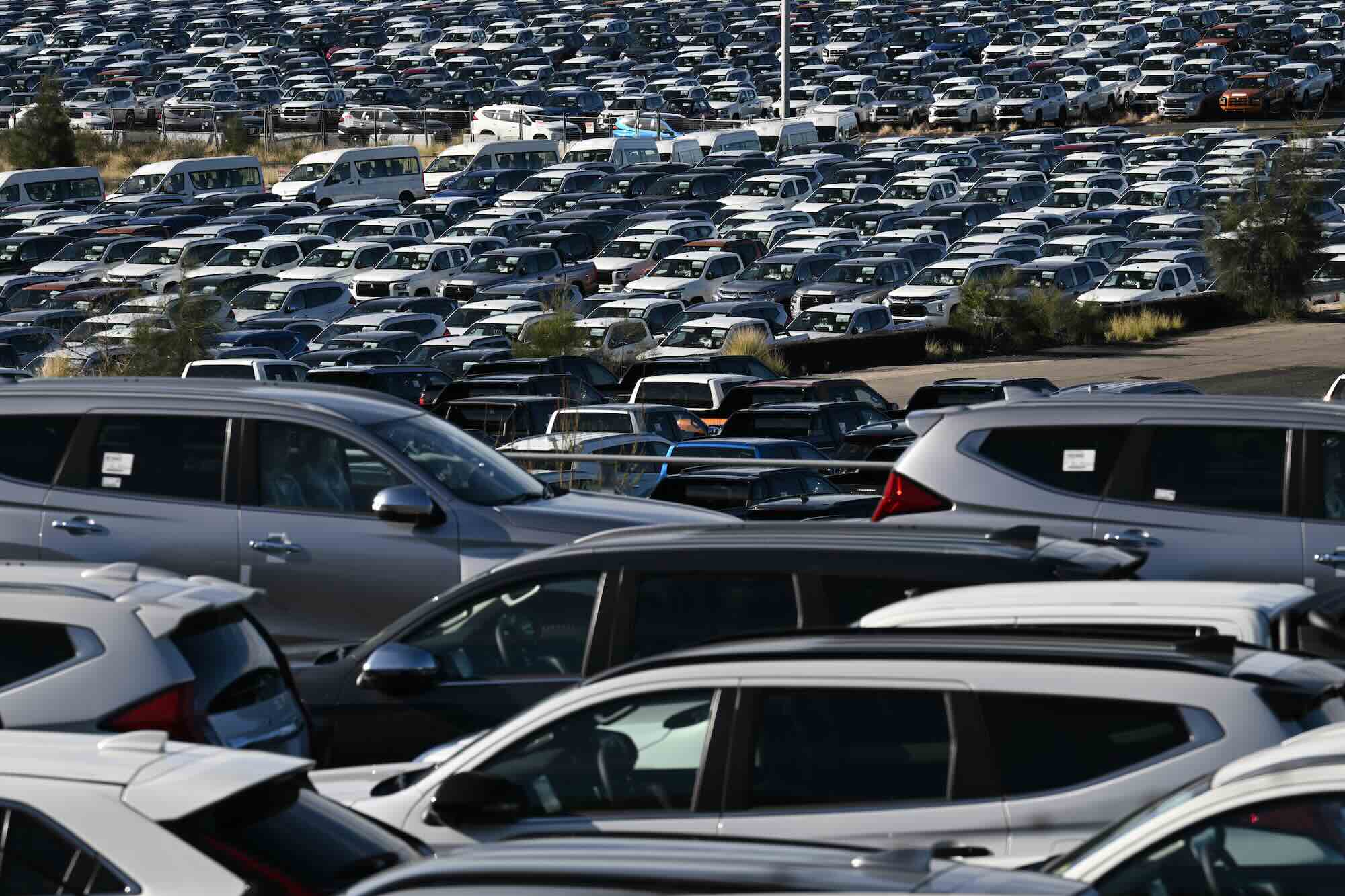
Electric vehicles have outsold petrol-only cars in Australia for the third consecutive month, taking a 23.1 per cent share of the new vehicle market in October as sales of petrol and diesel vehicles continued to fall.
Combined figures from the Federal Chamber of Automotive Industries (FCAI) and the Electric Vehicle Council show 24,845 battery electric vehicles were sold during October, ahead of 23,605 petrol vehicles, although behind diesel on 25,649.
That means Australians bought more than three times as many EVs as they did in October last year, when battery electric sales totalled 7,361 and accounted for just 7.3 per cent of the market. Petrol-only sales, meanwhile, fell 35.9 per cent compared with the same month last year. Diesel sales dropped 14.7 per cent.
October’s EV share was slightly below the 24.2 per cent reported in September, when electric cars also outsold both petrol and diesel vehicles. But it extends the run of months in which battery electric vehicles have accounted for more than one in five new vehicle purchases.
You can find the full breakdown of EV sales at The Driven’s Australian electric vehicle sales by month in 2026 – by model and by brand
The Tesla Model Y remained Australia’s best-selling EV, recording 3,105 sales, followed once again by the BYD Sealion 7 on 2,524.
Meanwhile Geely’s EX5 recorded 1,789 sales, followed by the Jaecoo J5 on 1,714 and the Zeekr 7X on 1,441.
Geely’s smaller EX2 also continued to build momentum, with 1,350 sales, up from 1,211 in September.
The MG4 Urban rose to 894, another sign that the expanding choice of smaller electric cars is finding buyers alongside the SUVs that dominate the top of the sales charts.
Tesla delivered 4,050 vehicles, including 945 Model 3 sedans, according to the Electric Vehicle Council. That was down from 5,654 in September, but well above the 916 vehicles it delivered in October last year.
The Model Y’s result would place it fourth in the combined overall vehicle rankings, behind the Toyota HiLux, Ford Ranger and Toyota RAV4.
Australia’s best-selling EVs in October
| Rank | Model | Sales |
|---|---|---|
| 1 | Tesla Model Y | 3,105 |
| 2 | BYD Sealion 7 | 2,524 |
| 3 | Geely EX5 | 1,789 |
| 4 | Jaecoo J5 | 1,714 |
| 5 | Zeekr 7X | 1,441 |
| 6 | Geely EX2 | 1,350 |
| 7 | Tesla Model 3 | 945 |
| 8 | MG4 Urban | 894 |
| 9 | BYD Atto 2 | 747 |
| 10 | BYD Atto 3 | 709 |
| 11 | Xpeng G6 | 577 |
| 12 | GWM Ora 5 | 520 |
| 13 | Kia EV3 | 504 |
| 14 | BYD Dolphin | 489 |
| 15 | Kia EV5 | 453 |
BYD also strengthened its position in the broader market, recording 10,025 sales across its battery electric and plug-in hybrid range, second only to Toyota’s 20,649.
Its October total was more than two-and-a-half times the 3,959 vehicles it sold a year earlier.
For the first ten months of 2026, BYD has recorded 86,639 sales, comfortably ahead of Ford’s 68,414, although Toyota remains well out in front on 173,593.
Those BYD figures include plug-in hybrids such as the Shark 6 ute, which recorded 1,843 sales in October.
Plug-in hybrids had another strong month across the market, reaching 11,745 sales, up 148.6 per cent on October last year. Meanwhile, conventional hybrids recorded 18,434 sales, a much more modest increase of 3.8 per cent.
Together, battery electric vehicles, plug-in hybrids and conventional hybrids accounted for just over 51 per cent of the combined new vehicle market.
FCAI chief executive Tony Weber said competition, higher fuel prices, continuing instability in the Middle East and federal tax concessions had contributed to strong demand for battery electric vehicles throughout 2026, with little indication that demand was easing.
“Consumers are making rational choices and are attracted to options that reduce their costs. Despite continuing pressure on household budgets and higher borrowing costs in 2026, the October result shows there is extraordinary resilience in new vehicle demand,” Weber said.
He also called for charging investment to keep up.
“This increase in new vehicle demand, especially BEVs, must be supported by reliable and accessible charging infrastructure that keeps pace with demand.”
Combined FCAI and EVC figures put battery electric sales at 205,436 for the first ten months of the year, or around 19.3 per cent of the overall market.
October was a softer month than September for EV volumes. But with electric vehicles again ahead of petrol-only cars, and more models contributing meaningful sales, the shift is becoming harder to dismiss as the fortunes of a single brand.
Correction: An earlier version of this article incorrectly reported that BYD sold 1,943 fully electric Atto 2s in October. That figure included hybrid variants. BYD sold 747 battery electric Atto 2s, placing the model ninth among Australia’s best-selling EVs for the month.