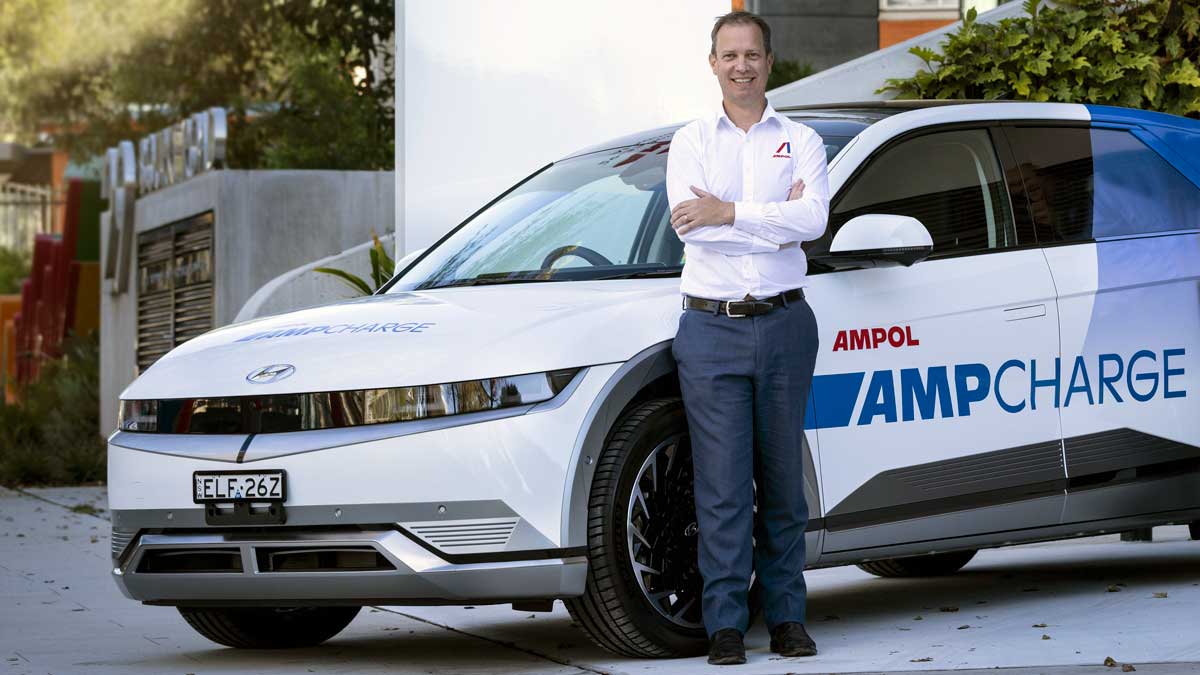
Petrol refining and retailing giant Ampol has announced a major strategic shift, announcing a deal to buy one of the country’s biggest EV charging network operators, Evie Networks, for $225 million.
Evie Networks was owned by Fast Cities Australia, whose biggest backer was the former coal magnate Trevor St Baker, who also invested heavily in Tritium, the Brisbane-based maker of fast-charging stations that collapsed and was sold to an Asian buyer.
The purchase of Evie Network will add more than 1,030 EV charging bays to Ampol’s network – which currently stands at just over 300. The bays are spread over 400 sites, and the deal is subject to regulatory approval.
Ampol says the purchase comes at a time of surging EV sales, declining petrol and diesel offerings, and as the company seeks to boost its convenience store revenues which are key to the profitability of its retailing network.
According to an investor presentation, the purchase will also provide “network scale ahead of growth in fleet charging demand, where Ampol has a leading position in fuel card and customer relationships.”
It is aiming for earnings from the new business of more than $30 million within three years, and double digit growth thereafter, and is targeting about $10 million in mostly cost synergies within 3 years.
Ampol managing director and CEO Matt Halliday said the acquisition of Evie positions Ampol to capture growth as the uptake of EVs and charging demand continues to gather momentum. EVs reached a record 24.8 per cent share of new car sales in August and have averaged 20 per cent over the last five months.
“For Ampol, EV charging is ultimately a question of disciplined investment at the right time,” Ampol CEO Matt Halliday said in a statement. “That means closely monitoring customer behaviour, EV uptake, site economics, grid connections and the broader charging network to ensure our capital is deployed where it can create the greatest value.
“Our job is to be there for customers with what they need, when they need it, as they choose vehicle technology that suits their needs.
He said Evie’s attractive long-term tenure sites, with established grid connections and some with expansion capacity, provides Ampol with an opportunity to grow its charging footprint at scale and at pace.
“Public charging infrastructure is a precondition for broad electric vehicle adoption. That is particularly acute in a country the size of Australia, where long distances between charging locations can contribute to ‘range anxiety’ and deter motorists from purchasing an EV,” Halliday said.
Evie Networks CEO Chris Mills said Ampol recognised the value of the sites and the business, although talks on integration would not be held until ACCC approval was received.
Four of five Evie charging sites are already located at Ampol facilities, but the vast majority of its network are in metropolitan areas. “We know where there is unmet demand,” Mills told The Driven.
St Baker holds a majority stake, believed to be around 80 per cent, and injected the initial cash into the company when it started in 2017, while RACQ has a small stake and staff hold the rest. “Trevor is very happy,” Mills said. “He has been a fantastic supporter of the company, and his insights into the board meetings have been very valuable.”
Sign up for The Driven’s free daily newsletter and get the latest EV news and analysis delivered straight to your inbox.