It seems for every newly launched medium to large SUV in Australia, the rest of the world sees yet another launch of a small car we won’t see here.
Even more frustrating is when we see these launches in the UK market, because an EV specified for the UK market means the model is being both built in right-hand drive AND has all its menus and buttons in English, making it a purely marketing decision to not bring it here.
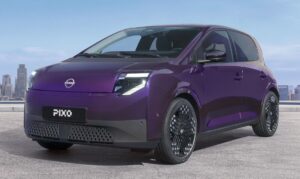
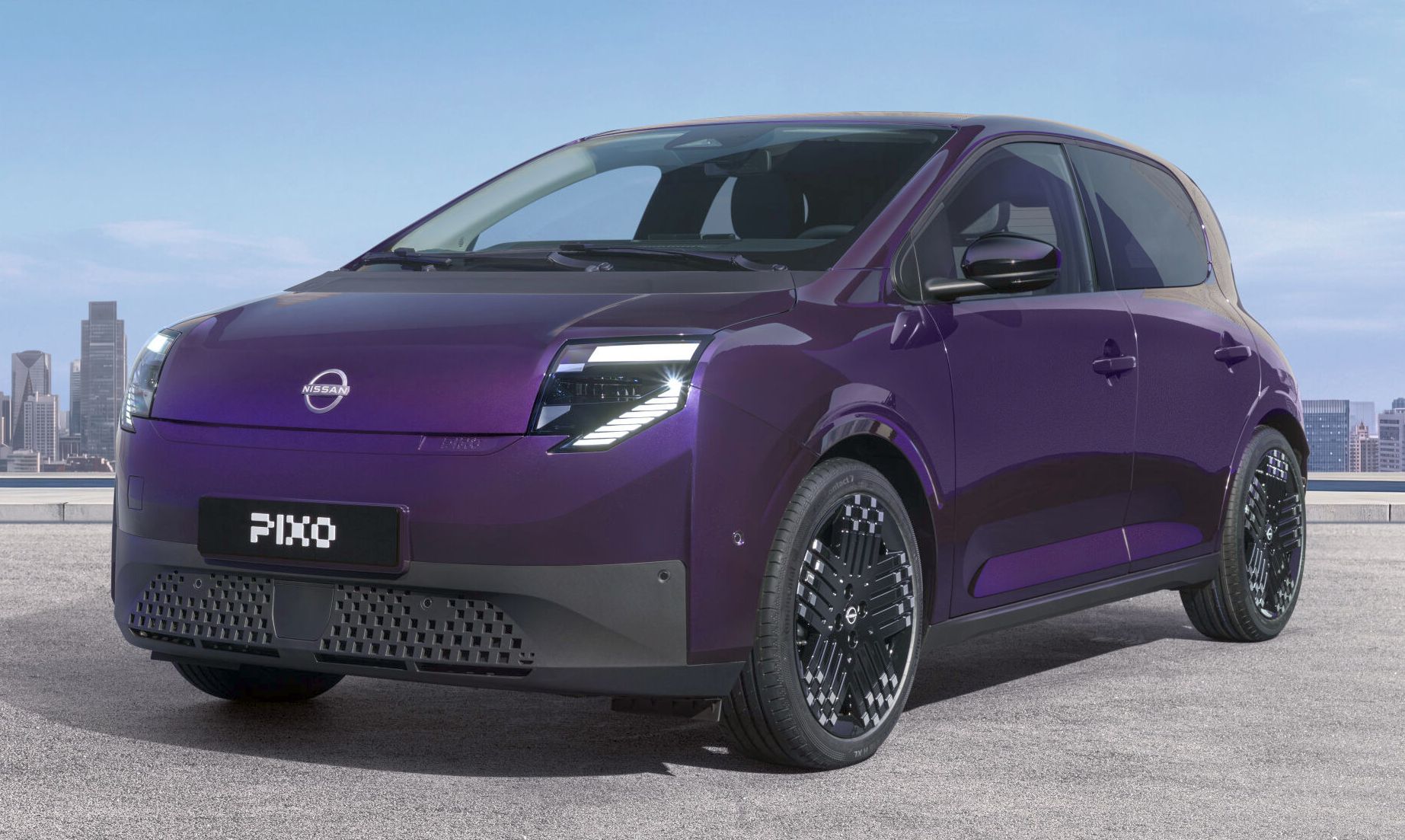
To that end, Nissan have just announced their new city car, the Pixo, for the UK market. Built under the Renault-Nissan Alliance, the Pixo is essentially a mildly restyled Renault Twingo E-Tech and as such, will be produced at Renault’s Novo Mesto (Slovenia) manufacturing facility.
Customer deliveries of the Pixo are scheduled to begin in the UK from early 2027, although pricing details have yet to be released.
The Pixo comes with a 27.5 kWh LFP battery providing a 260 km WLTP combined range. Power is provided to the front wheels via a 60 kW electric motor. Not exactly rubber-burning, Nullarbor taming stuff – but to be frank, few Australians need (or will ever use) that either.
More Australians are though getting frustrated with the ever-expanding range of medium to large SUV offerings, given the latest intergenerational report shows the average size of Australian families is ever-decreasing.
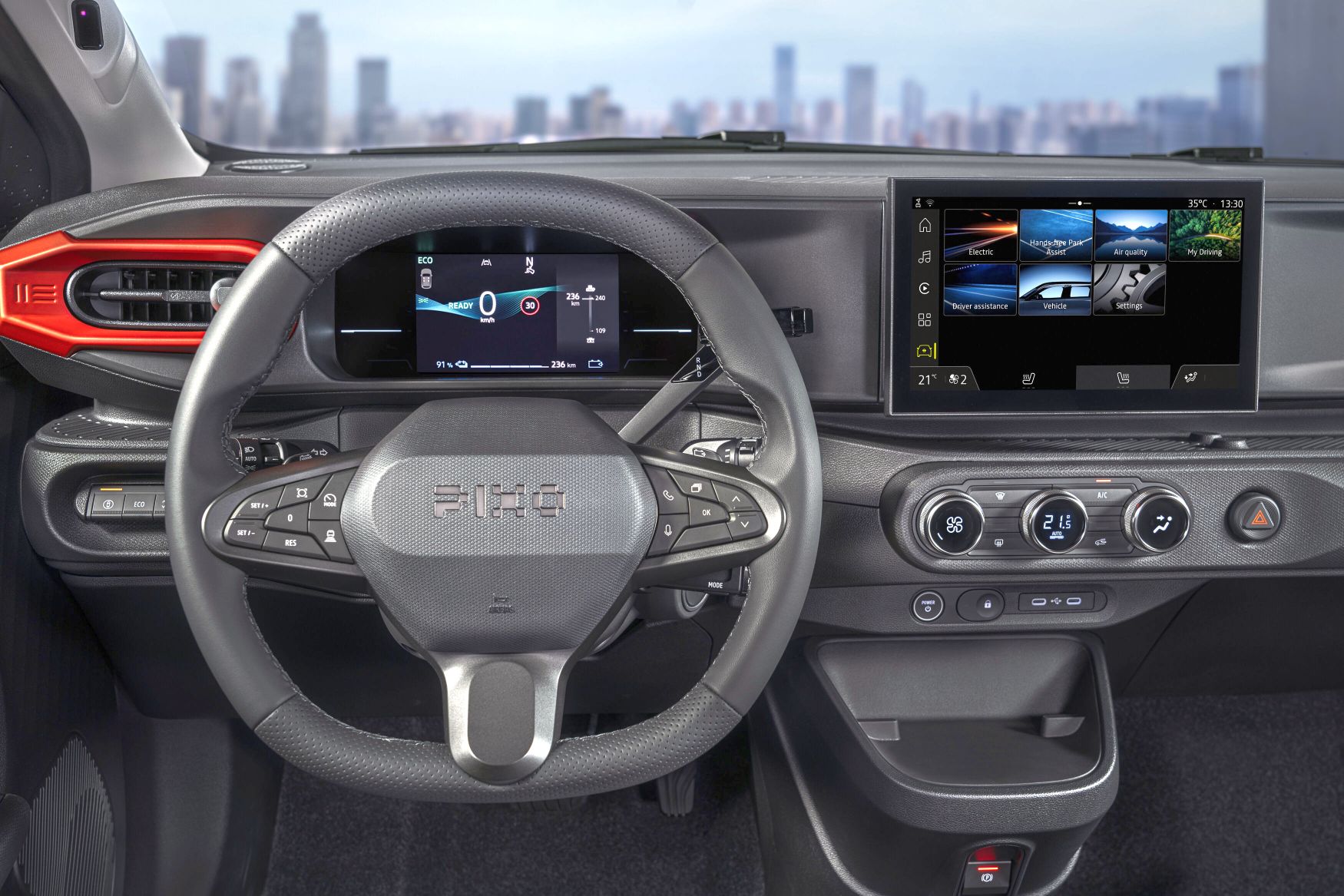
As per all modern cars, the Pixo comes with all the usual advanced driver assistance systems, including include Adaptive CruiseControl that can stop and go with the flow of traffic, Lane Departure Warning, Hands-Free Parking, etc. In addition, one-Pedal technology is included to allow the driver to start, accelerate, decelerate and stop using only the accelerator pedal.
Interestingly, the Pixo also provides 11kW V2G via the Renault AC V2G system. I say ‘interestingly’ as whilst V2G has yet to arrive in any substantive form here, overseas there is a ‘VHS versus Betamax’ like battle starting to play out as to whether V2G will come from the DC or AC pins.
Most manufacturers have so far opted for DC, but Renault have taken the AC route to utilise the car’s inbuilt AC to DC charger. Nissan previously have been opting for DC, but with the Pixo (and new Micra), Nissan is dipping its toe into the AC V2G pond. It will be interesting to see where this all goes. (More on where V2G is going will be covered in a coming article).
So why won’t we ever see the Pixo in Australia?
The Nissan Pixo/Renault Twingo E-Tech pairing are in the European ‘A Car’ (or ‘mini car’) segment, which is equivalent to Australia’s ‘light car’ category. This makes it even smaller than the recently canned-for-Australia Renault 5 E-Tech (also sold in Europe as the Nissan Micra).
As such, the chances of a car smaller than the SUV-only offerings from either manufacturer here are, well, Buckleys. (Despite Honda recently releasing their diminutive Super-one here).
Nissan Pixo: basic specifications:
| Dimensions: | |
| Seating | 4 |
| Overall Length | 3,796 mm |
| Wheelbase | 2,492 mm |
| Height When Empty | 1,512 mm |
| Overall Width (w/o mirrors) | 1,790 mm |
| Front Overhang | 741 mm |
| Rear Overhang | 563 mm |
| Ground Clearance | 140 mm |
| Turning circle | 9.9 m |
| EV: | |
| Battery | 27.5 kWh (LFP) |
| Driving Range | 260 km WLTP |
| DC Charging | 50 kW, 15–80% in approx. 28 minutes |
| AC Charging | 11 kW (bi-directional) |
| Power output | 60 kW |
| Boot Capacity: | |
| No Seat Folded | 356 litres |
| Rear Seats Folded | 1,221 litres |
Sign up for The Driven’s free daily newsletter and get the latest EV news and analysis delivered straight to your inbox.