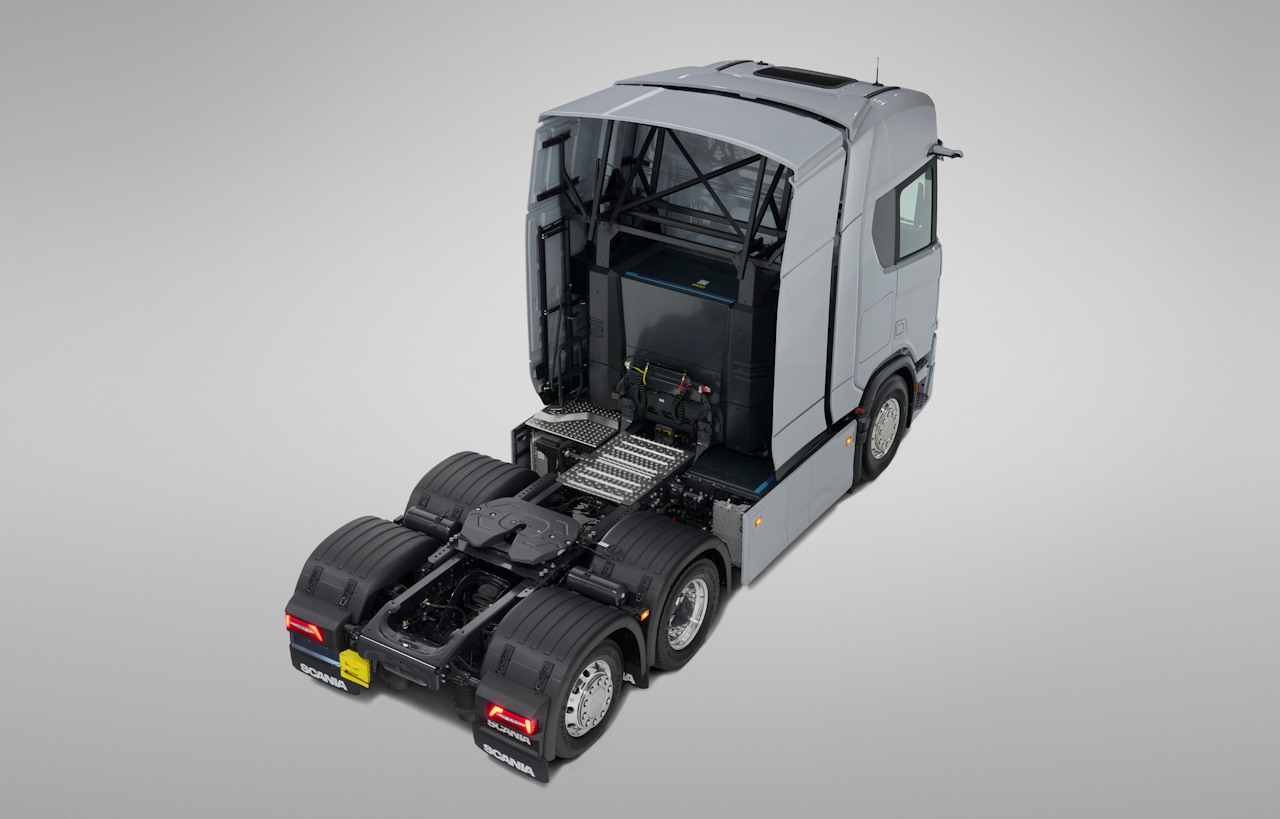
Swedish truck manufacturer Scania is hoping to improve the ability of electric trucks to complete long-haul operations by adding two batteries behind the cab, enabling up to 720 kilometres of range.
Scania announced this week a new solution for its battery electric trucks that combines expanded battery capacity, megawatt charging, and “practical” vehicle configuration.
“Electric trucks are already part of the transport system, but long-haul operations place very different demands on range, payload, and charging,” said Lars Gustafsson, senior vice president and head of solutions management at Scania.
“With this solution, Scania is showing how those pieces can come together in a practical way for customers who want to electrify demanding long-distance routes.”
In addition to the existing chassis-mounted batteries, Scania is enabling selected long-haul 6×2*4 tractor configurations with standard European trailer combinations to mount two MP20 battery packs behind the cab, adding approximately 365 kilowatt-hours (kWh) of additional installed capacity.
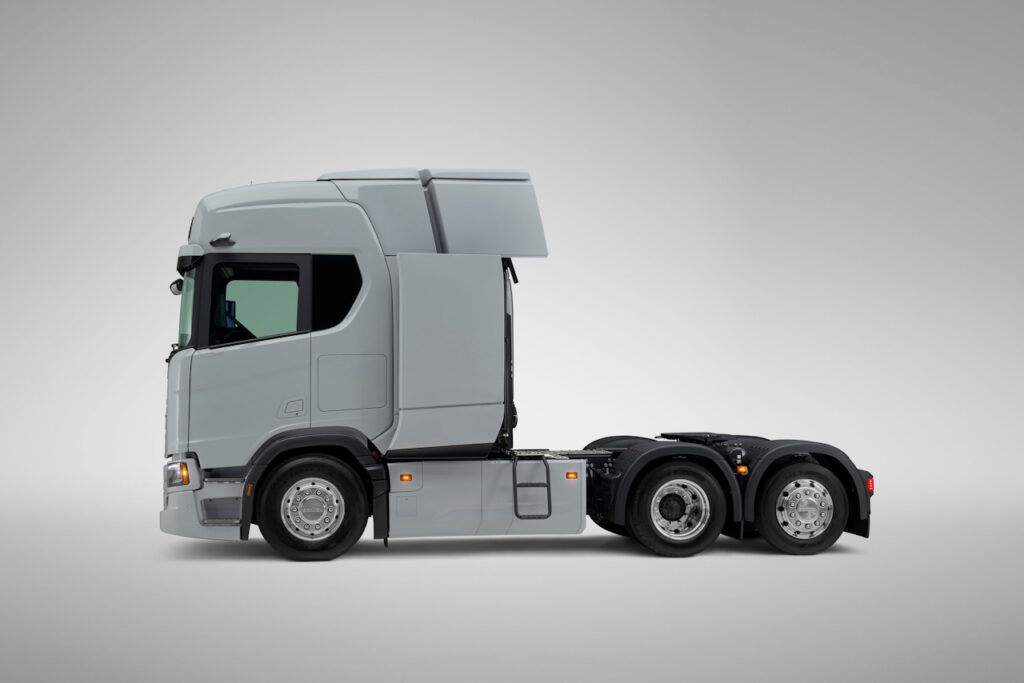
When these extra batteries are combined with Scania’s new protruding IVD (Increased Vehicle Dimension) front, an extended and aerodynamically optimised front bumper and hatch design, the trucks are able to reach maximum range even with a total vehicle length above 16.5 metres.
The new IVD front is able to help reduce energy consumption by up to 3 per cent by reducing wind resistance, depending on specification and operation.
And when combined with megawatt charging, the longer range of the trucks is backed by shorter charging stops, making their role in long-haul operations even more viable.
“This is not only about placing batteries in a new position on the vehicle,” explained Gustafsson. “The larger point is what it enables: electric transport over distances that have traditionally been among the hardest to electrify, with range, payload and charging considered together from the start.”
Sign up for The Driven’s free daily newsletter and get the latest EV news and analysis delivered straight to your inbox.