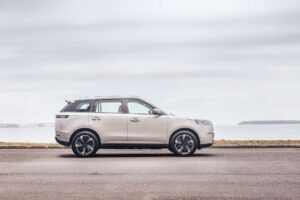
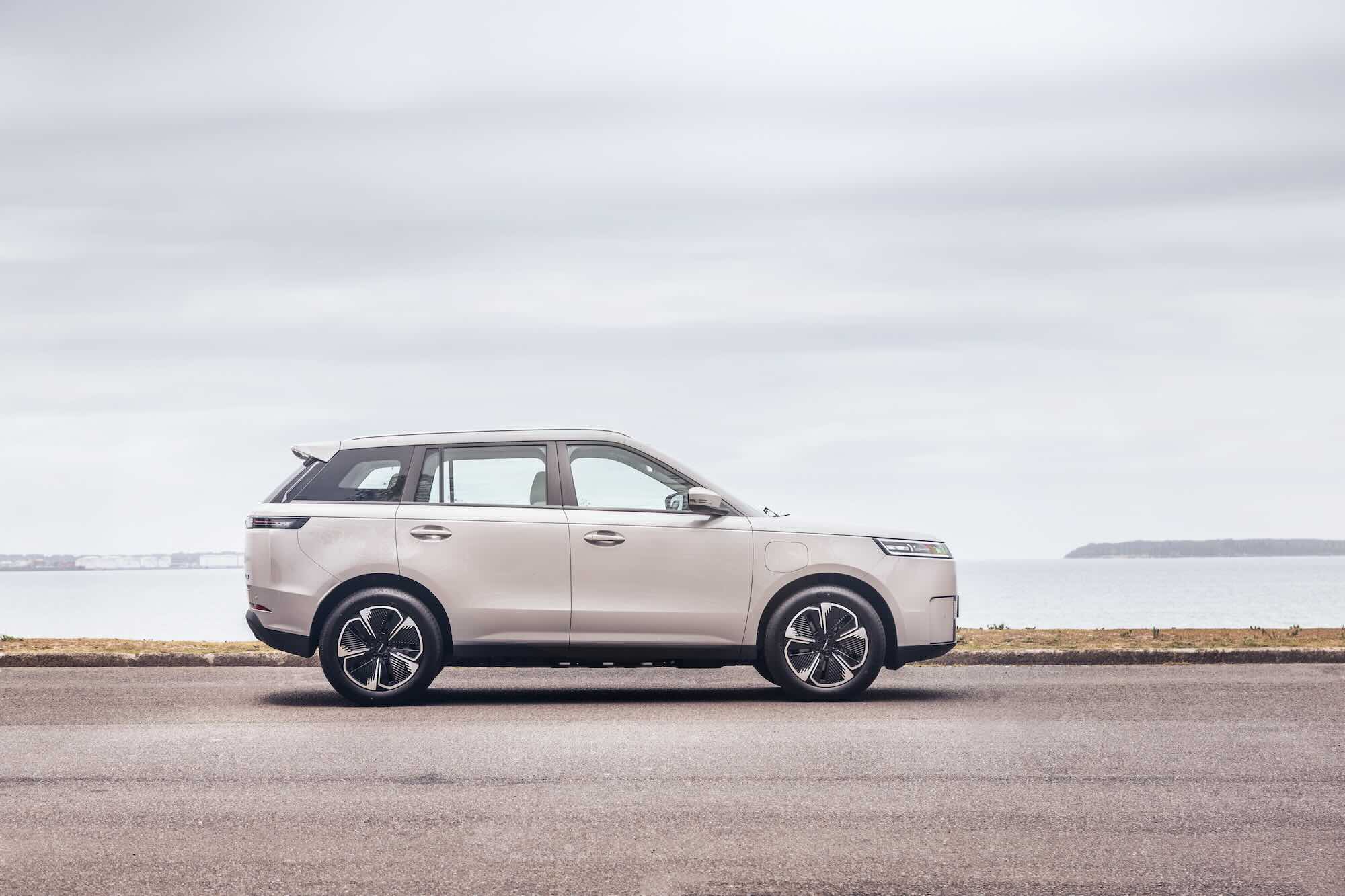
The Jaecoo J5 EV arrived in Australia with the sort of specification sheet that makes you instinctively look for the catch. For $36,990 driveaway, you get a compact electric SUV with more than 400 km of WLTP range, wireless Apple CarPlay and Android Auto, heated and ventilated front seats, a panoramic roof and a decent list of standard equipment.
And buyers appear to have noticed. In May, the J5 was Australia’s second-best-selling battery electric vehicle, behind only the Tesla Model Y.
So, on paper at least, it looks like a very compelling deal. But what is it actually like to drive? And what compromises are you making to get an electric SUV for less than $37,000 driveaway?
After spending a week with the J5, the answer is yes there are some compromises, but probably fewer than you might expect.
Around Sydney’s city streets, the J5 makes a good first impression. The steering is light, visibility is good and the car is easy to place in traffic. It feels very much designed for urban driving rather than carving up a mountain road, which for the vast majority of buyers is probably the right priority.
Its single electric motor sends 155 kW to the front wheels, with a claimed 0–100 km/h time of 7.7 seconds. A Tesla Model Y or Zeekr 7X will feel significantly more urgent, but those cars also sit in a very different price bracket.
The J5 still delivers the instant torque you expect from an electric motor, so it never feels particularly sluggish around town or when merging into faster traffic. You can feel some of the vehicle’s weight through corners and the steering could offer more feedback, but for ordinary day-to-day driving it is perfectly competent.
And that becomes something of a recurring theme with the J5. It is quite easy to point at a more expensive electric SUV and say the steering is better, the acceleration is stronger or the chassis is more sophisticated. Yes, more often than not, the more expensive car is better. This is generally how capitalism has chosen to work. But are those differences matter enough to justify paying substantially more?
The J5 carries a quoted WLTP range of just over 400 km. That figure won’t trouble the longest-range EVs on sale, but it is more than adequate for most Australian drivers, who travel less than 40 km on an average day.
It also gives the J5 enough range to comfortably handle occasional longer trips rather than being restricted to city runabout duties. At $36,990 driveaway, more than 400 km of claimed range in an electric SUV is a pretty useful combination.
The cabin is another area where Jaecoo has clearly focused on delivering perceived value. The materials do not have the same quality or tactility you will find in cars costing twice as much. But the J5 does not feel particularly cheap either.
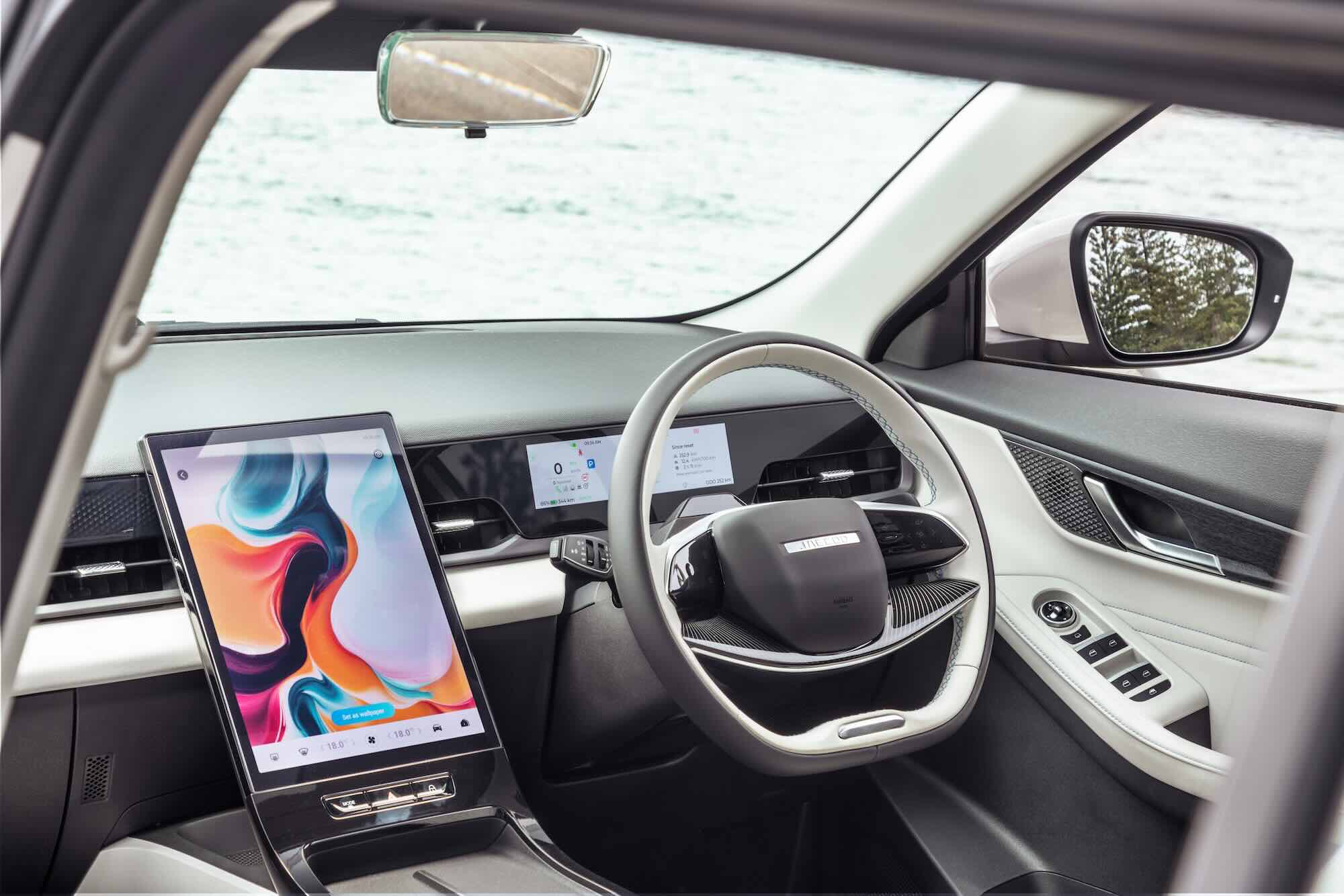
There is a panoramic glass roof, heated and ventilated front seats and a large portrait-oriented central touchscreen. That screen turned out to be one of the highlights of the car. Wireless Apple CarPlay looks particularly good on the vertical display and is among the better CarPlay implementations I’ve come across.
The J5 does not have an integrated mapping system or connected navigation services, so you will largely rely on Apple CarPlay or Android Auto for directions. In practice, because the phone integration works so well, that isn’t much of a hardship.
There aren’t many physical buttons, with most functions controlled through the touchscreen, but the software is intuitive enough that I didn’t find myself missing them as much as I have in some other screen-heavy cars. There is also a wireless Qi phone charger, two cupholders and useful storage underneath the centre console.
I’m 6’5″ tall, but I had no problem getting comfortable behind the wheel. The seating position is good and the cabin feels reasonably spacious for a compact SUV. There are also obvious shades of Range Rover in both the interior layout and exterior design. Whether that resemblance is deliberate is something only Jaecoo can answer, but it is easy to see why the comparison keeps being made.
Jaecoo has also made quite a bit of the J5’s pet-friendly credentials. The interior uses scratch-resistant materials and there is a dedicated Pet Mode, which can keep the climate control running for short periods while displaying a message to anyone outside the car that the owner will be returning. It is one of those features that may sound slightly gimmicky until you actually own a dog.
The regenerative braking is probably the weakest part of the driving experience. There are three regen settings, but even the strongest mode does not deliver genuine one-pedal driving. You still need to use the brake pedal to bring the car to a complete stop most of the time, and the transition between coasting and regeneration can feel inconsistent.
At times there is a slight delay after lifting off the accelerator before the car begins to slow, and the response can feel a little jumpy rather than smooth and predictable. As someone who generally prefers strong one-pedal driving, I found this a little underwhelming.
In fact, the J5 arguably feels better with the regen turned down, particularly if you are accustomed to coasting in a conventional petrol or diesel car. That could potentially be improved through a software update, but in its current form the regen system is not one of the J5’s strengths.
Charging specs are perfectly respectable, with DC charging peaks at 130 kW, while AC charging is around 10.5 kW with access to three-phase power and closer to 7 kW on single phase. Those numbers are not class-leading, but they are perfectly adequate for the car’s likely use case and price point.
One of the J5’s better surprises is its driver assistance system. While some modern cars seem to have been programmed on the assumption that silence represents a software malfunction, I found the J5 is considerably less irritating.
Its default driver monitoring and safety settings will still warn you when necessary, but they are not constantly chiming or intervening. It does not berate you for being 1 km/h over the speed limit, nor does it hassle if you fail to launch the millisecond the car ahead moves.
The overall result is a system that feels more like assistance and less like having an anxious back-seat driver trapped somewhere behind the dashboard.
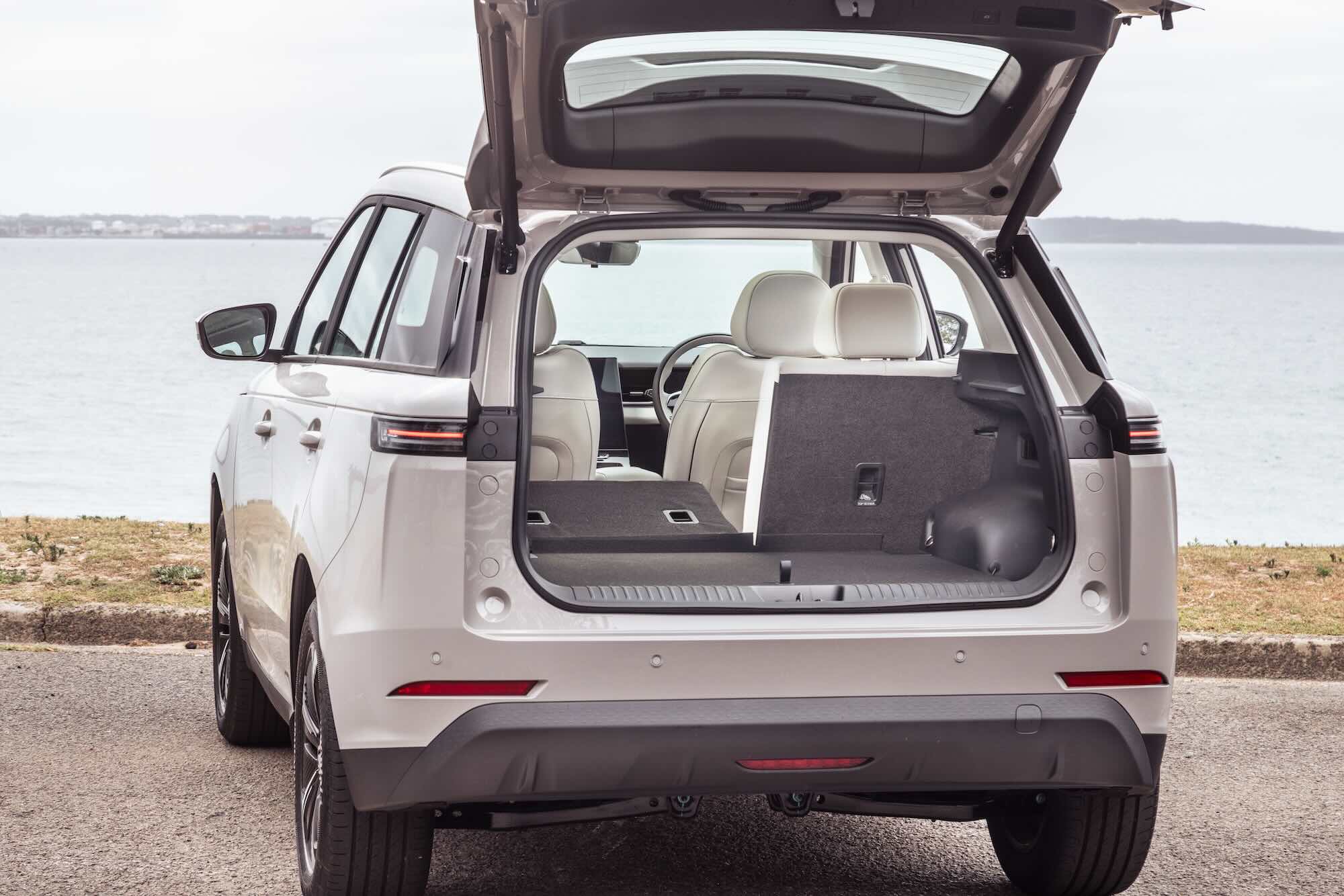
The hardest thing about reviewing the J5 is working out what it should fairly be compared with. There are electric cars available around this price, but most are smaller hatchbacks rather than compact SUVs. Comparable vehicles would include the Leapmotor B10, BYD’s Atto 2, and Chery’s E5. We’ll have reviews coming shortly for the Atto 2 and E5.
Move into electric SUVs above the $40k mark and you start seeing more options, including models such as the Geely EX5, Hyundai Kona, GAC Aion V, and BYD Atto 3, some of which can climb considerably higher depending on the variant.
So while the J5 may not offer a drive experience as refined as some more expensive rivals, it is also substantially cheaper. That makes criticising it for not matching them dynamically feel slightly harsh.
For under $37,000 driveaway, you are getting a reasonably spacious electric SUV with more than 400 km of claimed range, heated and ventilated seats, a panoramic roof, wireless smartphone connectivity and a comfortable driving experience. That value proposition makes it easy to understand why it has become so popular in the Australian market.
The J5 is not the best-driving electric SUV on the Australian market. Its steering is light, the regenerative braking needs refinement and it won’t satisfy anyone looking for sports-car performance disguised as family transport. But that’s probably not who this car is for.
For buyers who simply want something affordable, practical, comfortable and electric, and with enough room for a child or two and enough range for everyday driving and the occasional road trip, the J5 ticks an impressive number of boxes. Its $36,990 driveaway price was originally intended as an introductory offer, but Jaecoo has kept it in place, and the J5’s strong sales suggest that decision has worked.
Of course, there is one question no week-long review can answer: what will ownership look like in three, four or five years? Jaecoo is still a relatively new name in Australia, and long-term reliability, resale values and dealer support will only become clearer with time.
But based on the car that exists today, the J5 is a very compelling proposition. It gets most of the important things right, costs less than $37,000 driveaway, and for many buyers that may be more useful than chasing outright performance or headline-grabbing tech.
| Jaecoo J5 EV | Specification |
|---|---|
| Price | $36,990 driveaway launch offer |
| Battery | 58.9 kWh LFP |
| Range | 402 km WLTP |
| Motor | Single permanent-magnet synchronous motor |
| Drive | Front-wheel drive |
| Power | 155 kW |
| Torque | 288 Nm |
| 0–100 km/h | 7.7 seconds |
| DC charging | Up to 130 kW |
| DC charge time | 30–80% in around 28 minutes |
| AC charging | 6.6 kW single-phase / 10.3 kW three-phase |
| Regenerative braking | 3 levels |
| Length | 4,380 mm |
| Width | 1,860 mm |
| Height | 1,650 mm |
| Wheelbase | 2,620 mm |
| Tare mass | 1,710 kg |
| Boot space | 384 L to cargo cover / 480 L to roof |
| Wheels | 18-inch aero alloys |
| Tyres | 235/55 R18 Continental EcoContact 7 |
| Suspension | MacPherson strut front / multi-link rear |
| Seats | 5 |
| Infotainment | 13.2-inch touchscreen |
| Driver display | 8.88-inch LCD |
| Smartphone connectivity | Wired + wireless Apple CarPlay and Android Auto |
| Wireless charging | 50 W |
| Warranty | 8 years / unlimited km |
| Battery warranty | 8 years / unlimited km |
| Capped-price servicing | 8 years |