Major Australian EV Charging infrastructure and technology company, Jet Charge, has released an analysis of the potential savings on offer to businesses thinking of switching to BEV.
According to their analysis, a large heavy fleet company with 100 vehicles spends $5.8 million a year on diesel at current prices ($1.91/litre). In comparison, electric depot charging of this fleet as fully electric would cut this cost by $4.5 million (or more than 70% of the diesel fuel costs).
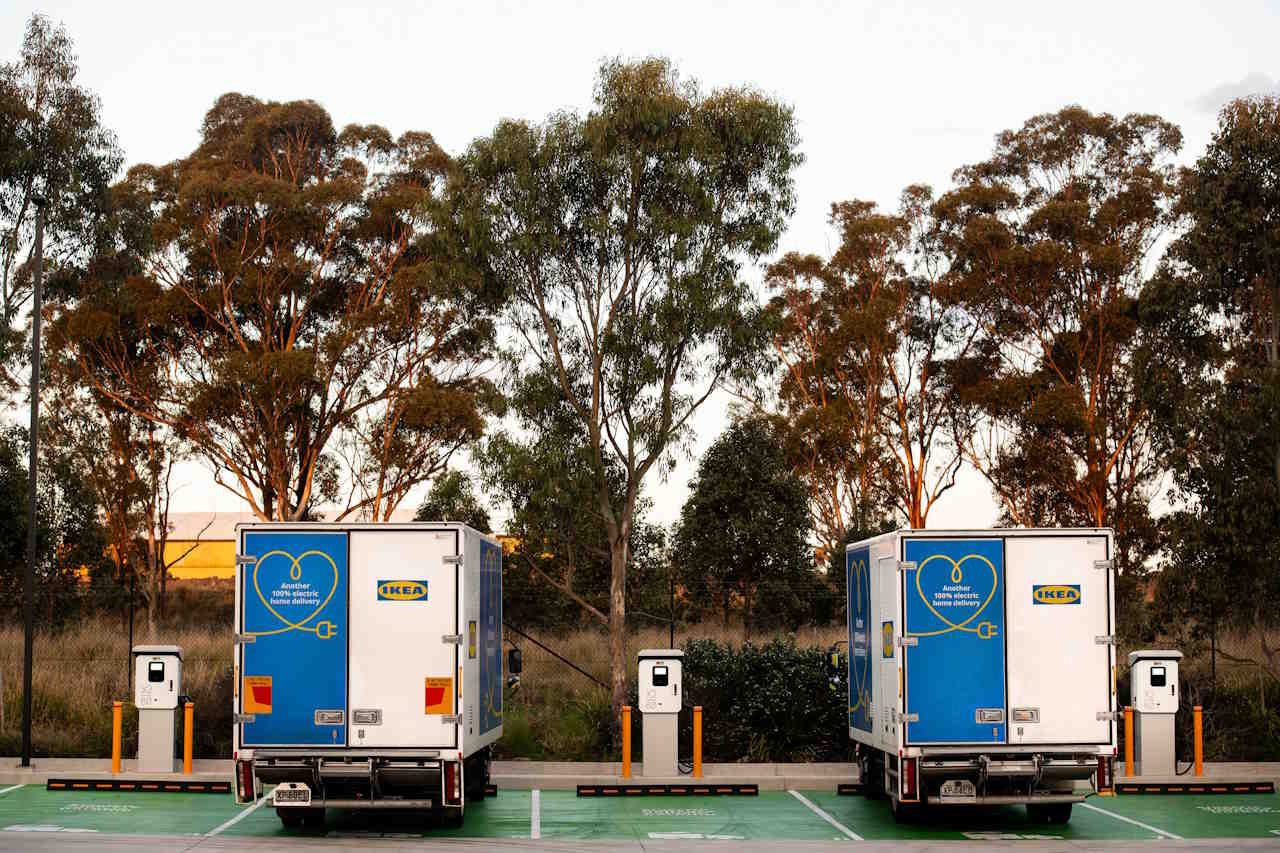
Pointing to examples such as IKEA, who have built a $4.5 million national charging network across seven IKEA sites, Jet Charge show how significant the move can be, with the retailer moving from 5% to 83% zero-emission delivery in just three years.
Between the cost savings, imported fuel availability concerns and meeting corporate zero emissions targets, there is now significant pressure on fleets to either start consider going electric, or to speed up their current five- or ten-year transition plans.
As Tim Washington, Co-Founder and CEO of JET Charge puts it: “At current diesel prices, the fuel cost savings of switching a commercial fleet to electric are not marginal. They are transformational. The question for Australian fleet operators is no longer if they should electrify. It’s whether their charging infrastructure will be ready when the vehicles arrive.”
Washington went on to say “sustained diesel dependency in freight is one of the less visible but most direct contributors to the rising price of goods. And it’s already happening.” … “Fleet electrification is now a risk mitigation strategy for supply chain cost issues, and has real consumer implications.”
Re that last point, as discussed in The Driven’s recent article on the NSW standing committee report on the EV infrastructure rollout, there are still many systemic obstacles to address before large fleet operators can feel confident to electrify.
As noted in that report, the distribution network service providers (DNSPs) are notorious for slow connection and/or supply upgrade timelines, along with the wildly differing fee structures each DNSP applies for doing the same work.
Alongside this, there is the workforce bottleneck consisting of electricians trained in EV charger installation and maintenance, as well as EV trained heavy truck mechanics to maintain these fleets.
Together, these can lead to long delays to implementing a fleet transition plan as the electrical workers may not be readily available to install the chargers and/or their power supply, and/or there won’t be a trained pool of mechanics and electricians available to ensure a quick turn-around when faults or damage arise.

All-up, whilst there are major savings to be had in electrifying Australia’s transport fleet (as well as fuel supply confidence and stability of running costs by not relying on imported fuel-oil), there is still work to be done before Australia’s fleet can fully embrace the EV transition.
Hopefully, recommendations like those found in the above-mentioned NSW report will be implemented without delay for, as Jet Charge point out in their analysis, once fleet managers and businesses realise the advantages of fleet electrification, there is likely to be an ever-increasing flood of depots requiring heavy truck charging and maintenance.
Sign up for The Driven’s free daily newsletter and get the latest EV news and analysis delivered straight to your inbox.