Japanese automaker Toyota is reportedly planning to scale back its planned increase in the production of battery electric vehicles (BEVs), joining the growing ranks of legacy carmakers rolling back their EV plans.
The Japan headquartered Nikkei Shimbun, the world’s largest financial newspaper, reported on September 6 that Toyota was planning to slow EV production, cutting its global output forecast for 2026 to 1 million cars, down 30 per cent on a previously announced forecast of 1.5 million.
According to Nikkei, Toyota’s decision to slow EV production is due to the slowdown in the global EV market.
While Toyota has not made an official announcement, a statement from Toyota issued to Reuters late last week sought to contradict the report, saying that there had been no change to its 1.5 million EV target for 2026 – on track to 3.5 million per year by 2030 – but added that the figures were not targets but benchmarks for shareholders.
The decision to ramp back EV production, however, does fit in line with Toyota’s long-standing “multi-pathway strategy” of matching powertrain technology to actual public demand.
This strategy has seen Toyota make more of an effort in hybrid vehicles – both plug-in (PHEV) and non-plug-in (HEV) – as well as hydrogen fuelled vehicles (FCEV), and leading the charge against EV supportive policies, including those proposed for Australian.
Toyota announced at the beginning of July that it had become the first carmaker to sell 100,000 HEVs in Australia over 12 months (the 12-month period to June 30), but the majority of these are in mild hybrids, or was Toyota describes at HEV.
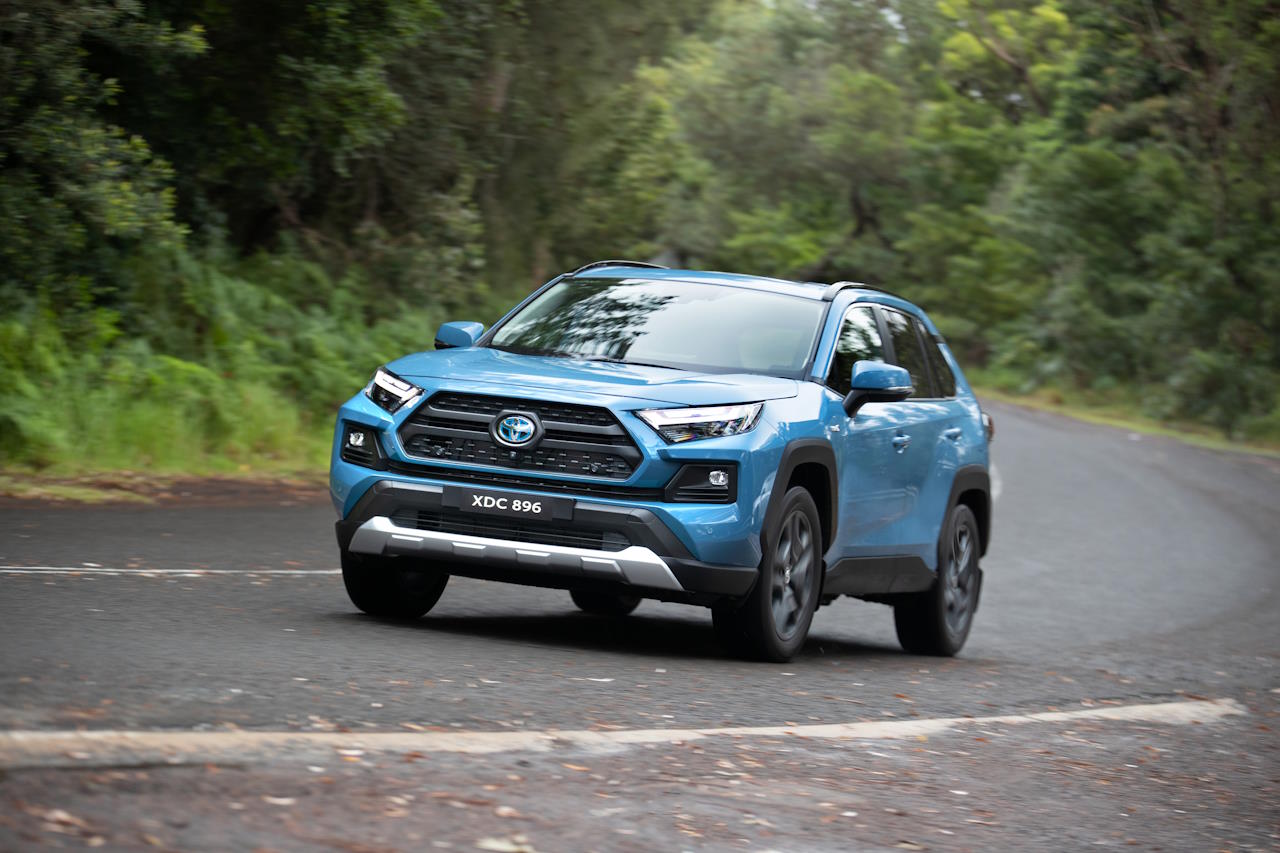
A month earlier, Toyota Australia announced that it would no longer sell petrol-only variants of nine models, including the hugely popular RAV4. It sells only one fully electric model under its brand.
Sales of Toyota HEV far outstripped that of all other Toyota electrified models in the first six months of 2024, nearly reaching 2 million vehicles – compared to just over 70,000 for both BEV and PHEV models.
The report of Toyota’s alleged plans follows a slow but consistent trickle of similar stories from other carmakers around the globe.
Volkswagen, Nissan, and Hyundai were all reported earlier this year as redirecting their focus towards PHEVs due to weakening consumer demand in major markets.
American automakers General Motors (GM) and Ford both followed suit in the middle of the year, with GM cutting its 2024 EV sales goal and Ford abandoning its goal of going all electric in Europe by 2030.
Meanwhile, just last week, Swedish carmaker Volvo also abandoned its 2030 all electric target, similarly redirecting its attention towards hybrid models.