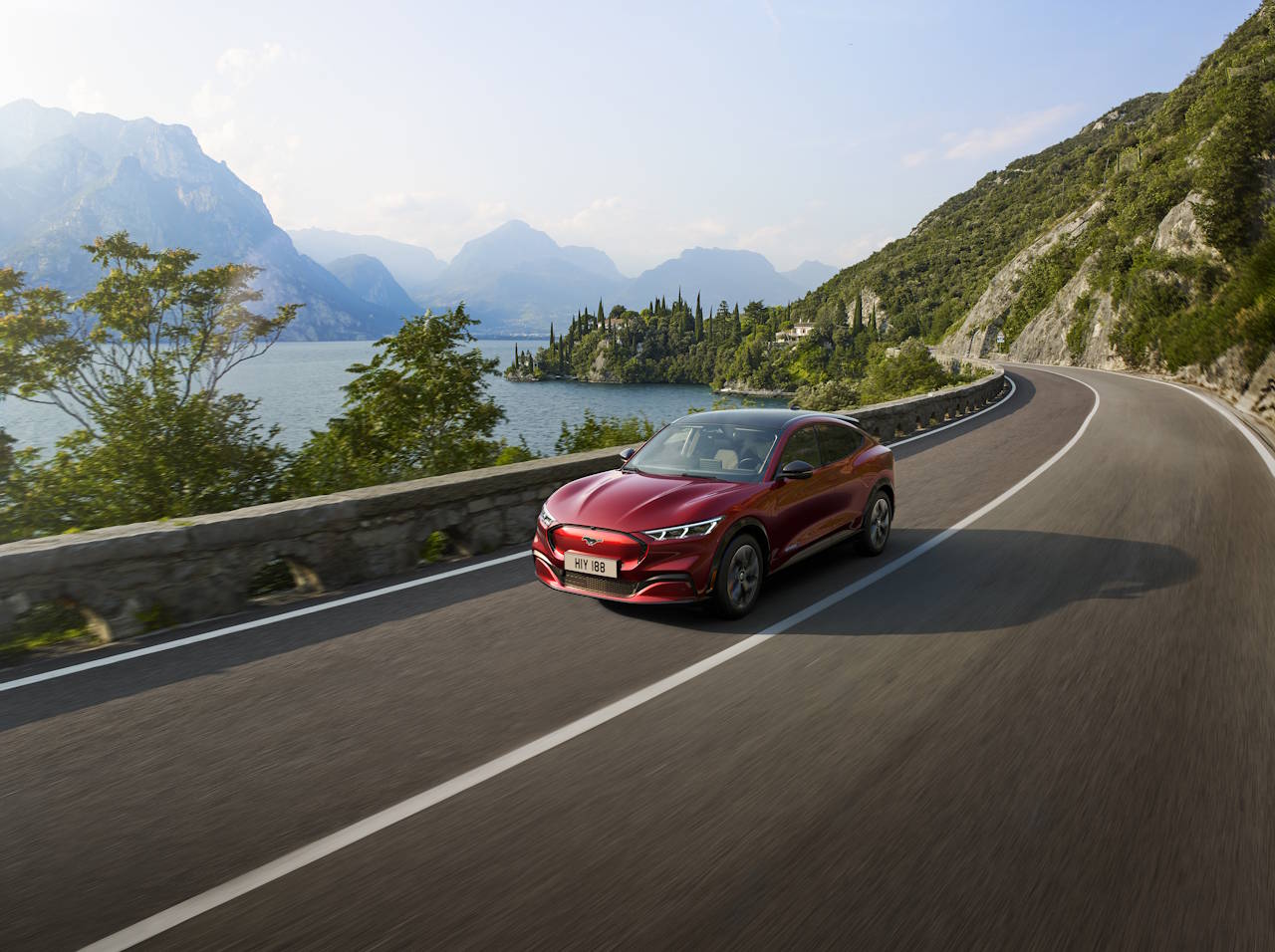
Ford says the batteries in its 2021 Mustang Mach-E electric SUVs retained an average of more than 91 per cent of their original usable capacity among vehicles that had travelled more than 160,000 km. Across the full North American cohort, the average was 92 per cent after just over five years of ownership.
The first Mustang Mach-E vehicles reached customers across North America over five years ago, and since then have collectively driven two billion miles – around three quarters of the way to Neptune, apparently (“not a practical comparison”, according to Ford, “but a useful way to understand the scale and distance”).
Analysing battery state-of-health (SoH) data for the more than 36,000 Mach-Es from that first class of vehicles revealed that the average battery health was 92 per cent. In fact, according to Kevin Vander Laan, the technical leader of high-voltage battery cells and systems at Ford, 95 per cent of all MY’21 Mustang Mach-Es had a battery health between 87 and 97 per cent.
Breaking that down further, the vast majority of Mach-E owners had driven around 55,000 miles (around 88,000 kilometres) since they took delivery of their car and seen their battery’s SoH fall to 92 per cent. For the over 2,000 who had driven more than 100,000 miles, SoH reached 91 per cent.
An even smaller group of extremely high-mileage drivers, having driven more than 200,000 miles (around 320,000 kilometres), is averaging a battery SoH of only 88 per cent.
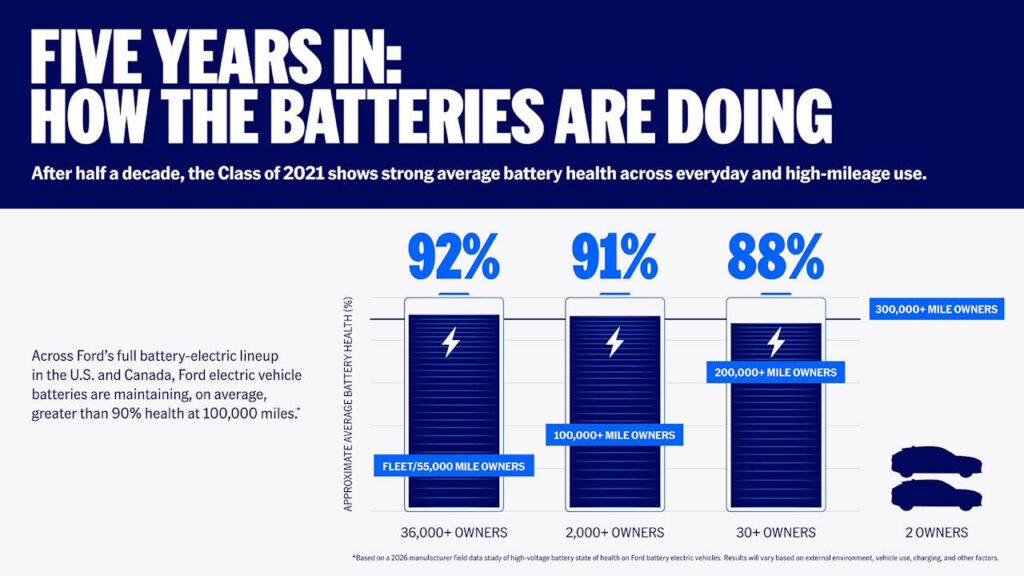
It’s not just the 2021 Mustang Mach-E that is performing well, according to Ford. Aggregated across the company’s full battery-electric lineup released over the last five years in North America, its battery packs are maintaining on average greater than 90 per cent SoH at 100,000 miles.
Ford is using this data to inform current and future electric vehicle programs such as its Universal Electric Vehicle platform, which will underpin its next generation of EVs, including the Fathom pickup, which could be launched as early as next year.
Vander Laan said the 2021 cohort gave Ford a large body of real-world data to inform future battery and vehicle development, and “is one of the most valuable feedback loops we have had at this scale: more than 36,000 vehicles, five-plus years, and billions of real-world miles.
“The data is encouraging, and the learnings continue to inform how Ford approaches battery systems, software guidance, and future electric vehicle programs.
“The Class of 2021 has added a real-world chapter to what our validation work was designed to understand. And we have many more electric miles ahead of us.”