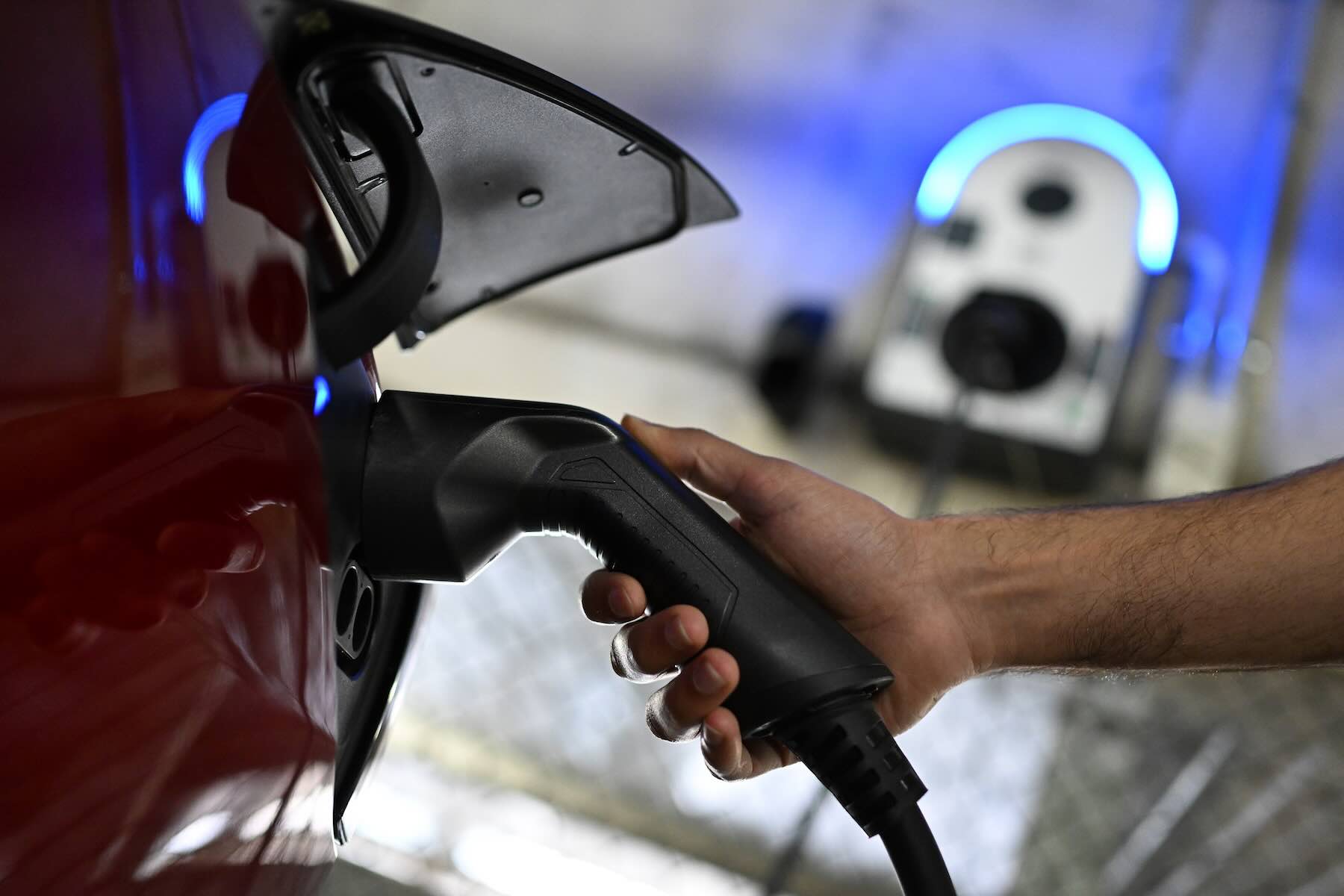
Federal shadow Attorney-General Michaelia Cash confirmed on Wednesday that a Coalition government would scrap the government’s electric vehicle (EV) subsidy if it were elected to government in 2028, claiming it would deliver a $2.1 billion saving.
Even though a federal election is not due for another 18 months or so, the Liberal-National Party Coalition has this week released its plan for budget cuts they say would be worth $31 billion over the four years from 2028-29 – equivalent to the first four years if they were to win the next election.
It includes an end to the home battery rebate scheme, funding cuts to the Australian Renewable Energy Agency, and the removal of the EV subsidy, known as the Electric Car Discount, a fringe benefits tax (FBT) exemption on EVs worth up to $89,332, potentially saving vehicle owners between $3,000 to $5,000 per year.
According to Parliamentary Budget Office modelling reportedly prepared for the Coalition and seen by The Australian Financial Review, scrapping the EV subsidy today would save $2.1 billion across the next three financial years.
And that’s just what federal shadow Attorney-General Michaelia Cash has said the Coalition will do if they retake office.
Speaking on Channel 7’s breakfast show Sunrise on Wednesday morning, Cash accused federal treasurer Jim Chalmers of having a “spending addiction” and called for him to immediately cut the subsidy, adding that the Coalition’s “commitment to the Australian people” was that they would cut the subsidy.
“Australians should be able to buy any car they like, but the Australian taxpayer should not be subsiding it,” she added, possibly forgetting the tax advantages offered for diesel utes. It was Cash, after all, who said in 2019 that an incoming Labor government would “steal tradies utes” because of their support for an EV policy.
Cash’s comments came after Labor’s environment and water minister Murray Watt offered a strong defence of the subsidy, and in response to the journalist’s question asking how much the Coalition would commit to support EV infrastructure – a question Cash twice ignored and failed to answer.
The federal government has already committed to reducing the threshold from $89,332 to $75,000 next year and reducing it on all EVs further still from 2029.
But the Coalition’s desire to completely eradicate the subsidy comes at the same time as fuel prices skyrocket due to the ongoing global instability, the cost of living is hit by inflation and interest rate hikes, and consumers continue to commit to buying EVs at record numbers.
“At a time when petrol and diesel prices are skyrocketing, the Electric Car Discount has helped thousands of suburban Australians families get into EVs and save up to $3,000 per year,” said Aman Gaur, head of legal, policy, and advocacy at the Electric Vehicle Council (EVC), in a statement to The Driven.
“Removing the Discount now would only keep Australians hostage to expensive, imported petrol and diesel.”
The EVC’s mid-year State of EVs report published at the end of September revealed that a total of 103,716 battery EVs (BEVs) and 54,241 plug-in hybrid EVs (PHEVs) were sold in the first half of 2026, a 117% increase on the same period last year.
EVs now accounted for 25.8 per cent of all new car sales in the first half of 2026, helping to grow the national fleet of EVs to 612,000 as of June. And with Australia’s increasing demand for EVs, so too have carmakers begun to offer a greater offering of EVs, with 125 different BEVs and 71 PHEVs now available.
“The pace of EV sales growth reflects a powerful combination of greater vehicle availability, improved affordability and a growing awareness that EVs provide one of the best ways to cut the cost of living right now,” said Julie Delvecchio, Electric Vehicle Council CEO, speaking in September.
“Most EV drivers cut their annual fuel bills by more than 60 per cent according to the EV Ownership Survey from March this year. Against the backdrop of extreme fuel volatility this year, more and more Australians are voting with their wallets by switching to an EV.”