A 21-page report from motoring group NRMA laying out the problems its faced in rolling out a government-funded national EV charging network remains hidden from view, despite a formal request that it be tabled to parliament last month.
“The Grit in the Gears” report – subtitled “Lessons from the frontline of building a national EV network” – ostensibly delves into how NRMA came up short in the $78 million plan to roll out 117 EV charging stations across the nation. Around 62 have so far been completed, according to an NRMA spokesperson.
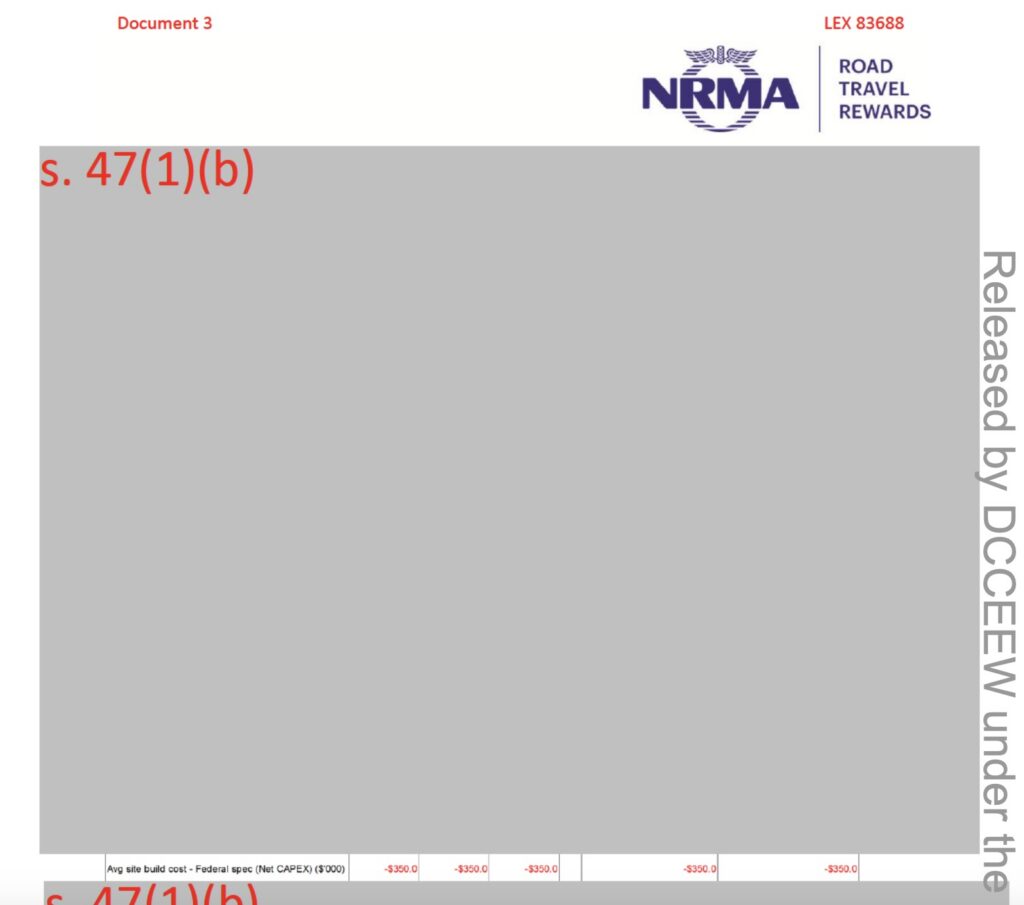
The 21-page report has actually been published on the Department of Climate Change, Energy and the Environment website, but is totally redacted, bar one single line that identifies the average cost of the charging installations – $350,000.
The redaction is justified by section s. 47 (1) (b) of the Freedom of Information Act, which allows for such decisions on the basis that the matters discussed are commercially sensitive. (See image below).
However, Liberal Senator Sarah Henderson moved last month that the report be tabled in parliament by climate and energy minister Chris Bowen no later than midday on September, 21. But according to the latest update from the Senate (published last Friday), it has not yet been complied with.
The lack of detail around the program has frustrated many in the EV community, particularly those who like to travel long distances. Harald Murphy, who has done the lap of Australia in an EV 12 times already, and is a former head of a state EV supporters club, wrote on X the other day:
“For anyone who cares about the failed @NRMA 117 site National EV DC charging network, this will make you angry. Here’s what it probably says: “Yeah, na. Let’s just take the money and pick the low hanging fruit. It’s not like anyone will notice or care.”
The issue is doubly frustrating given the surge in EV uptake this year, with full battery electric sales now reaching one in four new cars, with many delivering bigger batteries and longer range that should encourage drivers to take them deeper into the countryside.
Their concerns have been amplified by incidents, such as the one that occurred at the Border Roadhouse along the Nullarbor Plain, where a truck took out a solar canopy above one of the few reliable off-grid EV chargers along the route in April, rendering it inoperable. It has still not been repaired.
The NRMA won the contract to roll out the national charging network in April, 2023, with $39 million in funding from the Australian Renewable Energy Agency, and agreeing to match that sum with its own money. The plan was to build a network around Australia, to ensure there was a charger every 150 km along major routes.
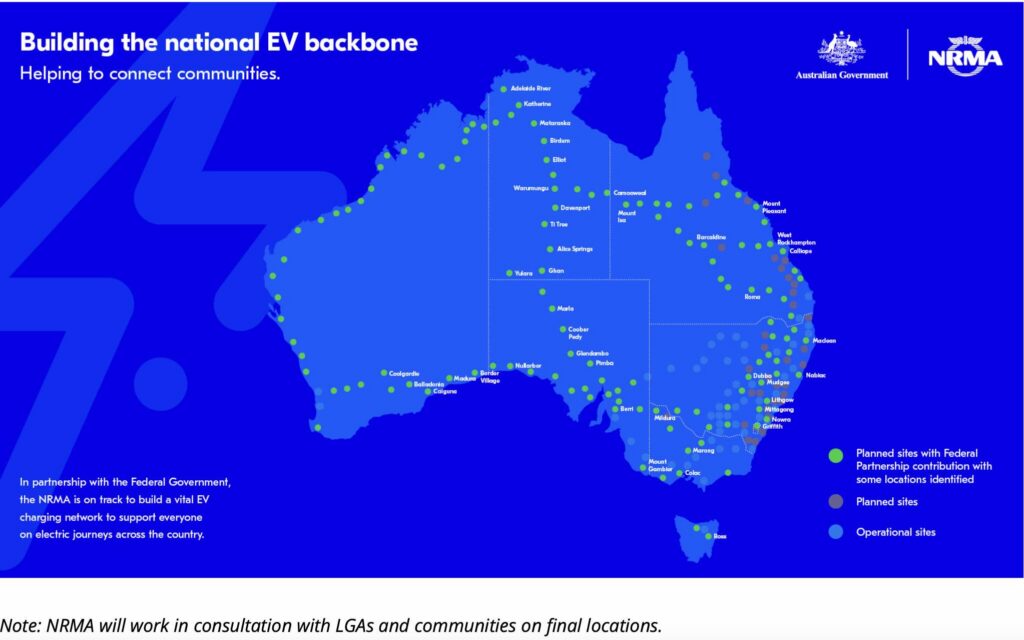
But the program ran into significant issues, particularly in regional and off-grid areas. According to a report published in the AFR in March only 45 of the EV charging stations had been installed, little more than one third of the target. That has now risen to 62 and the NRMA says work continues on the other installations.
One report that was published on ARENA’s website in late December, 2024, underlined the challenges the rollout of charging networks faced due to hardware issues (often not discovered until after deployment), supply chains, local council regulations, and the delays in approvals from local electricity networks.
“One of the most significant hurdles faced during the rollout of the National EV Charging Infrastructure Program was hardware design issues caused by original equipment manufacturers (OEMs),” the report says.
“The hardware initially chosen for the charging stations exhibited critical flaws that necessitated complete redesigns of several charging sites. These design issues were not identified until after deployment, leading to delays in the installation schedule.
“As a result, NRMA had to renegotiate with site hosts to accommodate the redesigned infrastructure, further complicating the timeline.
“The flaws in hardware design not only affected the efficiency of individual charging stations but also revealed a larger issue within the industry: new and emerging technologies often undergo extensive testing only after they are deployed in the field. This gap in the testing and design process led to unanticipated issues that could have been avoided with more rigorous pre-deployment validation.”
The withdrawal of Tritium and Freewire from the Australian market also complicated matters. On top of that, delays were experienced in planning, site approvals and grid connections.
“Issues such as crown land negotiations, floodplain impacts, and unrecorded underground utilities have only surfaced during detailed site assessments, resulting in significant delays,” the report says.
“Additionally, the need for DNSP connections to the grid has created bottlenecks in the program’s timeline, as the approval process for new technologies such as behind-the-meter (BTM) batteries has been slow. This has resulted in delays at several locations, requiring adjustments to the project timeline and budget.”
“Securing timely connections from DNSPS has been one of the most time-consuming aspects of the project. The uncertainty surrounding tariffs and the extended timelines for connection upgrades have created a bottleneck, leading to prolonged delays.
“In addition to these regulatory hurdles, there has been concern about the lower-than-expected utilisation rates at certain remote sites. This underscores the need for more strategic site selection, as some locations have proven less viable than anticipated due to limited demand.”
Note: This story has been updated with a response from the NRMA on the number of stations completed.
2nd Note: EVs usually have a single speed transmission, so Grit in the Gear might have been more appropriate than Grit in the Gears.
You can find The Driven’s detailed EV sales data here: Australian electric vehicle sales by month in 2026; by model and by brand.
And you can sign up for The Driven’s free daily newsletter and get the latest EV news and analysis delivered straight to your inbox.