I was a fairly early EV adopter. I set myself some criteria — under $50k, big enough for a family of four, and more than 400 km range — and made the leap as soon as a car that met them became available.
I bought my BYD Atto 3 in 2023 and, just over three years and 75,000km later, I’m still in love with the thing.
We had the same concerns as everyone else making the change: Will it last? Will we be able to charge where and when we need to? Will there be support if I need it?
But it didn’t take long to become completely comfortable with the new way of life the EV offered us.
Most of our driving is around town, so we charge at home on a normal three-pin plug and do our best to charge when our solar panels are producing.
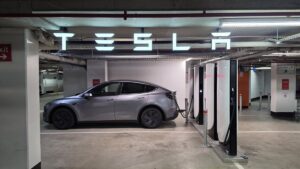
A friend said to me one day, “You must be pleased there is a fast charger in Albany now.” And I am — but mostly for the tourists who get to use it.
There is really no need for a fast charger for most locals. While most of our kilometres are local, we do a fair bit of travelling outside town. But my experience is that, apart from the odd camping adventure — we managed a family-of-four tenting trip to Kalbarri with no problems — most of our out-of-town travel is to a few select places.
We go to Bunbury or Esperance to visit family, or Perth to visit friends. Once you have done each trip once and planned a route through places with fast chargers using PlugShare, it is pretty much set-and-forget as far as trip planning goes.
For the Perth trip, Kojonup and Williams are our options. If we head to Bunbury, we stop in Manjimup. Heading east, the chargers in Jerramungup and Ravensthorpe get us there.
As I keep telling anyone who will listen, driving an EV isn’t harder. It’s just different.
The other day, I realised something unexpected had happened to the way I travel long distances, which tickled me. When we do the Perth run, we top up in either Kojonup or Williams — or sometimes both, if we don’t all coordinate our needs for a bathroom break. When we stop, I take the opportunity to get in some steps and have a 15-minute walk around.
A few weeks ago, I had to take my old diesel to Perth. I found myself stopping at both places and going for a quick stroll anyway.
My EV had taught me a healthy new habit.
Taking the EV to work
Using a car for work, however, can be a different proposition.
I work in Albany on the south coast of Western Australia, and soon after we purchased our own EV, I started thinking about how we would go about changing over some of our ICE work cars to EVs.
We do a lot of work on farms, and our office of about 100 people shares the use of around a dozen cars for field work across the agricultural region.
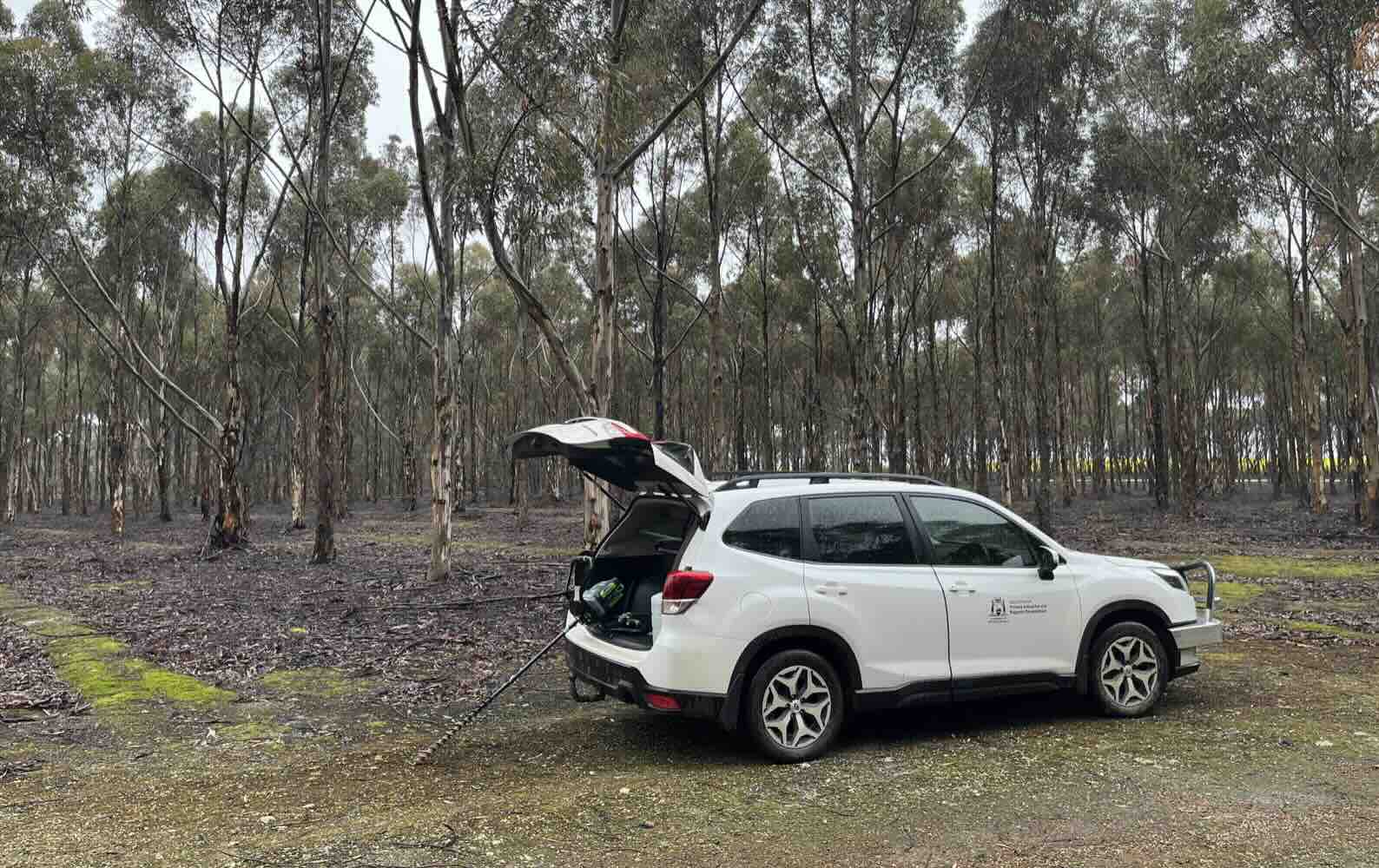
After three years of advocacy, we finally got our first EV at work: a Chery E5. Over the past few months, I have had the opportunity to stress-test that vehicle in terms of its usefulness for the day-to-day operations of our department.
I have used it for field work as far north as Moora, and plenty of places in between, covering around 10,000km. In the process, it has saved taxpayers money in diesel costs and saved all of us some tonnes of CO2 emissions.
Given that I was already very comfortable with the technology, I was fairly confident it would be a similar experience to using an EV at home. In the main, it has been — albeit with some significant, but manageable, differences.
Unlike my personal travel needs, almost every road trip I take for work is different: different regions, different trip lengths and different types of equipment I need to take with me.
All those issues are manageable, but I have to admit I got caught out a couple of times while acclimatising to the limitations of electric travel in areas with less well-developed charging infrastructure.
For example, there is a hole in the charging network in a triangle between Kojonup, Albany and Jerramungup. That is fine if you are just passing through the region, but if you want to visit half a dozen farms in that triangle and then get back to base, range can be an issue.
On one recent trip, I had to do a 50km detour to the Jerramungup charger to top up for my journey home.
Chargers, cables and fuel cards
I have also learnt a lot about the different kinds of chargers available in the regions.
The first time I was doing field work around Narrogin, I checked PlugShare and noted there was a charger there, so I was feeling okay rolling into town with 2% battery remaining. What I had failed to note was that the Narrogin charger required you to bring your own cable.
Luckily, I was staying the night, so I was able to run a cord out of my motel room. It trickled in enough charge overnight for me to get across to Williams for a fast charge the next morning.
We now have a Type 2 charging cable that lives in the car, so that won’t happen again.
Something else that surprised me was the level of understanding of EVs among the people who organise vehicles for government offices.
When the Chery arrived, it included cards to allow me to buy petrol or diesel at four different types of service stations — and, seemingly almost as an afterthought, a card for the Chargefox network.
I am doing my best now to help our fleet vehicle providers understand that our EVs probably don’t need fuel cards. They might, however, benefit from RFID cards that can be used across other charging networks.
The real missing piece
The other big surprise was the hesitance among my colleagues to get in and give the thing a go.
I work with a bunch of highly intelligent and well-educated people, and I was expecting they would all be as keen as me to be part of the transition to an electric future. But I forgot that new, or just different, is often a challenge for everyone. These things can take some time to get used to.
It did not help the reputation of our Chery that one colleague got caught out with a charger in Katanning that was not working. He had to spend a few hours one evening trickling in enough charge to get home at 60km/h.
I am gradually approaching the people I work with, taking them for test drives and talking about the ins and outs of charging infrastructure. We are slowly seeing an increase in acceptance of the EV in our fleet.
So what are the take-home messages?
Firstly, EVs are already a viable option for work and play in the regions, although a variable work environment requires a little more planning.
The next generation of EVs, with longer ranges, will help a lot with range anxiety for the uninitiated. But we still need to find a way to justify filling the significant gaps in the rural charging network.
I think the biggest missing piece of the puzzle, though, is education.
We need to find a way to get people comfortable with the tech, and that really comes down to lived experience. It would be great to see some effort from government to help people get comfortable with this new-fangled way of getting around.
But EV drivers are the people best placed to play that advocate role in their communities.
So, if you are already an EV driver, I hope you can take the time, when the opportunity arises, to bring more of the undecided or uninitiated into the fold.