It was probably the third request to open the back window – a prophylactic against alleged car sickness – when this driver wondered why Hyundai hasn’t put rear vents in its new Elexio.
As it was, I only found out this model is a bit more controversial than your usual EV after driving it nearly 1000km.
The Driven has already compared Hyundai’s “fighting China with China” model with its competitors, here and here: it’s a Korean car but made and partly designed in China.
But what if you’re an EV cleanskin and just want to know if it’ll get you from Melbourne to Sydney, with two tired-excited children at the end of term?
It will and very comfortably as well. Unless of course you have a car sickie (alleged; could’ve also been boredom) in the back.
The Elexio range starts with the base model at $57,990 drive-away and levels up to the Elite which comes in at $59,990 drive-away. But both use the same drivetrain, an 88.1kWh LFP battery, a single front motor producing 160kW and 310Nm, and front-wheel drive.
Hyundai estimates 562km WLTP range for the base model and 546km WLTP for the Elite.
We had the Elite, which comes with add ons including heated and ventilated front seats, a heated steering wheel, two wireless phone chargers instead of one, and a power tailgate.
The Elexio is replacing, for a week, my usual drive: a Mazda 3 hatchback from 2006.
This is what it had to better: a surprisingly capacious boot, a CD player, wind up windows, very few blind spots and two airbags. Cruise control and a backing camera still in the realm of science fiction. But a size and a pre-safety-innovation weight that means Melbourne to the other side of Sydney can be achieved on two 60 litre tank fills.
At current petrol prices seen along the Hume highway, that would have been an almost $300 trip.
I was expecting to be transported 20 years into the future. What I got was a machine that is still mostly car with some Chinese tech characteristics.
There are buttons in the usual places for almost all of the important things – cruise control, lights, indicators, drive mode.
The gears are on a separate lever and are shifted by turning the outer knob, which means unlike in, say, the Mustang Mach-E, you can’t accidentally nudge it into reverse if stopped at lights and searching for the indicator.
The regenerative brake paddles are finger-friendly, lodged on the other side of the steering wheel to where hands naturally sit.
The driver’s side child lock button is just under the window control panel and is easy to find.
It is a car you can get into and drive without getting 100m down the road and wondering where a crucial knob is.
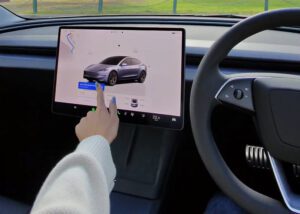
What is a bit odd is the fact that all aircon and heating controls are inside the screen, which takes up the entire centre and passenger side of the car.
As a passenger who still gets (legitimately) car sick, I’m uncertain about having a screen permanently in front of me. But unlike some of the software-first EVs out there, the screen menu isn’t deep and the main buttons needed are within easy reach – and eye sight
As a family wagon, the Elexio works: there is heaps of room in the boot, and plenty of space and extra cubbies in the back foot wells and doors.
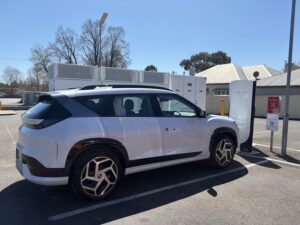
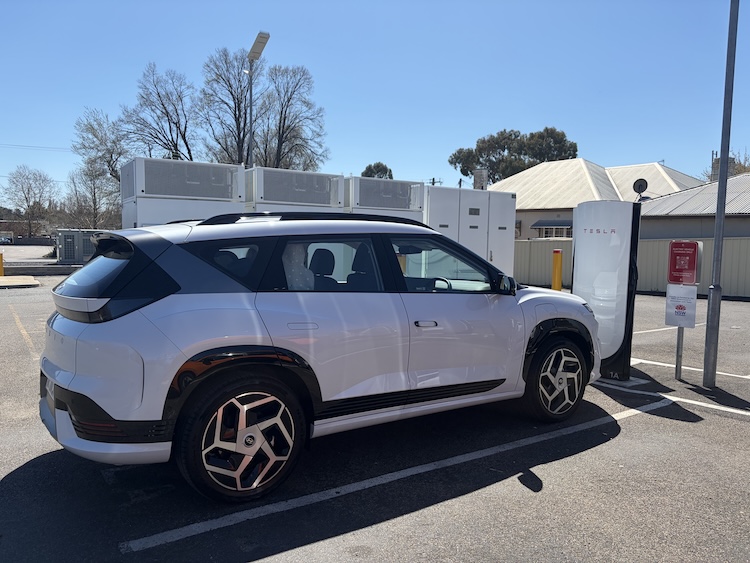
And as for charging? The bete-noir of all EV cleanskins writing reviews for certain other publications? Simple. Even while managing a just woken-up passenger and a wee accident at a service station stop.
The cost of four charges over two days: $58 and change.
Have your own EV drive story, please email us at [email protected]
You can find The Driven’s detailed EV sales data here: Australian electric vehicle sales by month in 2026; by model and by brand.
And you can sign up for The Driven’s free daily newsletter and get the latest EV news and analysis delivered straight to your inbox.