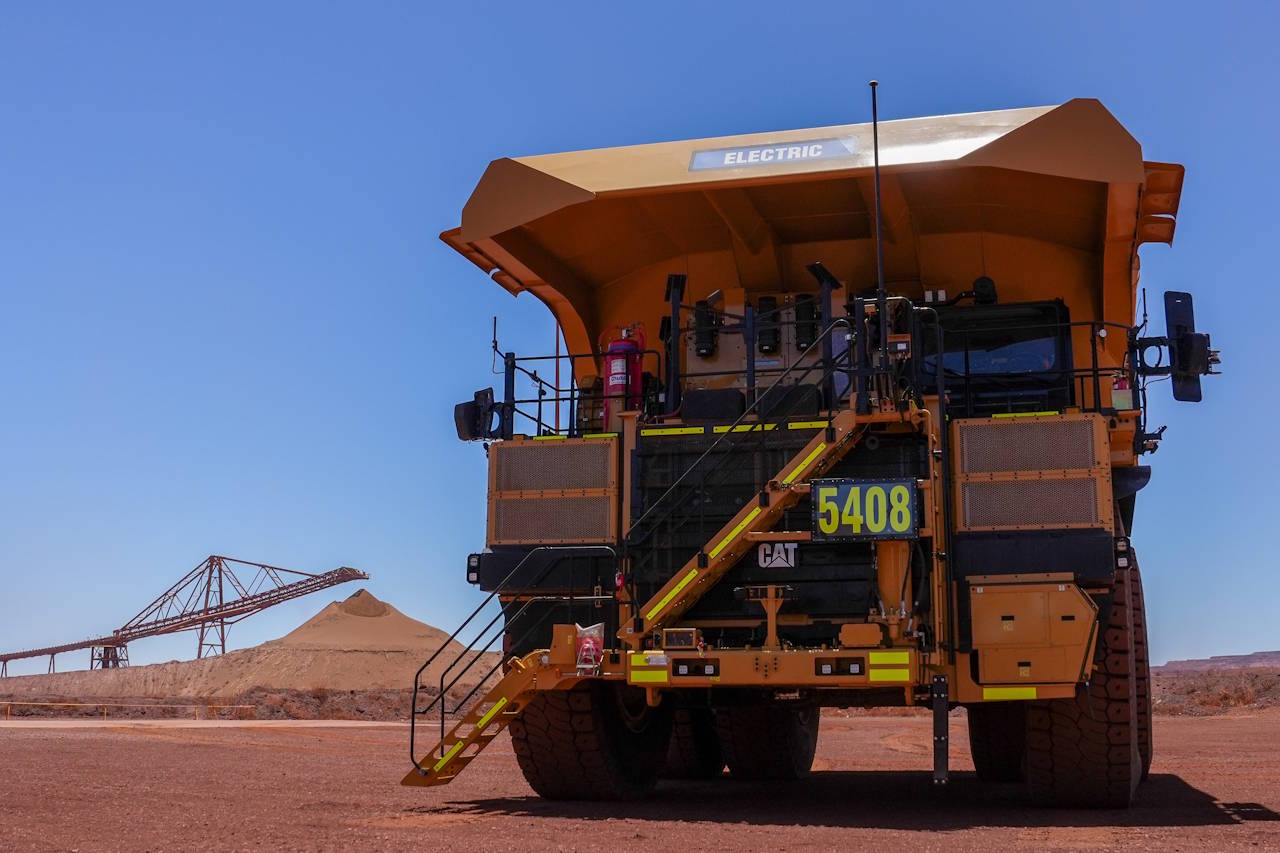
Mining giant BHP says it intends to trial “dynamic charging” technology for the two electric haul trucks that it is testing at its Jimblebar mine in the Pilbara, and is also taking delivery of another two battery electric locomotives for testing in the current financial year.
BHP has been criticised for its slow progress on the switch to electric mining equipment at its giant iron ore mines in the Pilbara, in contrast with the ambitious plans of rival Fortescue that intends to reach “real zero” and eliminate all diesel use at its mines by the end of the decade.
BHP has stated on a number of occasions that it does not consider the technology is ready for widespread deployment, although it has been trialling two Caterpillar 793 XE Early Learner battery-electric haul trucks at its Jimblebar mine.
In a statement to the stock exchange this week along with its annual results, BHP said that it expects to commission high-power static charging infrastructure and Caterpillar’s Dynamic Energy Transfer technology at the Jimblebar test facility this year.
The company actually announced plans to use the DER technology back in 2024. The technology uses a rail to charge electric haul truck’s batteries while the machine is on the move, and the system’s infrastructure is flexible, which allows it to be easily relocated.
BHP says it started working with Caterpillar to deploy zero-exhaust emissions mining trucks in 2021, but its slow progress in Australia is blamed by analysts and competitors on the huge rebates that it – and the rest of the mining industry – receives each year from the federal government from diesel use.
Climate Integrity reported on Tuesday that BHP pocketed around $548 million in fossil fuel subsidies under the Fuel Tax Credit (FTC) Scheme in the 2026 financial year, when it reported an after-tax profit of US$9.83 billion (A$13.8 billion).
Climate Integrity says that despite acknowledging that “diesel displacement is the largest lever” it has to reduce operational greenhouse gas emissions, BHP’s diesel use has increased year-on-year. It estimates that the amount of diesel BHP used across its operations increased from 1.23 billion litres in 2024/25 to 1.25 billion in 2025/26 – enough to fill 500 olympic swimming pools.
It will receive an estimated $548 million in Fuel Tax Credits from the federal government for the last financial year – less than the estimated $622 million BHP claimed in 2024/25 because of the halving of the fuel excise after the diesel price surge in response to the closure of the Strait of Hormuz.
BHP would have received an estimated $648 million in fuel tax credits in 2025/26 without the halving of the excise,” Climate Integrity said.
“Half a billion dollars in fuel tax credits flowing to a company posting a $13.8 billion profit is a policy failure,” Climate Integrity Executive Director Claire Snyder said in a statement. The Fuel Tax Credit scheme was never designed to subsidise the world’s largest mining companies while they delay decarbonising their fleets. It’s time for reform.“
“BHP itself says diesel displacement is the single biggest lever it has to cut emissions – and yet its diesel use keeps climbing. It’s hard to see why it would move any faster while taxpayers are quietly picking up half a billion dollars of their fuel bill every year.”
Fortescue has also argued for fuel tax credit for big miners be capped at $50 million a year, saying that the estimated $3.4 billion paid out each year is not giving any incentive to switch to electric trucks and other mining equipment quickly.
Fortescue is well on the way to delivering a green grid to power its iron ore mines, and the electric equipment it is installing, including more than 300 giant electric haul trucks, electric excavators, bulldozers, water carts and loaders.
BHP, meanwhile, also announced it has commenced trials of two Wabtec battery-electric locomotives in Port Hedland and took delivery of two Progress Rail battery-electric locomotives for testing in FY27.
“Once locomotives from both OEM’s are in trial, we expect to be one of the first mining companies globally to conduct side-by-side evaluations of battery-electric heavy-haul locomotive technologies from two suppliers within the same operating environment,” the company said.
Sign up for The Driven’s free daily newsletter and get the latest EV news and analysis delivered straight to your inbox.