Xpeng, a tech-driven Chinese-based electric car maker, has been expanding into dozens of international markets in the last few years with a range of new EV models, and recently we got to preview one of its upcoming affordable electric SUVs, which is expected to bring the brand into the mainstream in multiple global markets.
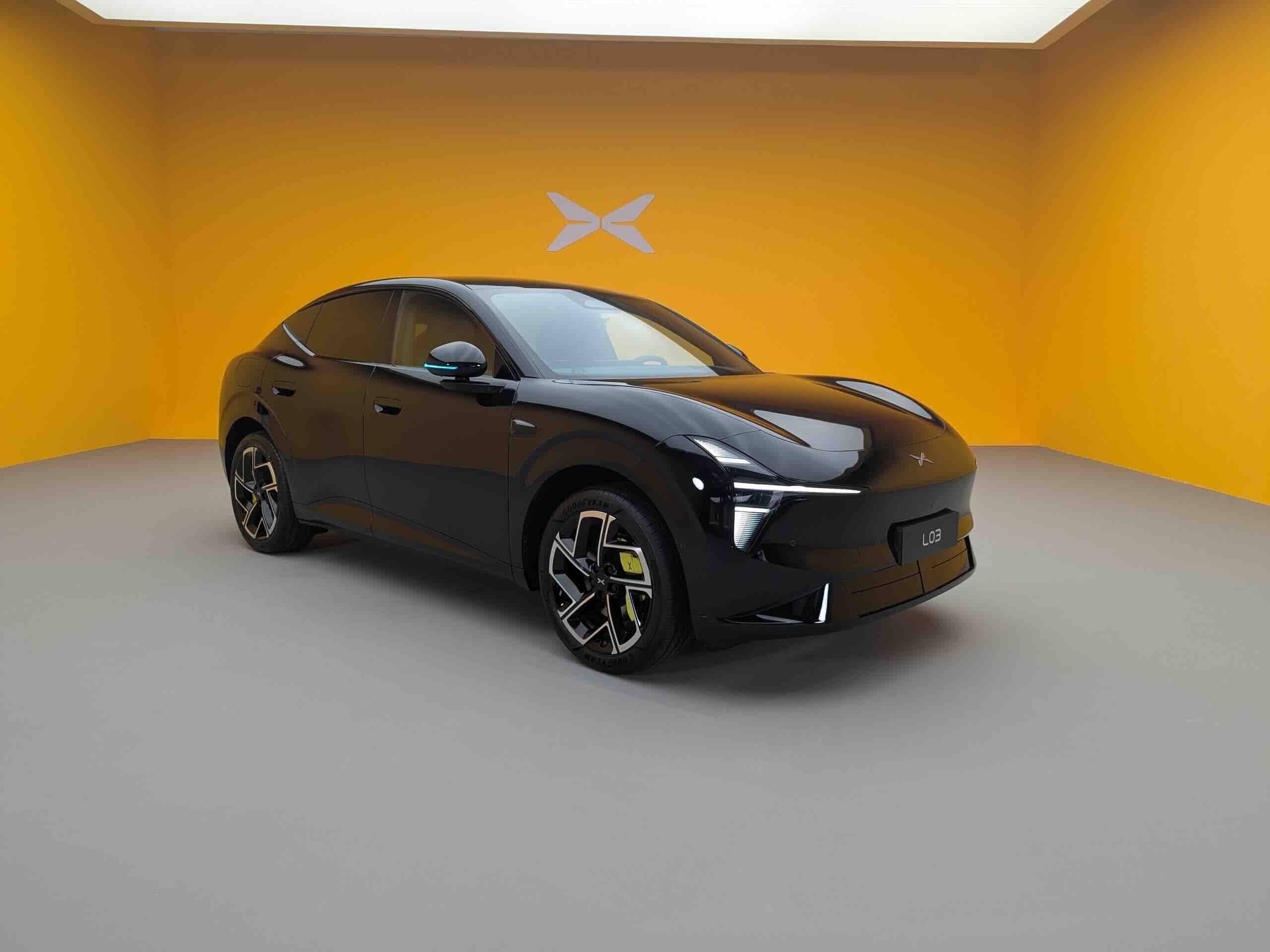
At an event in Beijing last week, we had the opportunity to get up close with the L03, which could end up being Xpeng’s best-selling model, given its anticipated low pricing. Detailed specs, pricing and local launch plans will be revealed in the coming months.
What we can tell you is that the car is 4.6 metres in length but has a coupe-like design, including a rear light bar, and has good aerodynamics and an expected coefficient of drag of just 0.228, according to Xpeng.
Efficiency is also boosted by active air ducts at the front, which open to provide cooling for the batteries and motor when needed.
The LO3 also features physical door handles, which make it much easier to open and close, while also meeting the upcoming requirements for manual door handles in its local Chinese market.
The interior build quality feels much more premium than what you would expect in an affordable SUV and closer to the newer G6. It has a big high-definition screen in the centre, like most new EVs, and it has a heads-up display too.
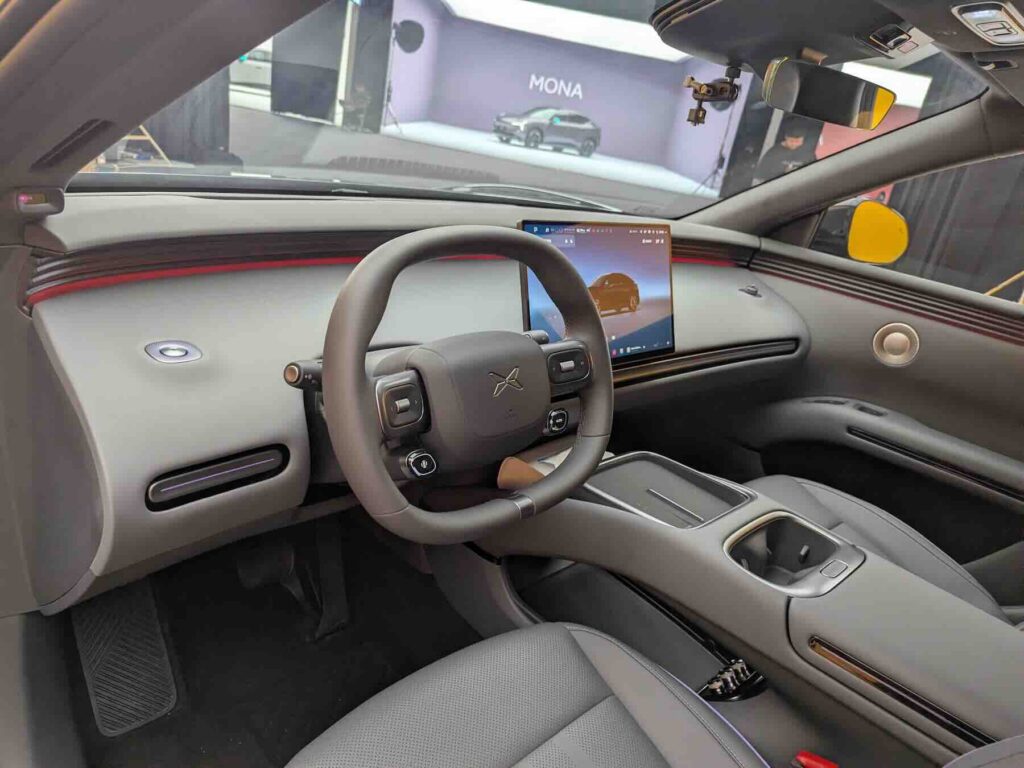
Wireless chargers are standard. And there is also ambient lighting which can be customised and it looked quite nice in low lights. This lighting runs underneath a multi-layered section that also runs along the width and into the doors.
The seating also feels very comfy and for passengers there is also a “zero-gravity” function which makes that seat almost flat for those wanting to relax, thanks to the in-built massage setting.
In the rear, there is plenty of room and like the front, the material quality is very good. Along with that there are rear air-vents and there is also cup and mobile phone holders in the centre arm rest. For added comfort on longer road trips, the back of the seats can be tilted at up to 5 degrees, helping with high comfort levels but that can reduce the rear headroom, which could mean that taller passengers hit the headliner.
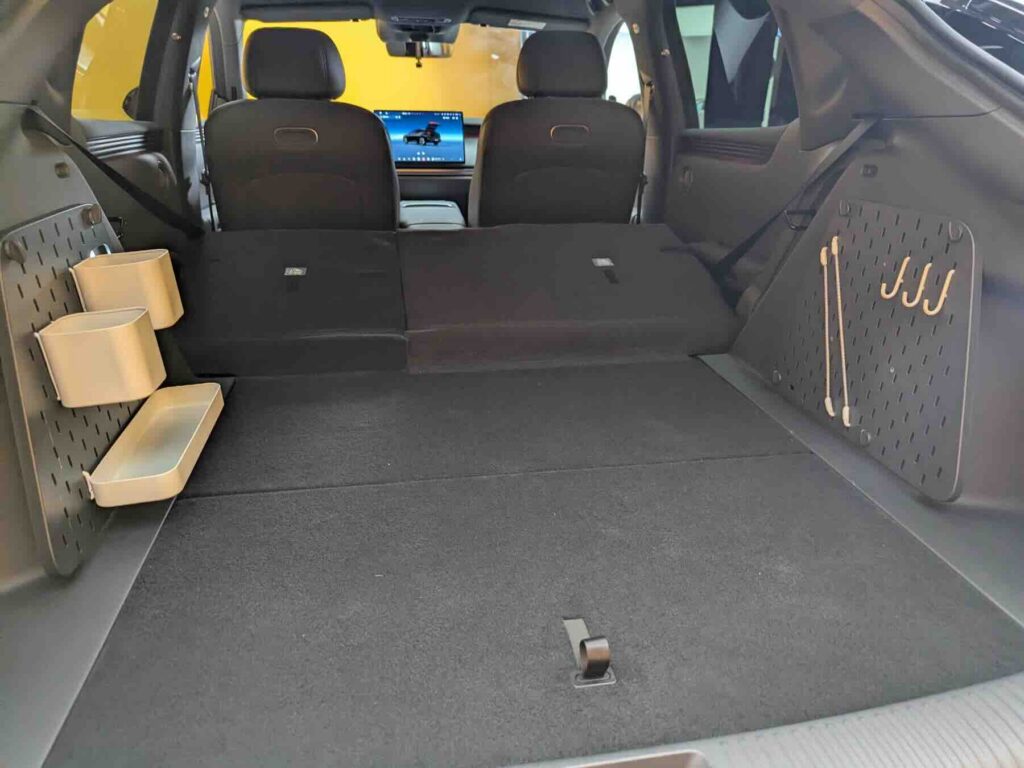
There are also quite a few hooks and magnetic areas to attached accessories too. Speaking of accessories, in the boot, there are also some hole-plate attachments that can be used for various activities, including storing fishing equipment.
With seats up, there is more than 500 litres of space and it also included a 100+ litre frunk under the bonnet.
Although we didn’t get the full specs on the powertrain, what we do know is that it will feature two Lithium Iron Phosphate (LFP) batteries with capacities of 56 kWh and 69 kWh.
These will deliver a range of 505 and 650 km on the CLTC cycle, respectively, which is likely to be between 400-530 km on the WLTP cycle.
We have also been informed that this model will be powered by a 183 kW single motor, which should give it enough oomph off the line.
One other part of the driving that would set it apart from its rivals is Xpeng’s self-driving tech that would be enabled with the L03’s Turing Chips. The VLA 2.0 system from Xpeng rivals Tesla’s FSD supervised and with that capability, it is likely to do well in the Chinese market, along with future availability in international markets too.
The author travelled to China as a guest of Xpeng.
See The Driven’s Compare EVs page for details of all EV models available in Australia.