The Renault Megane E-Tech has been something of an underachiever for Renault Australia since arriving in 2024, nearly two years after its launch in Europe in early 2022.
In the 17 months since arrival here, only around 620 units have been sold. To a degree this is a shame, as the Megane E-Tech has been a solid performer for Renault in Europe and the UK, where it has received extremely positive reviews regarding its handling, performance and value.
However, in Australia Renault has less ‘brand presence’ as well as having to contend with more (and cheaper) Chinese brands than Europe. As a result, Renault has struggled to sell into the already crowded small SUV market. Plus, even from launch, the current Megane E-Tech is a little behind in range and tech offerings such as V2L, DC charge rates and three phase AC charging.
This makes the recent announcement of a coming mid-model refresh by Renault Europe interesting. The refreshed model will have a longer WLTP driving range (up from 454 to 500km). The range increase comes about from an increased battery size (60 to 67kWh usable).
Interestingly, Renault have also switched battery chemistry from NMC to LFP – presumably in a bid to save costs and compete more directly with Chinese rivals. As a result of the increased kWh and switch to the slightly less energy dense LFP chemistry, the battery pack has been enlarged, meaning the updated Megane E-Tech will be 20mm higher than its predecessor.
Charging has been updated with DC charging now up to 165 kW (up from 130 kW) and AC charging standardised at up to 11 kW three phase. (Previously in Europe it was a bit of a muddle of either 22kW or 7kW as standard/22kW as an option. In Australia it has been 7kW only).
Other changes include V2L at up to 3.7kW (16A) via an adaptor used with the charge port – plus (depending on ‘market availability’) V2G functionality. It will be interesting to see if Australia is included for offering V2G, given the Renault V2G system uses AC instead of DC as the output current. (Unlike other manufacturers who mostly use DC).
Full i-pedal functionality has been added as a user-selectable option, plus Google Gemini introduced to improve speech control of vehicle functions.
Another new feature will be driver recognition, using a camera in the windscreen pillar. That will work by creating a profile via a facial scan, after which the vehicle can automatically activate personalised settings, including driving position and favourite media.
Renault by the way make a point of noting that the data from the facial scan will be stored exclusively in the vehicle and not transmitted to a server.
The European three variant line-up will also be slimmed to two. Mind-you, Australia currently only receives the techno version. What may happen is the expansion of the Megane range to offer two, thereby matching the current Scenic E-Tech with its are techno and esprit Alpine variants.
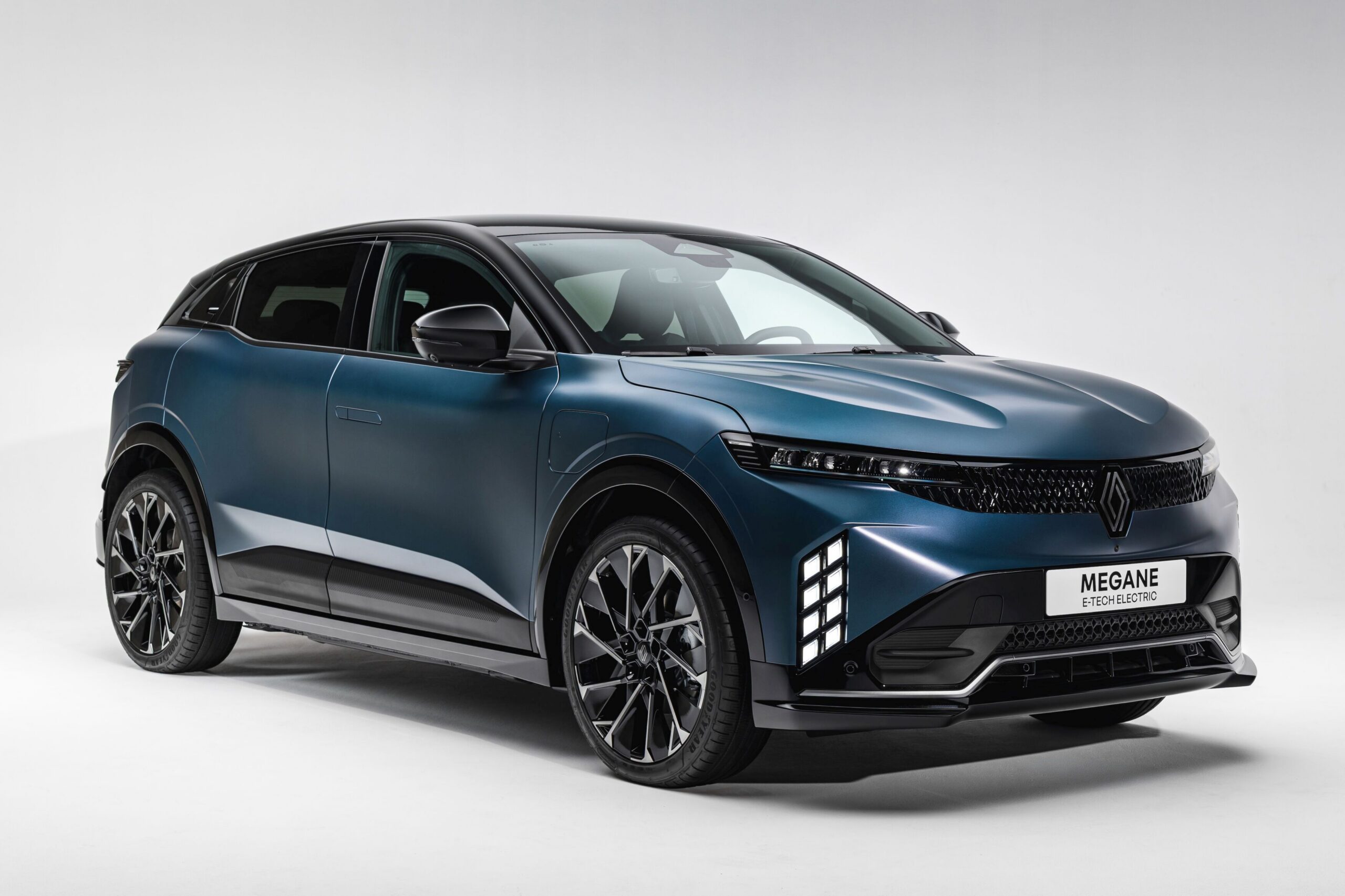
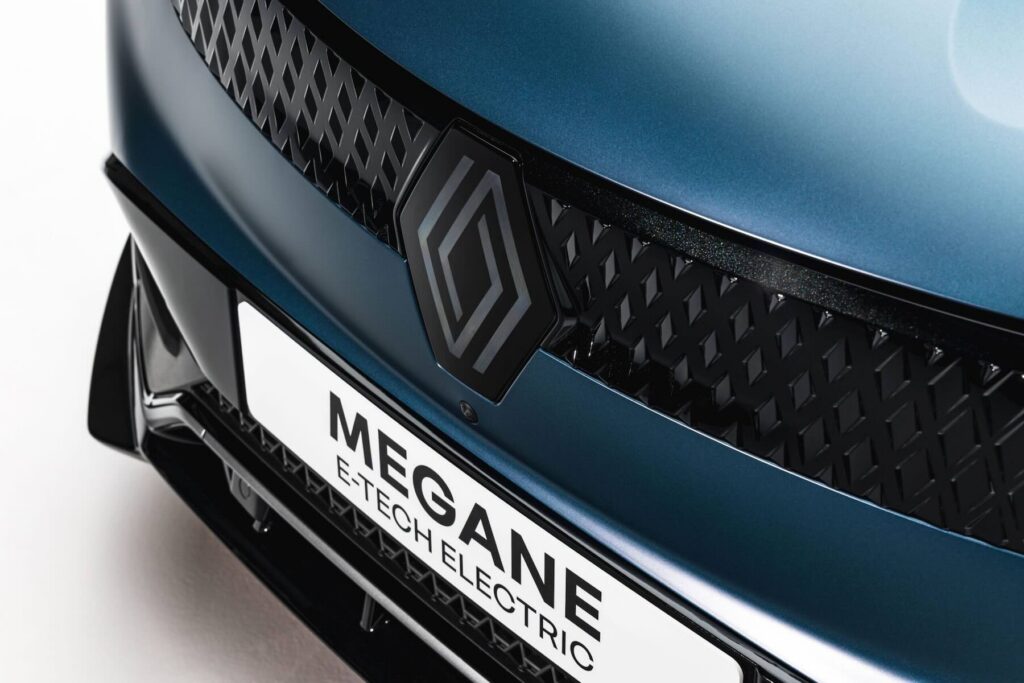
Externally, the new Megane E-Tech sports a smaller, more streamlined Renault logo on the nose along with a new look faux grille and running lights in place of the front/side air scoops. According to Renault, apart from the headlights, all the front-end components are new.
As for when it will make its way here: a Renault Australia spokesperson has advised The Driven they expect to release the updated version in the first half of 2027. Prices and specifications will be announced closer to showroom arrivals.
See The Driven’s detailed EV sales data here: Australian electric vehicle sales by month in 2026; by model and by brand.
Please sign up for The Driven’s free daily newsletter and get the latest EV news and analysis delivered straight to your inbox.