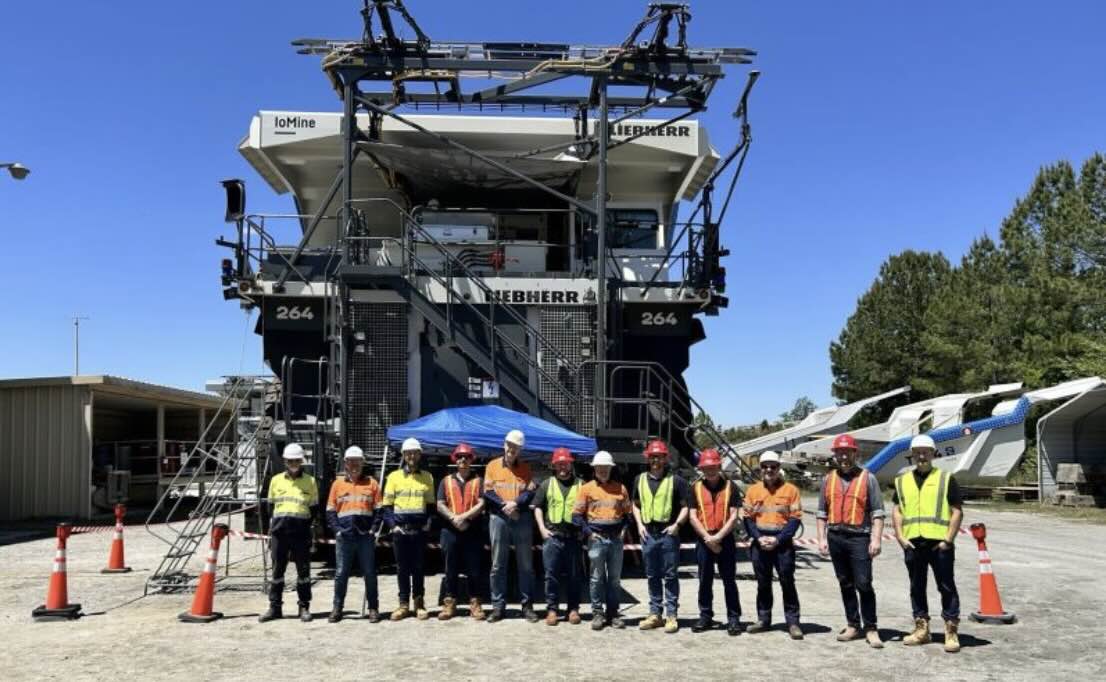
Iron ore mining giant Fortescue has fitted out its first giant electric haul truck with its own electric power system, ahead of the planned start of operations in the Pilbara, where more than 300 of these fully electric beasts will play a central role in the company’s target of eliminating fossil fuels by 2030.
The company also revealed on Monday that commissioning has started on another in-house technology development, the 6 megawatt (MW) chargers that will be able to top up the huge trucks in just half an hour.
“Another big step for decarbonisation at Fortescue: for the first time, our Fortescue Zero production series power system has been integrated with a Liebherr T 264 battery electric truck,” Warren Harris, the head of delivery at Fortescue, wrote on LinkedIn over the weekend.
“Getting a 240-tonne battery electric truck ready for the Pilbara is one of the toughest challenges we’ve taken on. But this integration proves the technology is here, and it’s getting closer to operations.
“Huge credit to the teams who take on these challenges, finding the engineering solutions and putting them into action. Looking forward to seeing the next truck arrive on site soon.”
The photo reveals that the truck is fitted out with a trolley assist system pantograph (on the roof), similar to those being used by some electric buses in Sydney.
But Harris said Fortescue is not intending to use pantograph charging systems, although other companies might, and will charge the massive 2.6 MWh batteries with the 6 MW fast chargers the company has developed.
The truck in the photo is actually in the US, and is being used as a trial for the fit out. The first electric truck that will actually be used in the Pilbara is currently being fitted out in Perth.
“Our 6 MW chargers are very real,” Harris wrote in response to some skeptical responses to his LinkedIn post. “Pantograph can have smaller batteries. As you know all mines are different. Fortescue’s will not have the pantograph instead opting for bigger batteries.”
In a separate announcement on Monday, Fortescue CEO Dino Otranto said Fortescue’s first battery electric haul truck is expected to be operational before the end of the year.
“Its first in-house developed 6MW fast charger has commenced commissioning and will support the rollout of battery electric haul trucks across the Pilbara,” he said.
“The charger will be capable of fully charging a haul truck in approximately 30 minutes.”
Fortescue is already operating 16 electric excavators – which are each saving one million litres of diesel a year – and an electric drill already operating across its iron ore operations. Around half of the company’s 70-strong excavator fleet will be electric by the end of 2026.
Facility testing of XCMG’s prototype battery electric wheel loader, dozer, grader and water cart is now in the final stages, with the equipment preparing to make the journey from China to the Pilbara for site testing.
Fortescue will be sourcing electric haul trucks from both Liebherr and China’s XCMG. The company is expected to complete the construction of its green grid – all powered by renewables and storage – by 2028 at a cost of more than $6 billion.
On Monday it also announced that it had begun construction of a new 680 MW solar farm, as well as a giant eight hour grid battery (650 MWh) that is part of plans to fully decarbonise its electricity grid as early as 2028.
See our piece on our sister site Renew Economy: Fortescue starts construction of Australia’s biggest solar farm outside main grid, and giant eight-hour battery
It expects to complete the electrification of all mining equipment and transport – excavators, drills, trucks and other equipment – by 2030, and is urging the federal government to put a cap on diesel rebates to encourage other big miners to do the same.
Sign up for The Driven’s free daily newsletter and get the latest EV news and analysis delivered straight to your inbox.