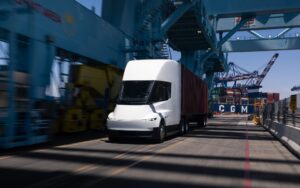
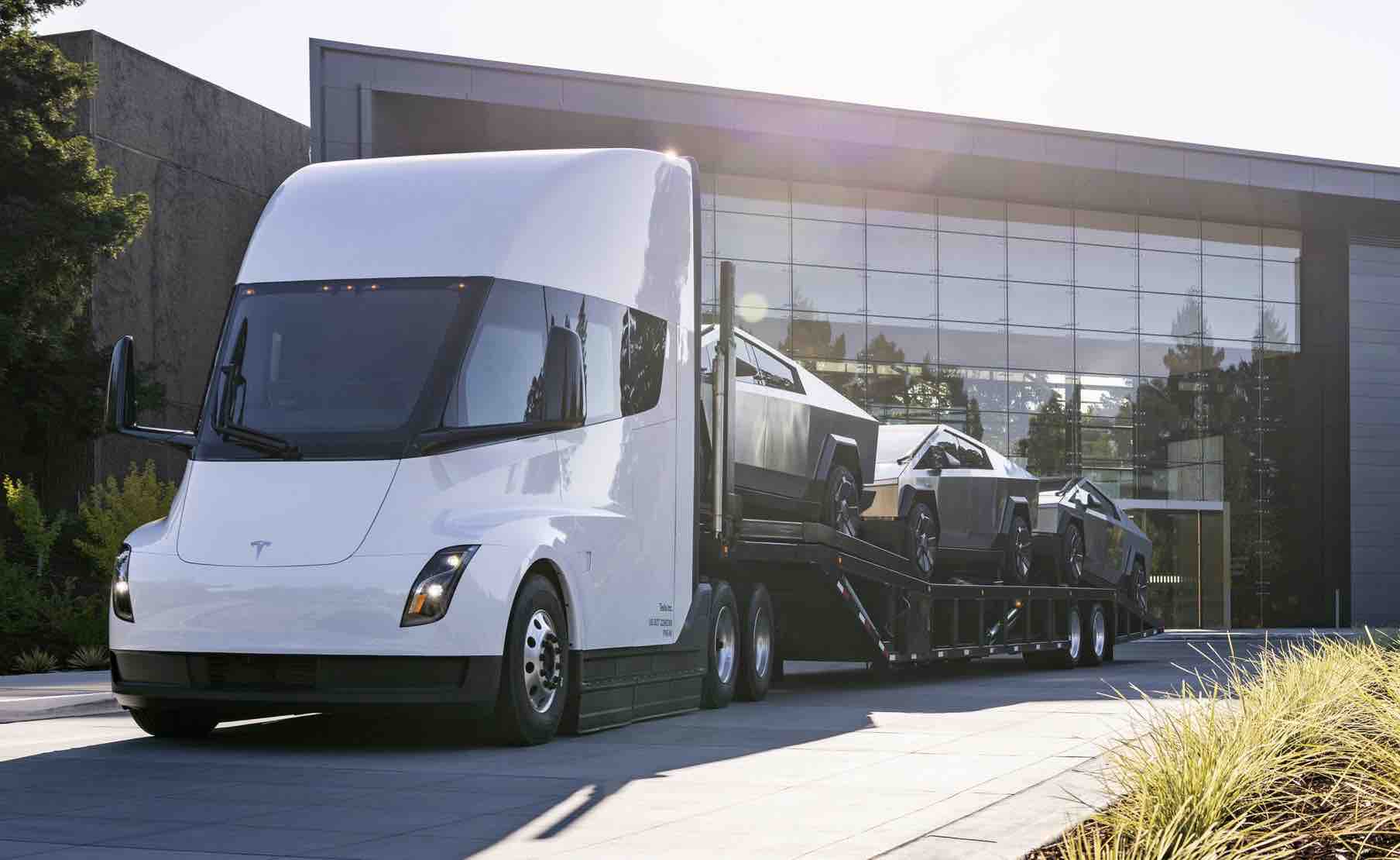
Tesla Semi is potentially one of the company’s most impactful products so far. So far, the electric truck has had limited number of customers, but – ahead of its planned mass production – the company has revealed the actual impact it has had.
New data shared by the Tesla Semi account on X highlights that the current fleet of these heavy electric trucks has saved over 3.7 million litres of diesel, which is equivalent to 1 million gallons.
Tesla first unveiled its Semi truck at an event in 2017. PepsiCo was one of the earliest customers with pre-orders after that launch event.
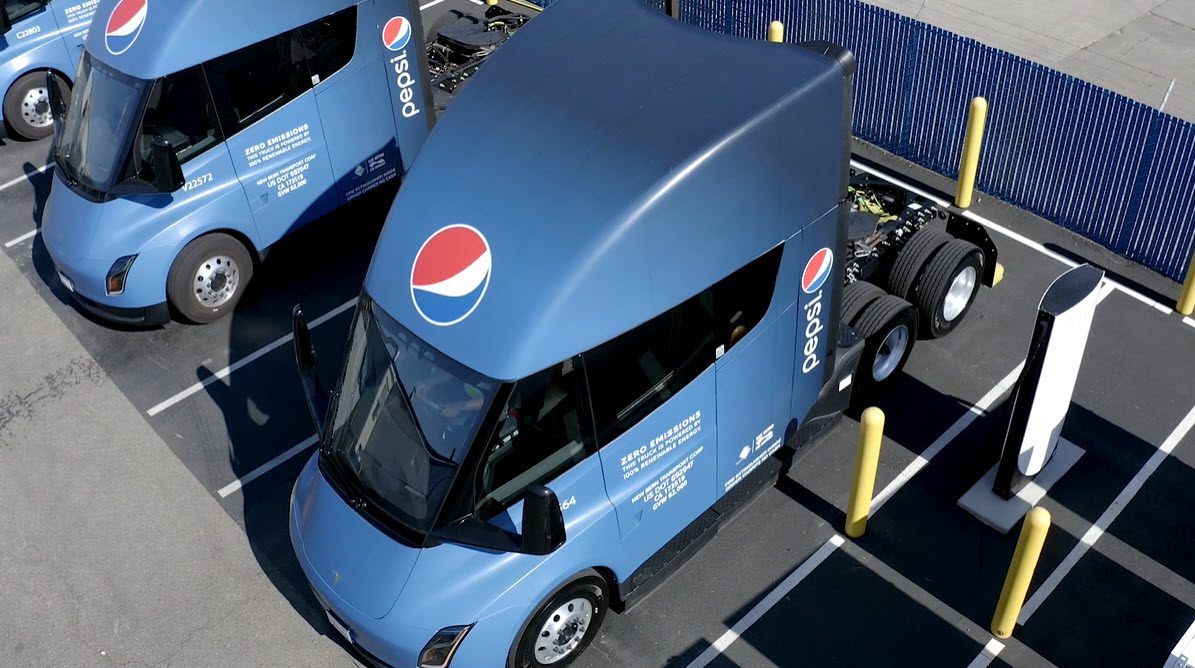
In late 2022, Tesla delivered the first Semi trucks to the company which has since expanded their operation and usage of it out of their Sacramento depot.
By late 2023, the capabilities of Tesla’s Semi were being showcased in independent tests for the freight industry.
This was called the 2023 “Run of Less” challenge, with a goal to analyse which truck would be able to make the most contribution and have the longest range for freight and distribution companies.
During one test, which required three charging stops, a Tesla Semi electric truck covered 1,732 km in a single day, outperforming all other heavy electric trucks.
As part of the test, the exact load on the day was not shared, but the event organisers had previously stated that the average loads during the trial have been around 31.8 tonnes (70,000 lbs).
One of the main reasons the Tesla Semi has been a success among freight companies that have tested it so far is its efficiency, which is significantly better than that of a diesel truck.
In an interview with Jay Leno, the Tesla engineering team shared that the Semi has a very low coefficient of drag, coming in at just 0.4, which is much lower than most trucks on the road today. That helps with efficiency when on the road, hence reducing charging stops.
Most traditional trucks had a drag coefficient above 0.8, which means they require significantly more diesel on routes than the Tesla Semi.
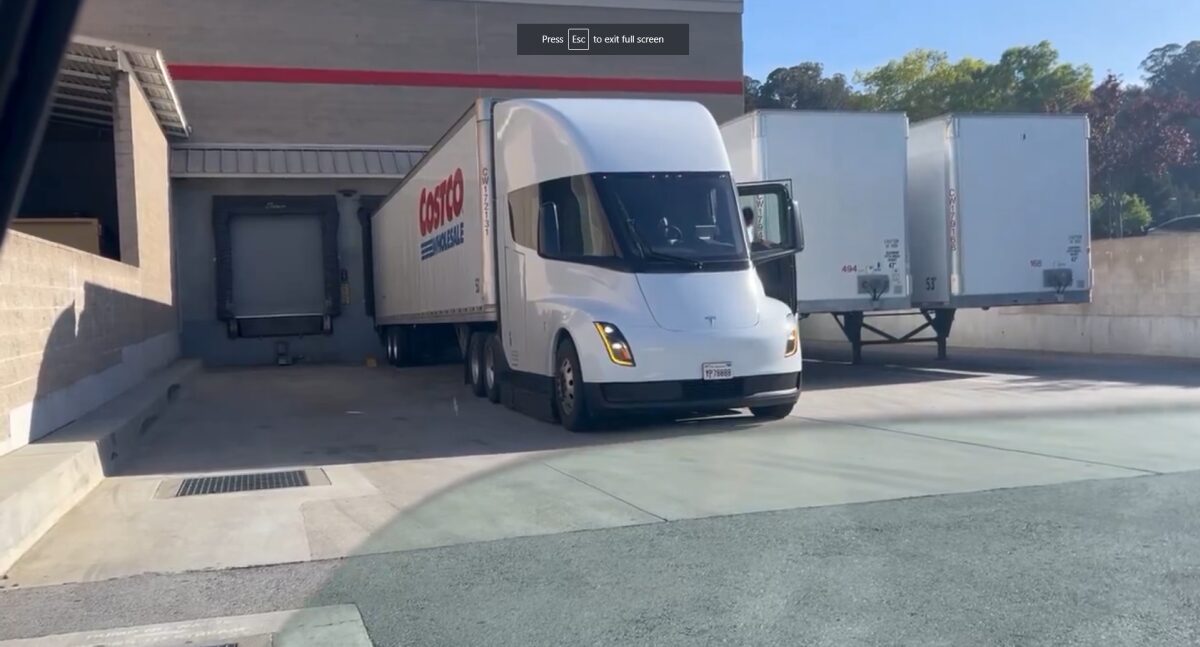
In May 2024, multiple sightings of the Tesla Semi being used by Walmart and retail store giant Costco, fuelling the expectation that Tesla was finally gearing up for mass production of the Semi as it fulfils orders from many of its order holders.
Around the same time, PepsiCo, its original customer, also announced that it would more than double its fleet to 50 operating out of its manufacturing and distribution facility in Fresno, California.
Tesla is currently building its mass-production factory on the company’s Nevada Gigafactory.

Volume production is expected to start late this year, with early ramp-up coming in 2026 with an expected production ramp seeing 50,000 Semi trucks being produced for customers globally.
Given the impact the Tesla Semi will have on the logistics industry and their reliance on diesel today, it’s a product that will certainly be worth keeping an eye on as countries around the world aim to reduce their transport emissions by cutting diesel use.