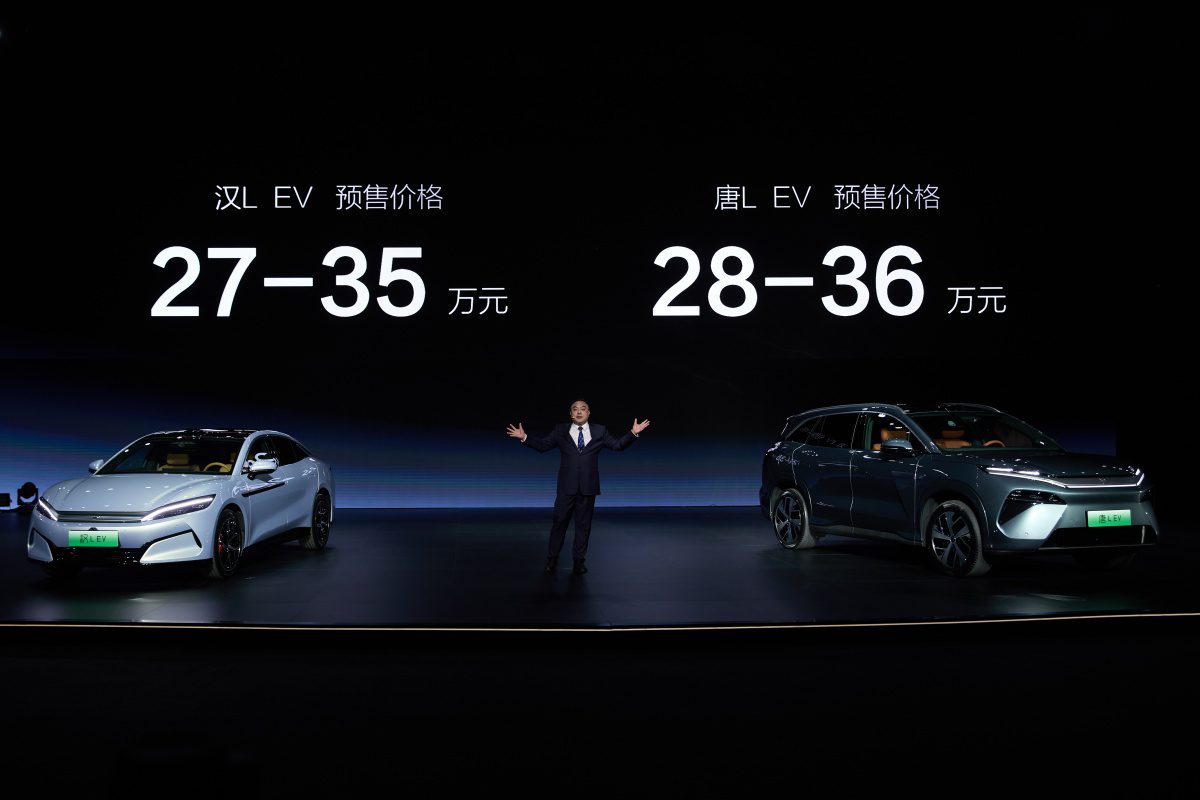
Chinese car and battery giant BYD says it has sold at least 10,000 units of the two latest EV models that feature up to 1,000 kW of charging power.
The two vehicles that are the first to feature this “Super e-Platform” include the latest versions of Han L sedan and Tang L SUVs, which began deliveries mid-way through April, prior to the Shanghai Auto Show.
BYD’s April sales show 10,483 of the Han L sedan were sold, alongside 11,406 sales of the Tang L SUV. As reported by Thinkercar on X, these are quite good sales numbers for BYD’s flagship vehicles, highlighting the interest in these models.
Both these vehicles are capable of the 1,000 kW charging, thanks to the new platform, which means that the cars can be charged as quickly as a petrol or diesel car can be filled.
BYD has also previously said that the new architecture will be coming to other vehicles in the future and allow for 10C charging speeds, meaning that the car’s battery can be charged up to 10 times every hour.
This same platform allows the car to receive large amounts of charging power at the right charger, helping add 400 km of range in just 5 minutes.
In addition to ultra-fast charging, the Han and Tang L feature BYD’s latest motor technology, which is also part of the new platform.
The electric motors found in both models can spin at speeds of over 30,000 rpm, the highest of any production vehicle. These motors also help deliver a power output of 580 kW with a power density of 16.4 kW/kg.
According to BYD, the new motors have the new Silicon Carbide power chips to ensure they can handle the high voltages and currents in this new platform.

Speaking of voltages, the new platform specs note that it’s rated at 1,000 V with 1,000 A of charging current that’s designed to add 2 km of range every second.
The BYD’s Han L sedan which starts at $A58,500 and the BYD Tang L SUV, priced from $A60,300.
Both models feature BYD’s second-generation blade battery with a capacity of 83.2 kWh, that allow for these charging speeds and significantly reduced charging times at the right charger.
Even at these prices, the demand for both models is quite high with first months totals highlighting the interest in BYD’s latest architecture.
Last week, it was also reported that the charging infrastructure to support these vehicles are starting to come online.
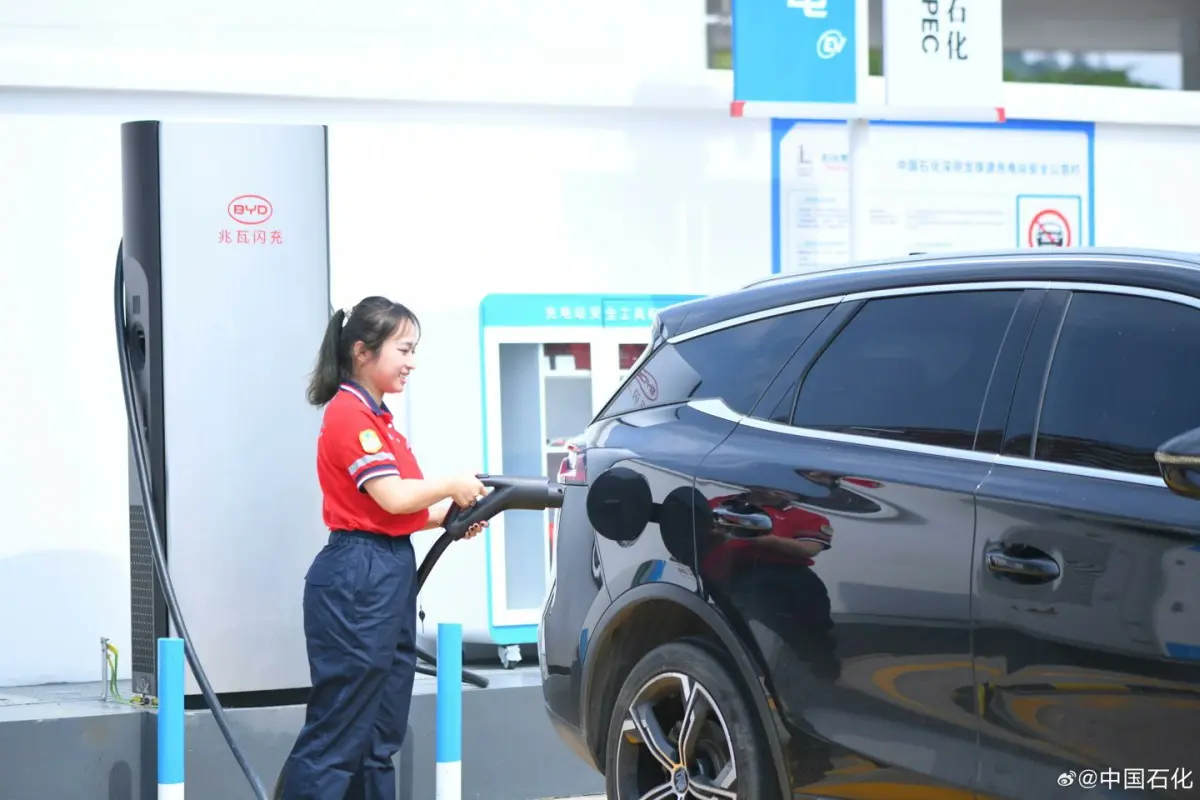
One of these sites opened in Shenzhen with three twin-plug charging stalls that feature long cables to help charge various vehicles, not just the Han and Tang L range.
This site was in partnership with oil and gas operator Sinopec and local grid operators in Shenzhen and could be the start of multiple sites across the city under this partnership.
BYD’s new platform is definitely one to watch out for and as initial demand for models with this gaining traction and starting on a high, it’d be interesting to watch how BYD transitions this across other more affordable models such as the Sealion 7 and Seal in the future, both of which we get right here in Australia.