
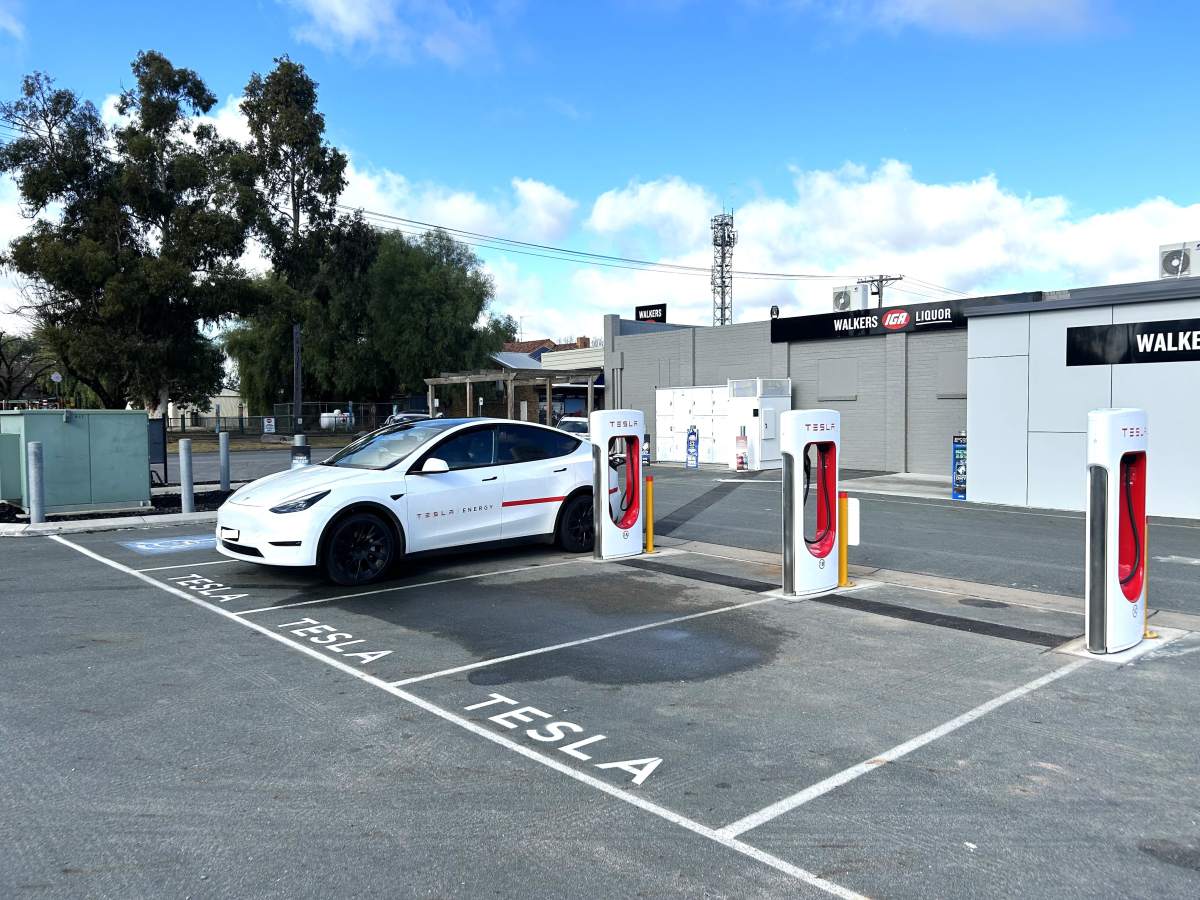
Tesla’s supercharger network is a big part of Tesla’s seamless ownership experience, helping millions of drivers move around the world, and the company has shared real-world data that shows that energy demand is peaking in markets like Asia Pacific.
In a chart shared by Tesla Charging on X, Tesla showcases the current energy demand over 2024 across three regions – Asia Pacific, which includes Australia, Europe, Middle East & Africa and North America.
The energy demand is then presented as a percentage of the region’s historic maximum demand, which gives a glimpse of how the supercharger network is coping with demand in the region.
In Asia Pacific, the peek was spotted at the end of Q4, the Christmas and New Year period, hinting that more superchargers will be needed in 2025 to keep up with the growing demand.
A senior manager at Tesla’s supercharging division, Max de Zegher , said the company uses the data, and its forecasts, to plan new Supercharger sites to meet demand.
Tesla’s supercharger network has grown considerably over 2024, with over 11,500 new stalls opening in 2024. The year ended with over 67,000 stalls globally with the network delivering over 5.2 TWh of energy over 2024.
In Australia, Tesla’s site count has surpassed 100 sites, with more than half opened to non-Tesla EVs, allowing all drivers with compatible cars to charge at the country’s most reliable charging network.
The 100th Australian supercharger site with a green and gold supercharger stall was opened in South Australia back in September.
In the same month, Tesla updated the local network map and added 30 new Supercharger sites around Australia, a big boost to the EV network nationally.
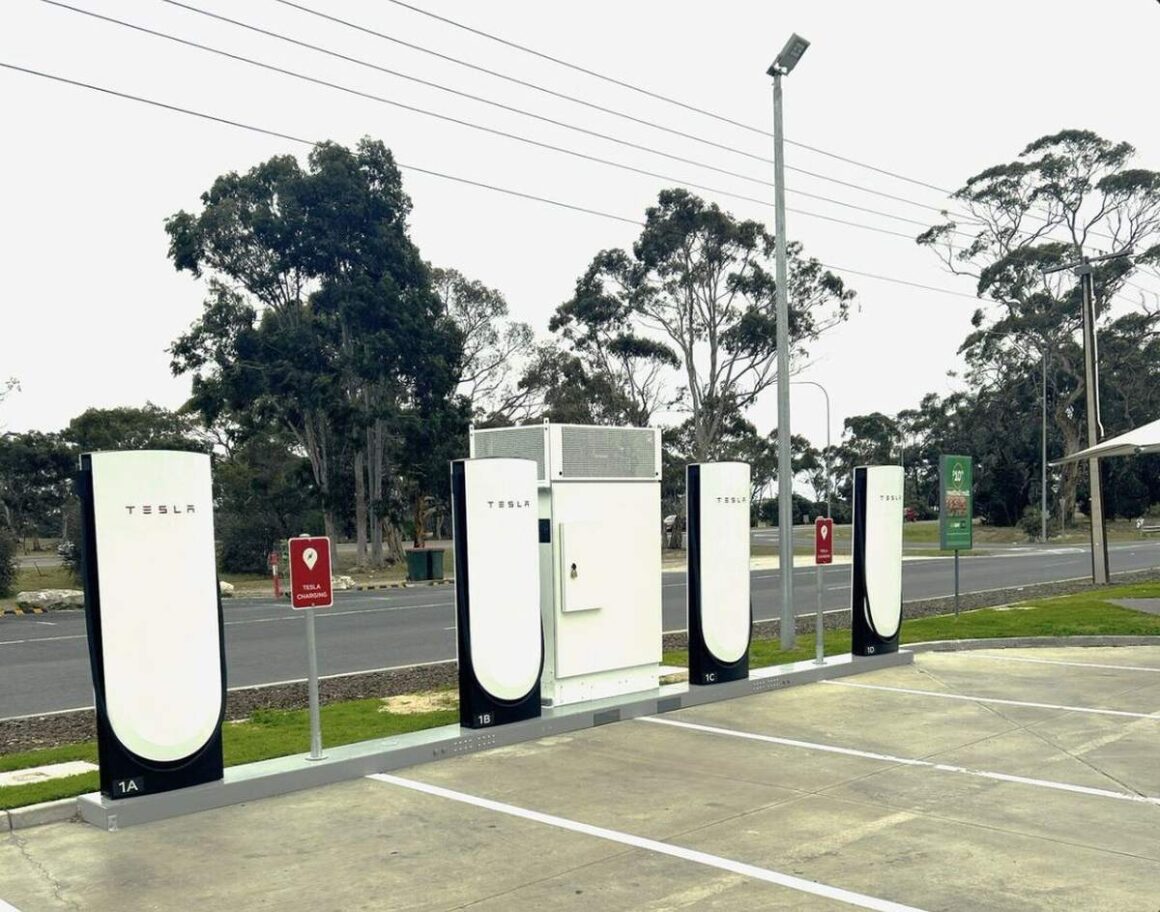
Following that, in October, Tesla opened its first pre-fab Australian supercharger site, which took just days to install at Bordertown, South Australia.
Then, in November, the company unveiled its new V4 supercharging cabinets, which will be able to deliver twice the charging speeds of up to 500 kW per stall for compatible cars.
It was expected that the energy demand from these superchargers would grow as more EVs make it to the road, but seeing it backed by real-world supercharger network data shows the data-driven approach Tesla takes over other charging providers.
This ultimately helps in delivering more reliable charging infrastructure in places where it’s needed, reducing queues at current and future charging stations.