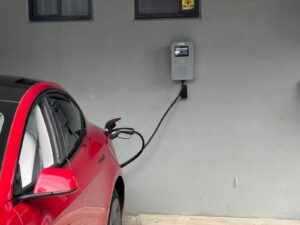

The ACT Government says it will need up to 1,000 public chargers by 2030 to support the switch to electric vehicles, and will need at least 10 times more than its current supply to meet demand.
The ACT on Monday published a new Electric Vehicle Charging Outlook that gets the ball rolling by soliciting expressions of interest from charging providers to deliver 50 public charging stations in 2022.
”This EV charging outlook is important because we expect that the ACT will need at least 600 to 1,000 public charging stations by 2030 to support the shift to electric vehicles,” said Shane Rattenbury, the ACT minister for emissions reduction.
“We want industry and investors to use this outlook to help them deliver charging infrastructure that is designed for people, making it as convenient as possible.
With less than 60 public chargers installed across the Capital, the ACT has to move decisively to quickly scale up by the end of the decade, given that EVs registered in the ACT are expected to reach at least between 25,000 to 42,000 by 2030, up from 1,300 in 2021.
“Canberrans are serious about climate action, so it is no surprise that the number of electric cars registered in Canberra has doubled in the past year, with around 750 more electric cars on ACT roads.”
The Outlook provides optimal locations for charging across the Capital and highlights the need to ensure accessible and convenient geographic distribution of the charging network across the ACT, and to make public charging accessibility for those without access to home charging.
The ACT believes that around 30% of EV drivers are unable to charge at either home or work because they live in apartments and townhouses and will have limited access to their own parking space and charging.
“Making it easier for Canberrans to access efficient and reliable chargers will help place ‘range anxiety’ firmly in the backseat for those considering purchasing an electric vehicle, as well as for visitors to our region,” said Rattenbury.
“In particular, the outlook focuses on making sure we meet the charging needs of people living in apartments. While some apartment buildings will be able to accommodate EV charging, others may not.
“Canberra has some of the most generous financial incentives in the country for the purchase of zero emissions vehicles. Last week, the ACT Government opened applications for Canberrans to access zero interest loans for the purchase of zero-emission vehicles, on top of two years of free registration and stamp duty exemption for new vehicles.”
The Outlook also recognises that transport accounts for around 60% of the ACT’s greenhouse gas emissions, making it the single largest contributor to emissions in the Capital.
The ACT has already cut emissions by 45% in 2020 compared to 1989-90 levels, well above the original 40% target for 2020. This was backed in large part by the shift to 100% renewable electricity, achieved in 2020.