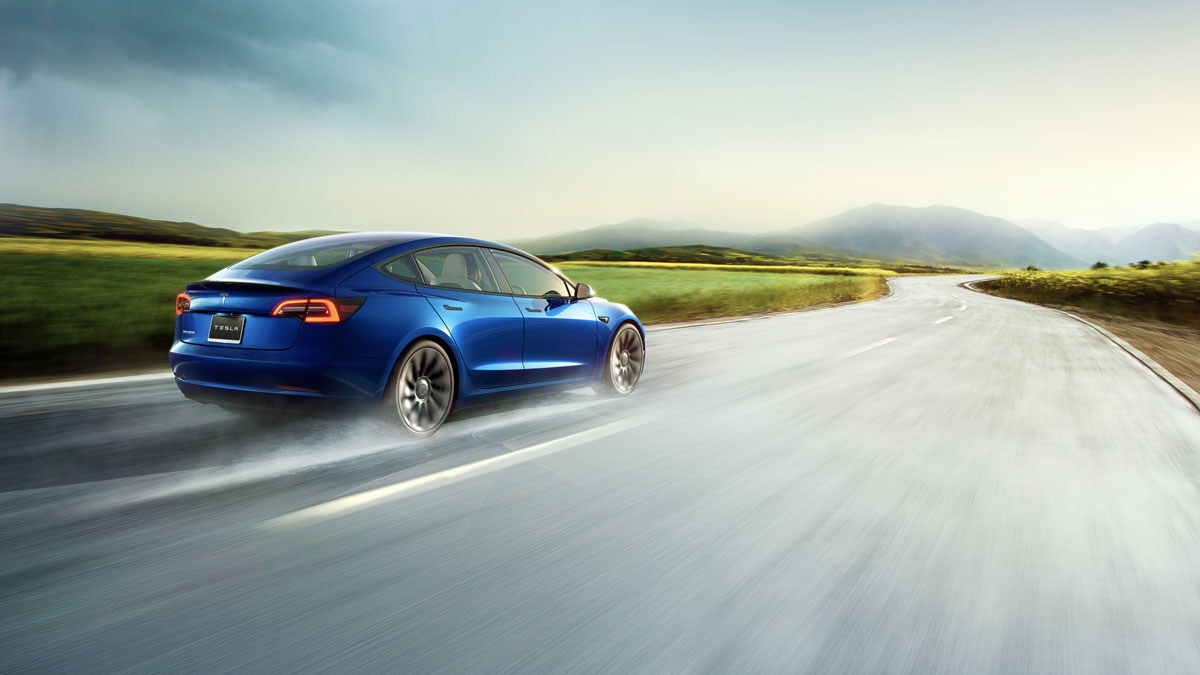
Tesla is set to close 2021 with a winning finish, with shipments of its highly successful Model 3 electric sedan ramping back up for the fourth quarter.
It already maintains a firm grip as the number 1 seller of electric vehicles in Australia (as well as in many markets overseas), and it has every chance of reaching the #4 passenger car overall by overtaking the Toyota Camry, MG’s MG3 and Mazda’s Mazda 3 by year’s end.
The latest shipment of Model 3 electric sedans, which arrived at Port Kembla around 6am on Friday, has brought the number of electric cars imported by Tesla to Australia in 2021 to more than its entire inventory for 2014 to 2020.
The milestone achievement was noted by the Tesla shipping tracker known as @Vedaprime, who says that there have now been 10,000 Model 3s shipped to Australia so far this year.
To put that in context, Tesla – which generally ships vehicles to Australia from Shanghai once ordered – has sold almost as many Model 3s in 2021 as Toyota has sold Camrys, putting the Model 3 at #7 on the broader passenger car market.
The 10,000 Model 3 cars account for Tesla’s entire sales in Australia this year; no Model S or Model X have been shipped since the premium electric vehicles were given a refresh by the Californian automaker, and the Model Y is yet to arrive.
A previous onslaught of Model 3s shipped in the first half of 2021 included a number of unsold vehicles, shortening the wait time for new Tesla customers to a matter of weeks instead of a previous 8-12 weeks.
However, it would seem that this inventory is now entirely sold out, with Tesla updating its estimated wait time on the Australian order page back to 8-12 weeks.
While this means new orders will not be received now until 2022, word is that there could be a number of extra shipments by the year’s end.
With Tesla dropping the price of its Model 3 to under $60,000 in July and now also with a recent upgrade to its battery resulting in a 10% increase in range, the EV pioneer is really putting the pressure on other EV newcomers such as the Hyundai Ioniq 5, the Polestar 2 and the Kia EV6, which also hope to grab a slice of the Australia EV market pie.
But it may come down to pure availability, as overseas action on reducing transport-related carbon emissions – in stark relation to the lacklustre “EV strategy introduced by the Coalition government that ignores calls from carmakers for vehicle emissions legislation and purchase incentives – means other carmakers have their hands tied when it comes to securing large inventory for Australia.