
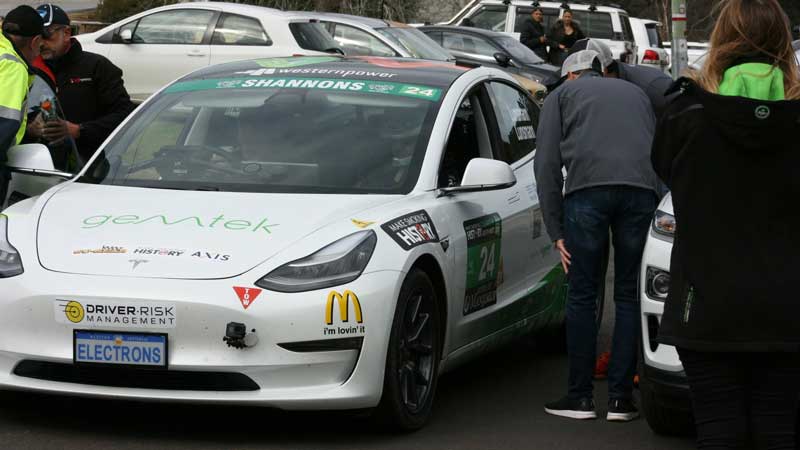
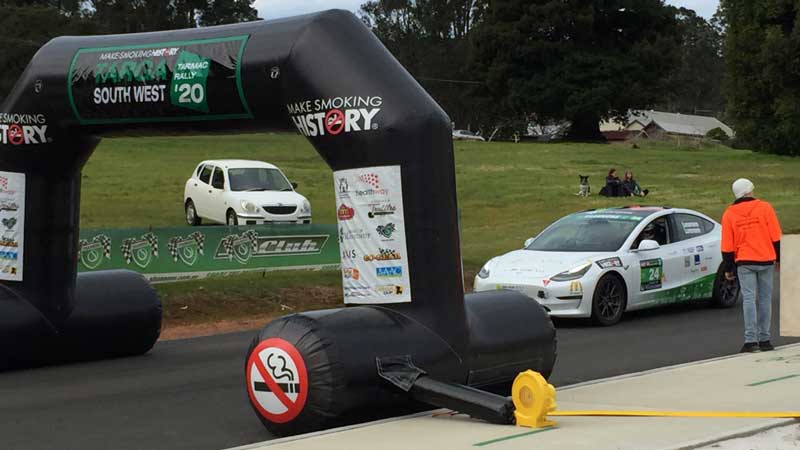
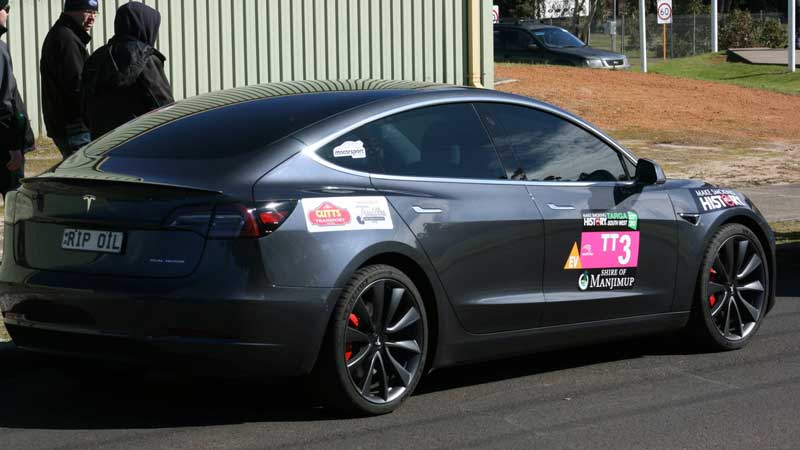
A Tesla Model 3 has claimed the winning position – in what is thought to be a first for an electric vehicle – in the renowned Targa 130 category at the recent Targa South West rally race in Western Australia, against a lineup of fossil-fuelled contenders including a Porsche 911.
It’s not the first time an electric vehicle has proven its worth in the demanding rally series, (such as this 2011 Tesla Roadster), which winds through dirt and closed roads in a series of sections around the town of Pemberton to test the mettle of contestants.
But it is the first time a Tesla Model 3 has taken to the track, and its winning finish is testament to the Gemtek team behind the win, and a great example of how racing pushes the boundaries of performance and the unique challenges presented by electric vehicles.
The Gemtek Tesla Model 3 won the Targa 130, which is speed-limited to 130km/hr – by more than 4 minutes.
https://twitter.com/robrobdean/status/1292268820560637953
And it could have been an even bigger gap, Driven contributor and Targa spectator Rob Dean tells The Driven.
According to Dean, the husband and wife team Jurgen and Helen Lunsmann, who have raced previously in the Tesla Roadster and were behind the wheel again this year, were so far ahead they took it easier in later race sections.
“The drivers backed off – they were winning by so much they just thought, let’s win it one piece,” says Dean.
By putting a Tesla Model 3 on the starting lineup instead of the previous Tesla Roadster, the Gemtek team have been able to leverage the DC charging capabilities to circumvent difficulties presented in previous years by the Roadster which was limited to slower AC charging.
In previous races, Gemtek has used a specially designed model charging station powered, controversially, by a diesel generator.
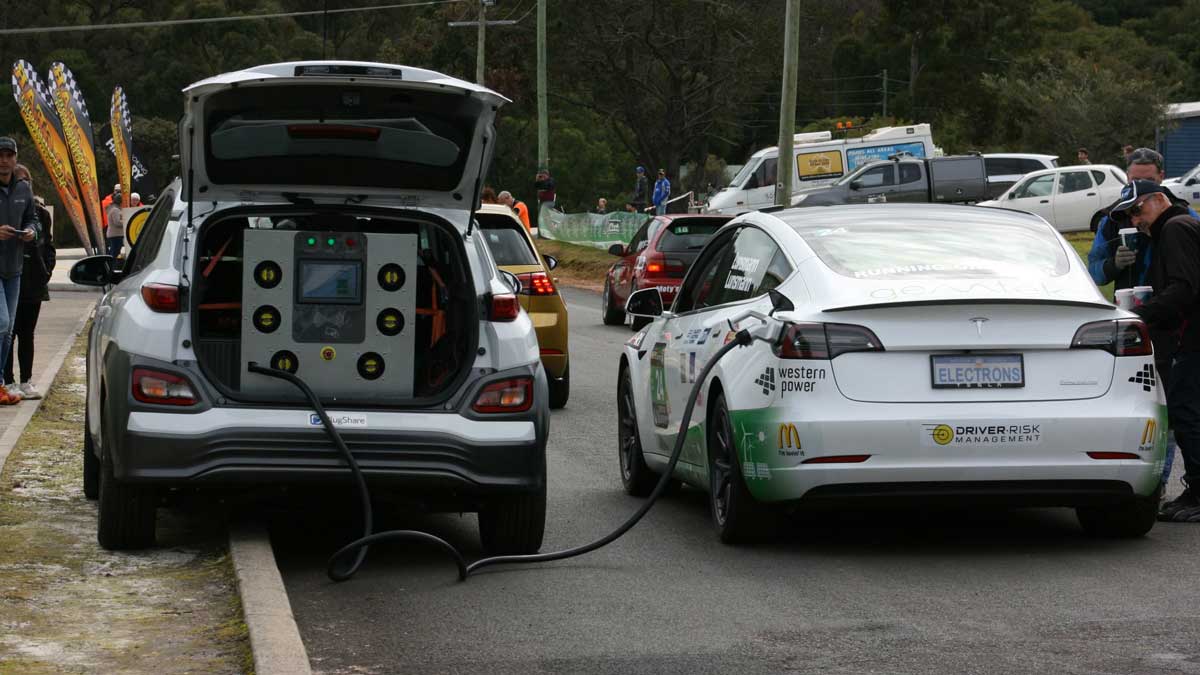
This year, the Tesla Model 3 was instead “topped up” at convenient intervals between sections by a DC charger concocted by engineer Jon Edwards, the one and same person who designed and built a diesel-powered electric vehicle generator that The Driven reported on in 2018 and is actually greener than one might think.
This time, Edwards created a mobile DC charger to top up the Model 3 in short, ten minute bursts to keep the state of charge above 80%. It did this by drawing off the battery of another electric car.
(The reason the team wanted the charge to be close to 80 per cent is due to calculations that the Model 3 loses horsepower when the state of charge falls significantly below that level).
“We know electric cars have always been fast but getting charge into them has been the issue – with this it has made it winnable,” says Dean.
https://twitter.com/robrobdean/status/1292243687112499200
“Normally the Tesla has a range of about 450 kilometres, but during competition, we’re working on a factor of 5-to-1, so about 80 or 90 kilometres before it needs charging,” Gemtek co-owner and EV Targa tour manager Florian Popp said in a statement prior to the race.
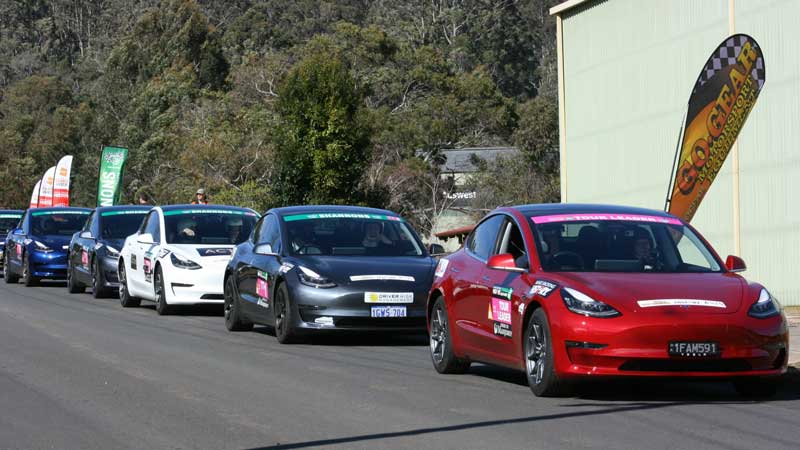
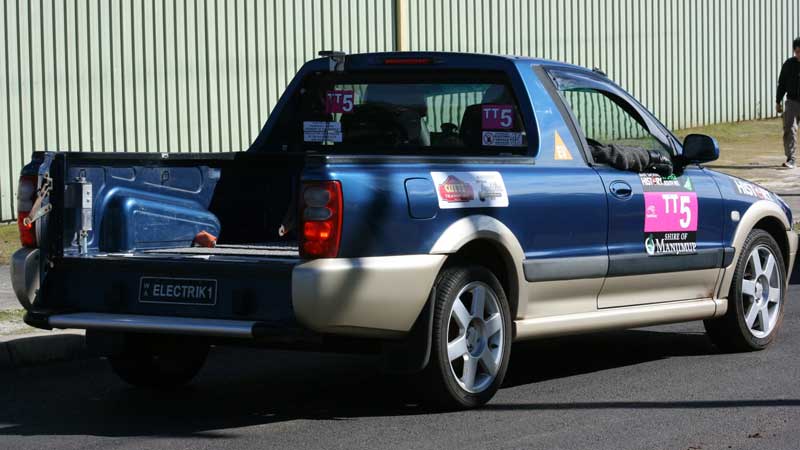
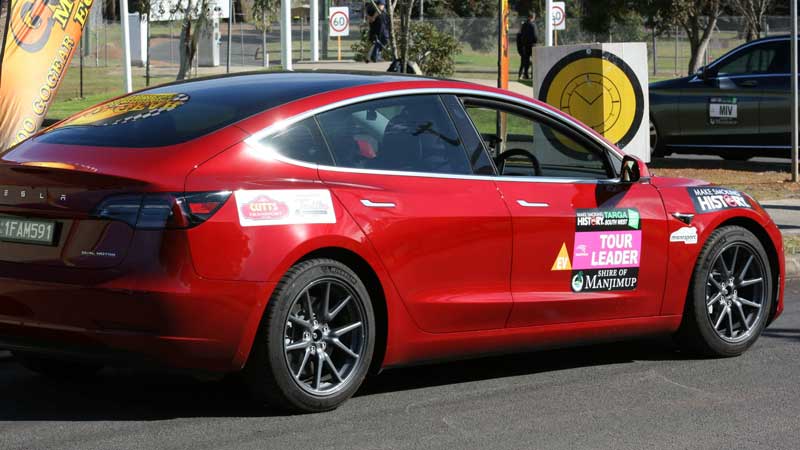
The rally series was also accompanied this year by a “Targa Tour” organised by Gemtek: an EV-only race driven on the same closed road stages as the main event with competitors racing the clock.
Limited to 110km/hr, a number of Model 3 owners took to the track behind a tour leader, and with experienced race drivers alongside the owners.
Popp says that Targa South West is a good opportunity to collect EV data.
“As we all become more climate aware and with the trajectory of clean energy, it’s a great opportunity to educate people about electric cars in a fun way,” Popp said in a statement.
The Gemtek Tesla Model 3 will race in the next Targa West event in October.