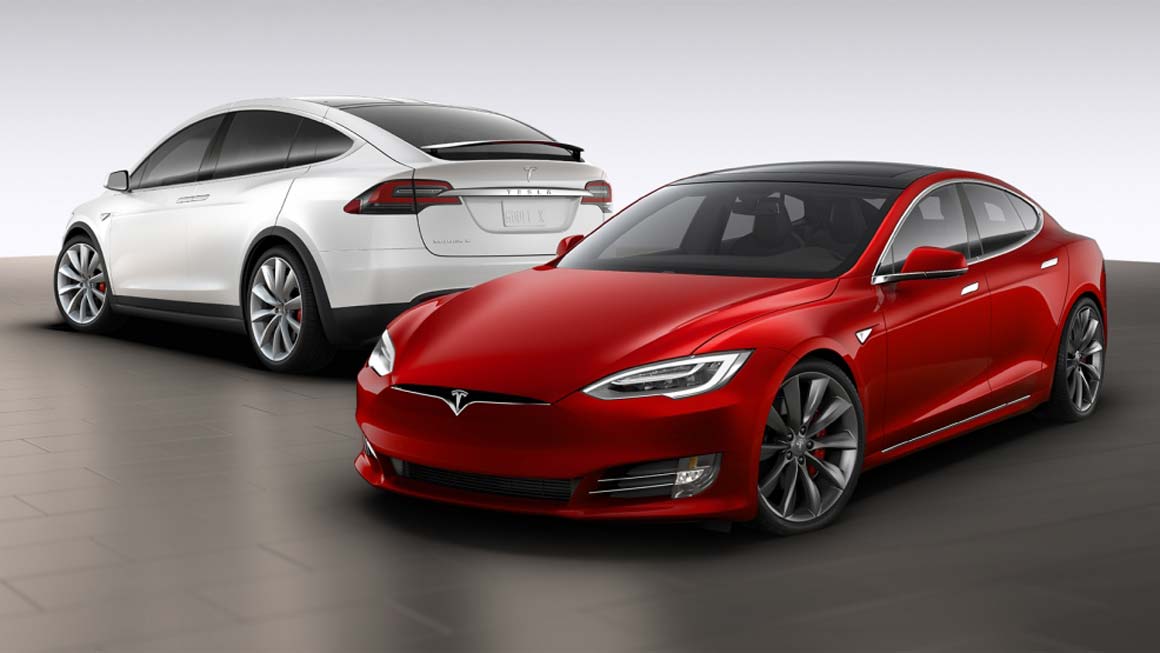
The price of the Tesla Model S and Model X in Australia have been revised down following a 6 per cent price reduction for both of Tesla’s premium electric cars overnight in the US.
While a price rise for all Tesla cars in Australia in April was attributed to the falling value of the Australian dollar, it is unknown what is behind the recent price drop.
In March, the Tesla Model S premium electric sedan was priced from $124,900, before on-road costs, and the Model X premium electric SUV from $133,900, before on-roads.
However, these were raised in April by $6,000 for the Model S to $130,900 and by $11,000 to $144,900 for the Model X, taking into account subsequent rises in the luxury car tax.
Now, the Model S has been revised down to its original early 2020 pricing of $124,900, while the Model X has been lowered to $138,900. The price of the Tesla Model 3, which currently is priced from $73,900, before on-road costs, remains unchanged.
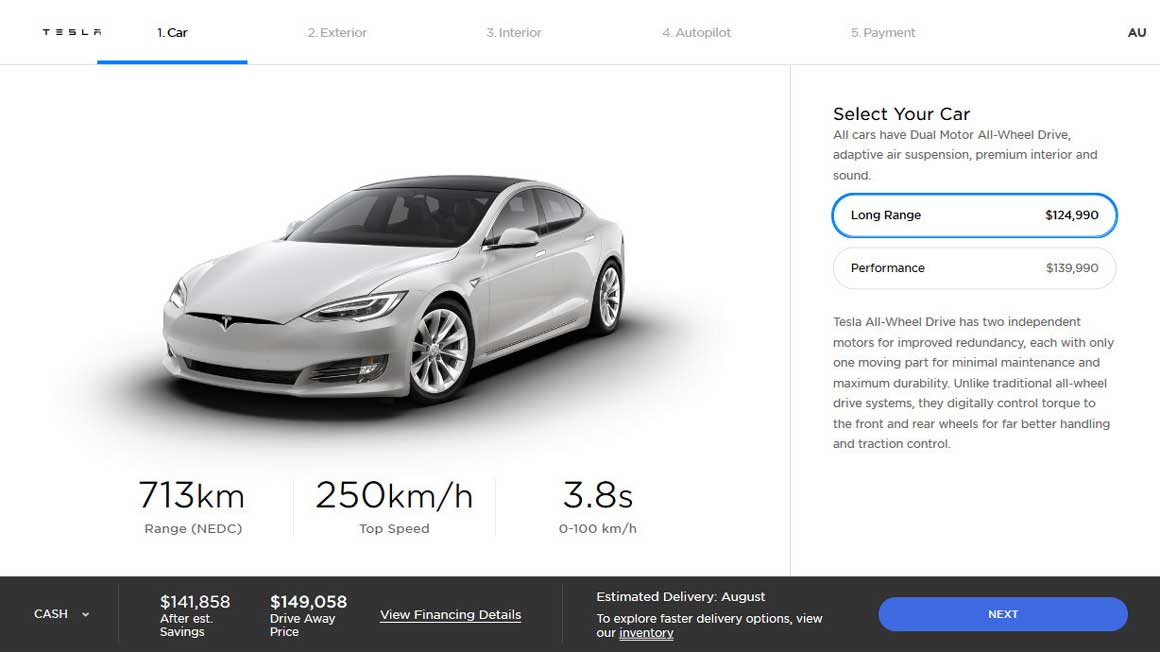

Tesla, like other car companies, regularly adjusts pricing according to market demands, although unlike buying from dealerships Tesla does not negotiate on price.
In April, it also changed the price of the China-made Model 3, although in the opposite direction, bringing down the price in order to ensure it was eligible for new restrictions on electric vehicle subsidies in the Asian nation.
This price drop was announced by Tesla CEO and co-founder Elon Musk in the company’s earnings call for the first quarter of 2020, and during the same call Tesla chief financial officer Zacahary Kirkhorn noted that Tesla would become more competitive in time as its Shanghai factory localised more parts production.
It is also expected that Tesla will unveil a series of technological advances at its upcoming Battery Day, now delayed due to the Coronavirus pandemic, that will deliver more cost savings, which in turn will hopefully be passed on to the consumer.
The production savings are expected to involve improved lithium iron phosphate (LFP) EV battery chemistry as well as cell-to-pack processes that do away with the need for cell modules.
According to reports, this will bring the cost of making battery packs down to $80/kWh, which is 20% less than the $100/kWh to reach price parity with petrol and diesel cars.
RenewEconomy and its sister sites One Step Off The Grid and The Driven will continue to publish throughout the Covid-19 crisis, posting good news about technology and project development, and holding government, regulators and business to account. But as the conference market evaporates, and some advertisers pull in their budgets, readers can help by making a voluntary donation here to help ensure we can continue to offer the service free of charge and to as wide an audience as possible. Thankyou for your support.