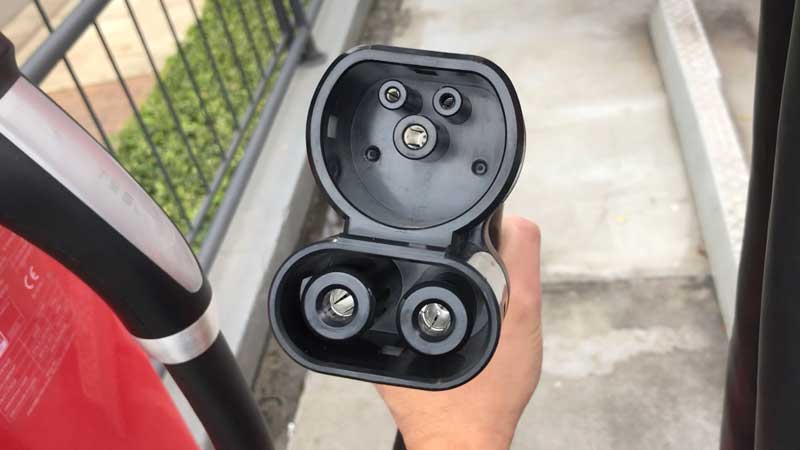
Tesla has started upgrading Superchargers with dual cables in readiness for the Model 3, which is due to start deliveries to Australian customers in August.
The upgrade for the Tesla Superchargers involves the addition of a CCS2 cable to each charger, so that both Model S and X – which use the proprietary Tesla DC charging plug – and the Model 3 – which will come standard with a CCS2 in line with other modern EV models, will be able to use Tesla’s DC Superchargers.
The announcement that Tesla Australia would upgrade the country’s nearly 30 Supercharging locations when the Model 3 order page went online:
To enable Supercharging of Model 3, which will come with a CCS Combo 2 charge port, dual charging cables supporting both CCS Combo 2 and Type 2 charging standards will be installed at Supercharger sites across Australia.
Reports of the upgrades started coming in over the weekend from Brisbane (as reported by Jason Cartwright) and also at St Leonards via Twitter.
Hey @sydney_ev @_TeslaTom confirming St. Leonards supercharger has two dual superchargers in place; 1A and 1B #model3 #EV #Model3AU pic.twitter.com/4O07HaoOCq
— EV Brief (@evbriefmedia) June 8, 2019
An interesting point to note is that while it has been reported that the Tesla CCS plug features a notch that disallows other EVs from being able to plug into Superchargers (see Bryce Gaton’s article here and image below), the upgraded Australian dual cable Superchargers do not have this notch.
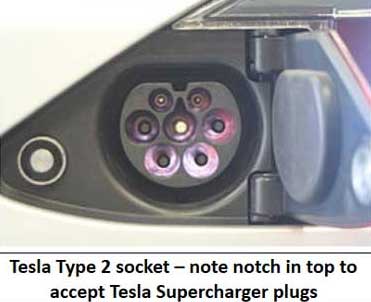
This is true of the upgraded Superchargers (at St Leonards at the very least), and thanks goes to tweep and youtuber “Tesla Tom” for confirming this):
Roger that! pic.twitter.com/OKgsqGlxHJ
— Tesla Tom (@_TeslaTom) June 8, 2019
Now, this does not mean that owners of other EV models with CCS2 plugs will be able to use Superchargers – other EV makers notoriously knocked back an offer long ago from Tesla to share chargers and plugs.
One can’t help but wonder, however, if the addition of the “notchless” CCS2 plug is a signal to EV makers that this offer is still on the table, or will be in the future.