When more than 50% of global new-car sales are electric, why would motorsport continue spending billions racing – and improving – internal-combustion engines?
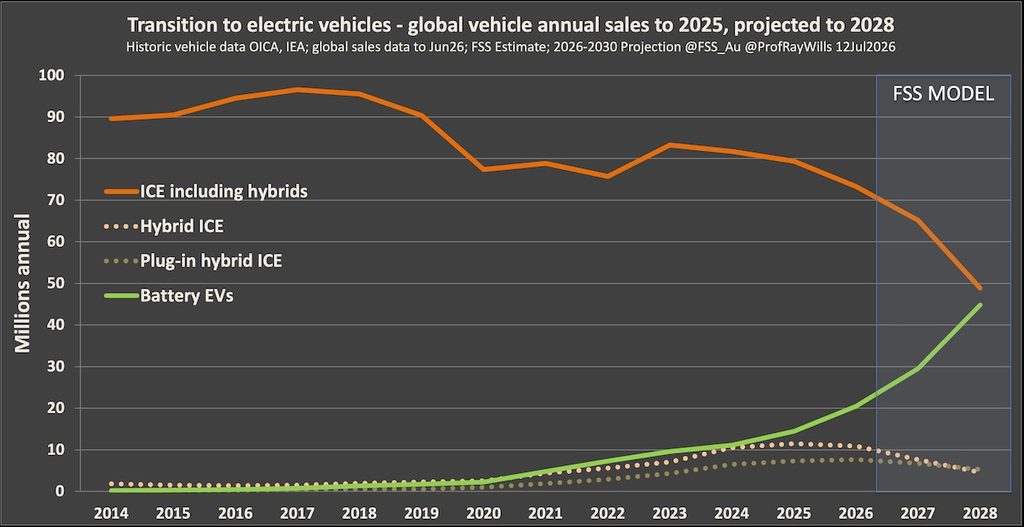
Our projection remains that battery-electric vehicles will likely reach 50% global car sales by 2028.
That transition will reshape motorsport, because racing has never been only entertainment. It has also been a brutal laboratory for testing performance, efficiency, durability and reliability—and transferring those lessons from racetrack to road.
Horse racing helped produce the thoroughbred. Motorsport helped produce the modern car.
But if internal combustion is a technology on exit, why keep directing racing’s engineering effort towards improving it?
Some motorsport traditionalists say EV racing is boring. Automotive commentator Mike Costello put it more forcefully: “Speed without noise is like food without seasoning.”
We understand the sentiment. Sound, vibration and mechanical drama have been central to motorsport’s theatre—and embedded in more than a century of car culture.
But “boring” is not an engineering characteristic. It is a judgement shaped by familiarity, presentation and the rules of competition.
Glider pilots, skydivers, speed skiers and sailors pursue speed and danger without combustion noise.
The noise is not the performance; it is an artefact of one means of propulsion that a century of car culture taught us to hear as power. In a combustion engine, most of the fuel’s energy is discarded as heat, with more lost through friction and vibration; only a minority reaches the wheels as forward motion.
Electric drivetrains reverse that equation: much more energy becomes movement and much less becomes waste. The silence is not the absence of performance. It is the sound of efficiency.
Sport does not stand still. Cricket evolved from five-day Tests into one-day cricket, Twenty20 and the Big Bash—shorter, sharper formats for changing audiences. Football has adopted substitutes, back-pass reforms, three points for a win, goal-line technology and VAR. Technology has also created esports and drone racing.
Not every experiment succeeds. MotoE was suspended after failing to build sufficient audiences or benefit from rapid enough development in electric motorcycles. That does not prove electric racing cannot work; it shows technology alone does not create compelling sport. Competition, presentation, storytelling and connection with fans matter too.
Electric motorsport must therefore develop its own theatre—not reproduce combustion racing with the soundtrack removed or artificially inserted.
Its visceral appeal could come from breathtaking acceleration, closer racing, tyre stress, visible energy strategy, rapid charging or battery exchange, and pit crews racing against both the clock and temperature.
The noise may diminish. The competition need not.
Elite motorsport has already tried the hybrid alternative. Formula One has used hybrid powertrains since 2014, while road hybrids are now mature technology. If motorsport’s purpose includes improving tomorrow’s road vehicles, hybrids increasingly look like yesterday’s transitional answer—not tomorrow’s destination.
The harder question is endurance racing.
Could battery-electric cars contest the Bathurst 1000—the 161-lap, 1,000-kilometre race that normally runs for six or seven hours?
Not under today’s format, if we expect nothing else to change.
But motorsport rules have always shaped technology and strategy. Bathurst has mandated pit stops, driver changes and brake servicing. An electric Bathurst might require several rapid-charging stops, battery exchanges, or some combination of charging, regeneration and tyre strategy.
Commercial battery exchanges currently take several minutes, so a race-ready rapid swap remains a challenge for the engineers. Which is precisely the kind of problem motorsport exists to solve.
Formula E already uses a mandatory 30-second Pit Boost, adding 10% battery energy and creating strategic choices around when to stop. Electric endurance racing would add battery temperature, charge rate, state of charge, regenerative braking and energy allocation to the familiar questions of tyres, pace and pit windows.
The pit crew does not disappear. The tasks change.
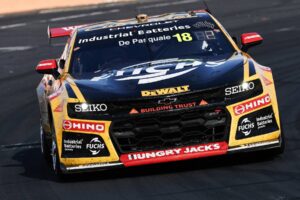
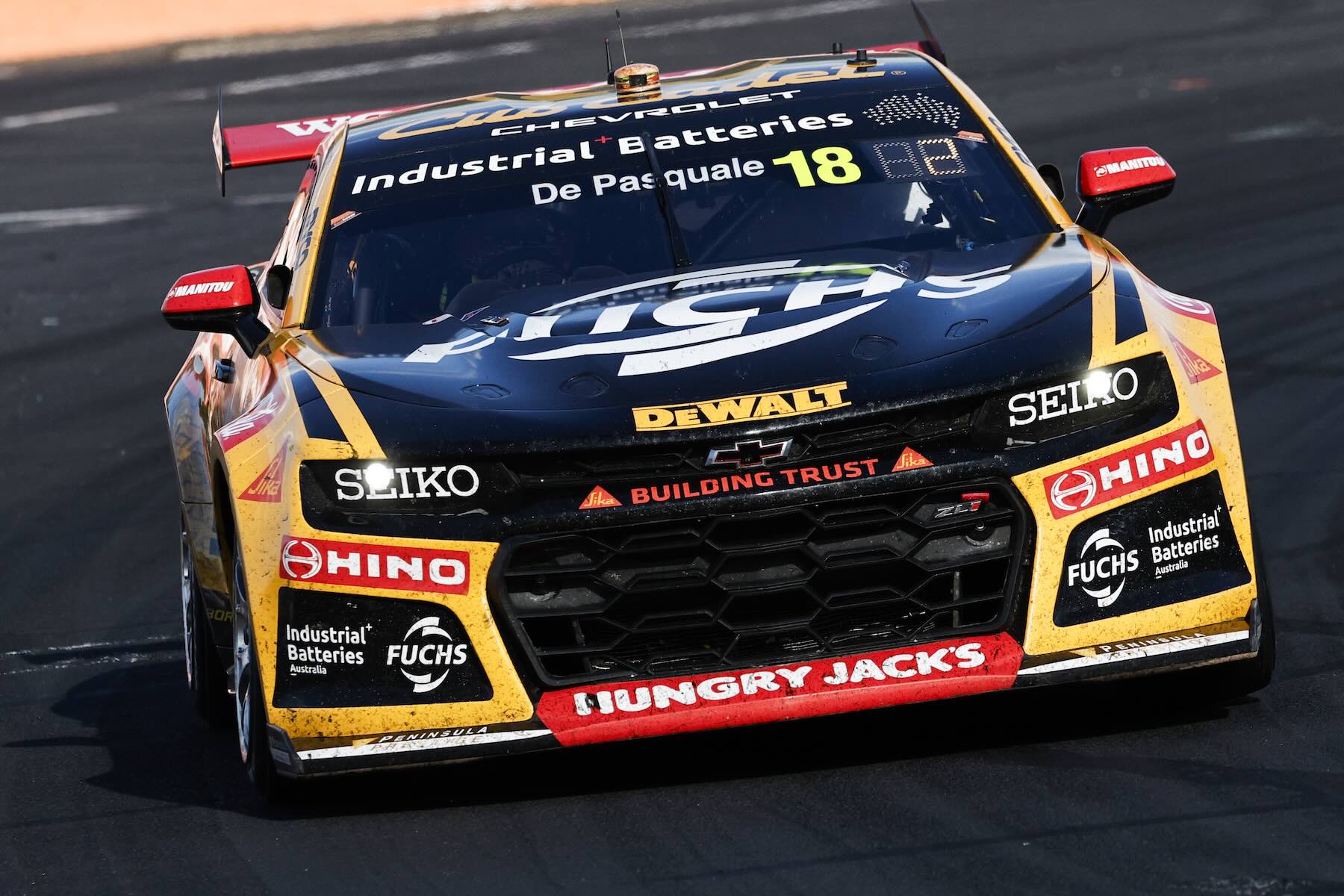
Then, as if Bathurst wanted to join the argument, Anton De Pasquale ran out of fuel on the final lap and couldn’t drive to the flag.
Talk about range anxiety.
One of Australia’s fastest cars – supported by professional engineers, live telemetry and a pit crew – could not convert performance into a finish because it exhausted its onboard energy.
Liquid fuel’s high energy density did not abolish range management. It simply made petrol range so familiar that we stopped calling the anxiety by its name.
Every endurance race is an energy race. ICE competitors manage fuel load, consumption, pace and pit windows. Electric racers will manage charge, regeneration, battery temperature, tyre degradation, charging speed and perhaps battery exchange.
The energy carrier changes; the strategy does not.
Electric racing could make that strategy more visible. Imagine spectators seeing in real time which driver is spending energy to attack, which is harvesting through the Esses, and which has conserved enough charge for a final-lap assault.
De Pasquale’s last lap offers a larger metaphor. The world has built extraordinary performance around fuels treated as limitless, although they are finite, geopolitically insecure and environmentally costly.
Speed is irrelevant if the energy strategy cannot get you to the finish.
ICE racing will survive as heritage, entertainment and nostalgia—just as historic races accompany events today, and horse racing survived the motor car.
But motorsport’s technological centre of gravity will move. Racing will follow the engineering talent, manufacturer investment, future market and commercial opportunity.
The future is electric. For motorsport, too.