Electric vehicles are often thought to be more expensive than their gas-powered counterparts. That reputation was always incomplete — and is increasingly hard to square with the math.
When you factor in what it actually costs to own and operate a vehicle, including unpredictable price surges at the gas pump, EVs frequently come out ahead. And with purchase prices rapidly converging, the full picture on EV affordability is better than most consumers realize. Here’s what the numbers show.
Operating costs
In most cases, EVs are less expensive to operate than gasoline vehicles, largely because they’re so much more efficient. On average, EVs use approximately four times less energy per mile traveled, which means driving on electricity is almost always cheaper.
Comparing fueling costs of a mid-size SUV across 17 major U.S. cities, a 2025 study found average savings of $4,450 over 7 years for the EV compared to a conventional gasoline vehicle.
(Note: All $ in this story are $US)
EVs also have fewer moving parts, so maintenance and repair tend to cost less too. The same study estimated average maintenance savings of $3,300 over 7 years across all classes for new vehicles.
A previous analysis of ownership cost likewise found battery electric vehicle maintenance costs to be ~40% lower per mile than for an equivalent gasoline vehicle. In other words, the more you drive, the more the savings continue to stack up.
Purchase price
The ICCT’s landmark 2022 study on EV costs and benefits made a clear prediction: price parity for 300-mile range cars by 2028 and for even longer ranges by 2030. From a technology standpoint, that prediction remains on track. So why has the average price of new EVs in the United States stayed so high?
In reality, the price of a new vehicle depends on much more than its powertrain; major manufacturers offer gasoline vehicles at a range of price points. As the average price of a new vehicle sold in the United States approaches $50,000, observers largely blame automakers’ recent focus on larger and higher-end models.
For EVs, far fewer models are offered, and in most cases manufacturers have chosen to enter the EV market with luxury or high-performance offerings, adopting a business strategy pioneered by Tesla. That’s left few options for buyers who want an EV with the features, performance, and price tag of an affordable gas car.
In other markets from the UK to Brazil, manufacturers have introduced more lower-cost EVs, but they have not offered the same choices to Americans. As just one example, since 2025, Stellantis has offered the $25,000 Citroen ë-C3 to customers in Europe and the UK but provided no comparable option in the United States.
This is starting to change. More affordable EV models have already arrived or will arrive in the United States this year. Even as automakers adjust their EV strategies in response to policy shifts, several 2026 announcements signal that additional lower-cost models are coming soon.
Ford’s pivot from the $55,000+ F-150 Lightning toward a $30,000 midsize truck is a prime example—as is GM’s decision to bring back the Chevrolet Bolt, with a starting MSRP of about $29,000.
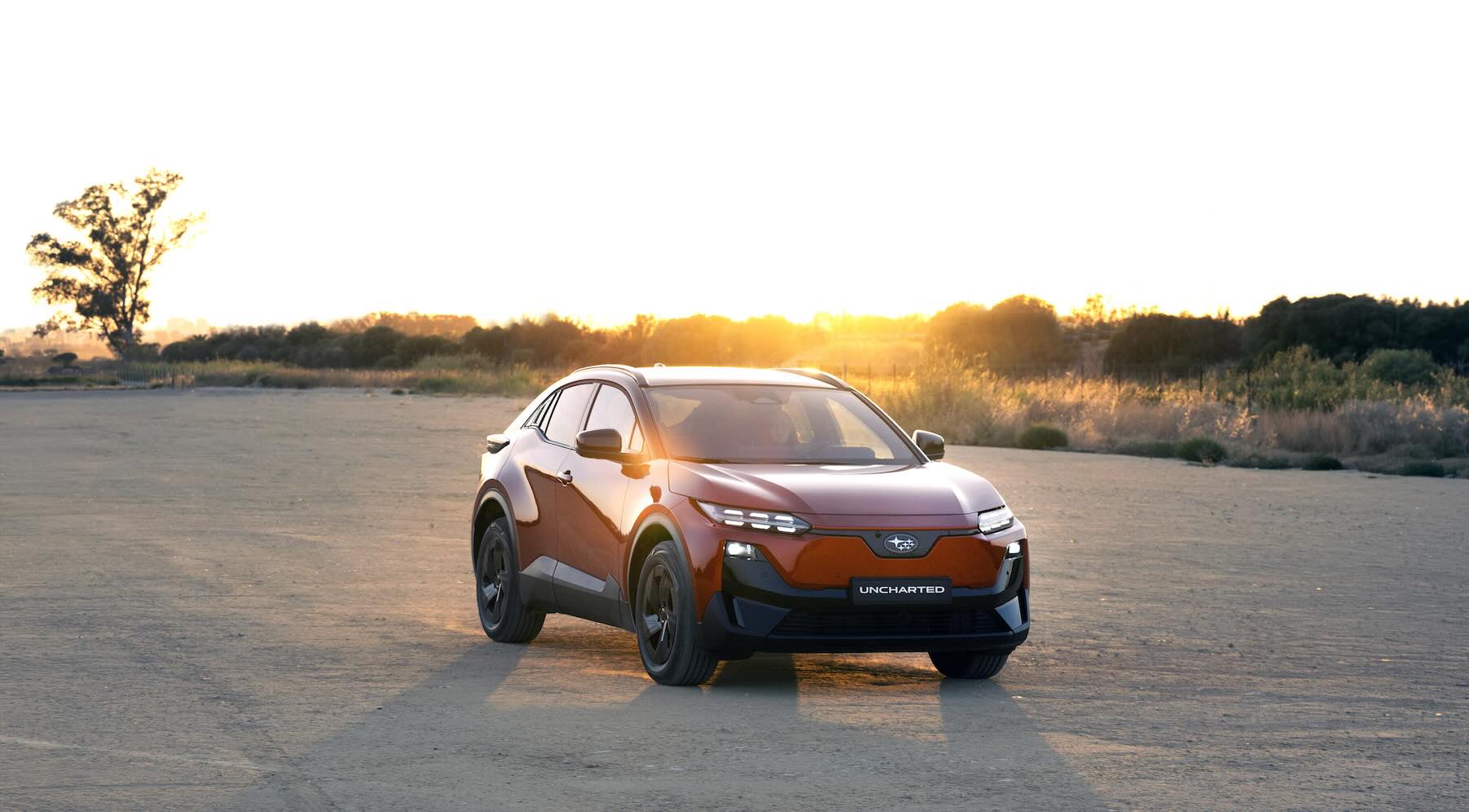
In some cases, cost parity may already be here. For example, the cost of leasing Subaru’s 2026 Uncharted EV is lower than a comparable Crosstrek hybrid. Legacy automakers will also have to compete with new entrants such as Slate, which will begin selling electric trucks starting at $25,000 this year.
This trend toward lower-cost EVs should come as no surprise. EVs are already cheaper on average to buy than comparable gasoline vehicles in China.
In the European Union (EU), larger EVs have also reached price parity and more lower-cost EVs are on the way, prompted by the next phase of EU CO2 standards: automakers have announced additional models for the European market priced below €25,000, a reminder of what regulations can do to expand consumer choice.
Beyond cost parity
The ICCT has projected that after 2030, EVs will be cheaper to produce than gasoline vehicles in nearly all cases. Batteries are the largest contributor to EV production costs and their costs continue to fall, declining from $170 per kWh in 2022 to $108 per kWh in 2025.
We expect costs for other powertrain parts (like the electric drive module and thermal management system) to fall too, as automakers get more experience building EVs. Efforts like Ford’s initiative to rethink vehicle manufacturing from the ground up should help, and the low costs already achieved by Chinese automakers should eventually translate to other markets.
Meanwhile, internal combustion engines are a mature technology with costs expected to increase as their fuel economy improves and emissions are reduced.
The bottom line is that the story most consumers have heard about EV costs is already out of date and falling further behind reality every year. EVs cost less to fuel, less to maintain, and will soon cost less to buy.
Meanwhile, gasoline vehicles are trending in the opposite direction, with rising production costs and ever-present uncertainty at the pump. The gap between perception and reality on EV affordability is wide today, but the numbers are hard to argue with. With more affordable models on the way, EVs are increasingly the best way to save money on a new ride.
Andy Navarrete is a Senior Researcher at the International Council on Clean Transportation.